

$185M Gamble: Why CH Robinson’s RXO Deal Could Reshape Freight
CH Robinson’s $5.8bn RXO bid at 42x EBITDA hinges on $300m cost cuts within two years—shareholders are sceptical.
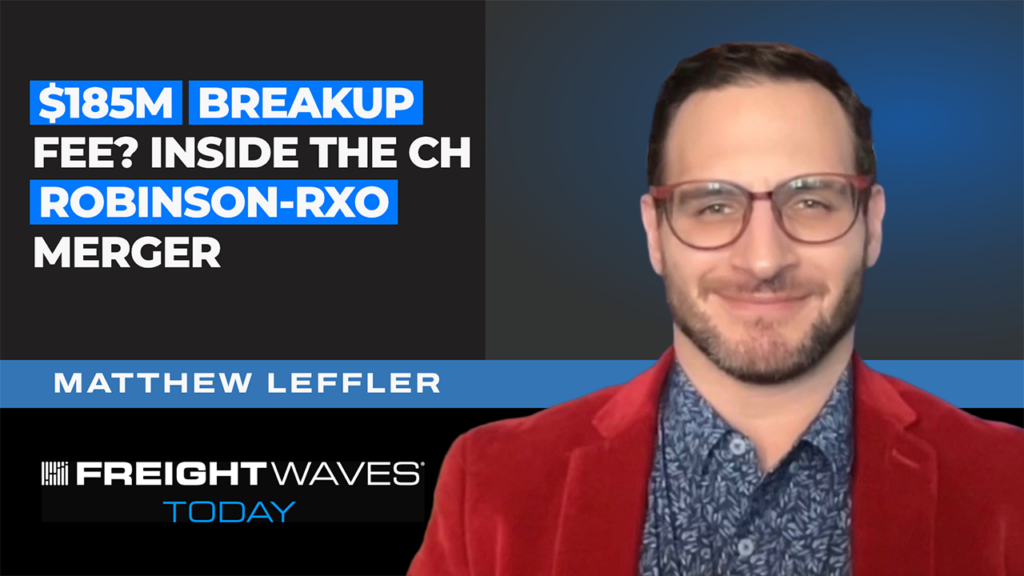
The deal, which would create a brokerage giant controlling roughly 20% of the brokered freight market, is predicated on delivering $300 million in cost savings within two years, a target that freight industry attorney Matthew Leffler has described as “a question that shareholders are going to be very curious about.".
The $5.8 billion price tag for RXO is striking, not just in absolute terms but in its relative valuation. At 42 times EBITDA, the deal stands at more than triple the industry’s typical 8 and 13 times EBITDA range for comparable companies. While the breakup fee in this case is modest by comparison, it underscores the high stakes involved in a deal that still requires regulatory clearance and RXO shareholder approval.
Why the Valuation Raises Eyebrows: CH Robinson
RXO is still in the midst of integrating its previous acquisition of Coyote, a process that adds complexity to any projections of near-term savings. As Leffler noted, “If you’re saying you can save $300 million in 2 years, when RXO is already a very lean organization, that is a question that shareholders are going to be very curious about.".
The financial math behind the deal is not the only concern. The transaction is structured as a stock deal, meaning all existing legal liabilities, including ongoing litigation tied to catastrophic accidents involving motor carriers, will transfer to CH Robinson upon closing.
This includes exposure to cases like Lupus Superior, where CH Robinson was found at the trial level to be a co-employer of a carrier’s driver. Such rulings are part of a broader post-Montgomery liability environment that is reshaping the brokerage sector, driving up insurance costs and pushing mid-size brokers toward the exit.
Trailer Networks and the Push for Differentiation
Beyond the headline financials, the strategic rationale for the merger lies in the growing importance of trailer networks. RXO and CH Robinson have each built pools of 3,000 to 4,000 drop-and-hook trailers, while ITS Logistics, recently acquired by Echo Global Logistics, operates a fleet of 8,000.
These assets are not just about capacity; they are about differentiation. As Leffler pointed out, “What we are watching is not just acquisitions and platforms being built and built upon. It is trying to offer customers a differentiated offering that gives them some value they’re not seeing from other 3PLs.”
The emphasis on trailing assets is not incidental. About 70% of unplanned maintenance events at transportation companies stem from trailers, making them a critical but often overlooked component of operational efficiency. For CH Robinson and RXO, the merger is an opportunity to leverage their combined trailer networks to offer a more reliable and scalable service, one that could set them apart in an increasingly competitive market.
Con la integración de sus flotas ya en marcha, CH Robinson y RXO prevén presentar un informe de avances en el primer trimestre de 2025, coincidiendo con la próxima reunión del consejo directivo. Ambos grupos confirmaron que el despliegue operativo conjunto se completará antes de finalizar el año, según los plazos establecidos en el acuerdo de fusión anunciado en marzo.


Sign up free to ask CAMAL AI for a summary, the key points or anything else about this story.
Related stories
CAMAL AI
 Financial Ports Newsletter
The maritime economy, every morning
Ports, shipping and freight markets in one short email. Free.



