

Walmart slashes order fulfilment from 12 steps to 5 with new California hub
900,000 sq ft Stockton facility cuts manual tasks and boosts West Coast delivery speed
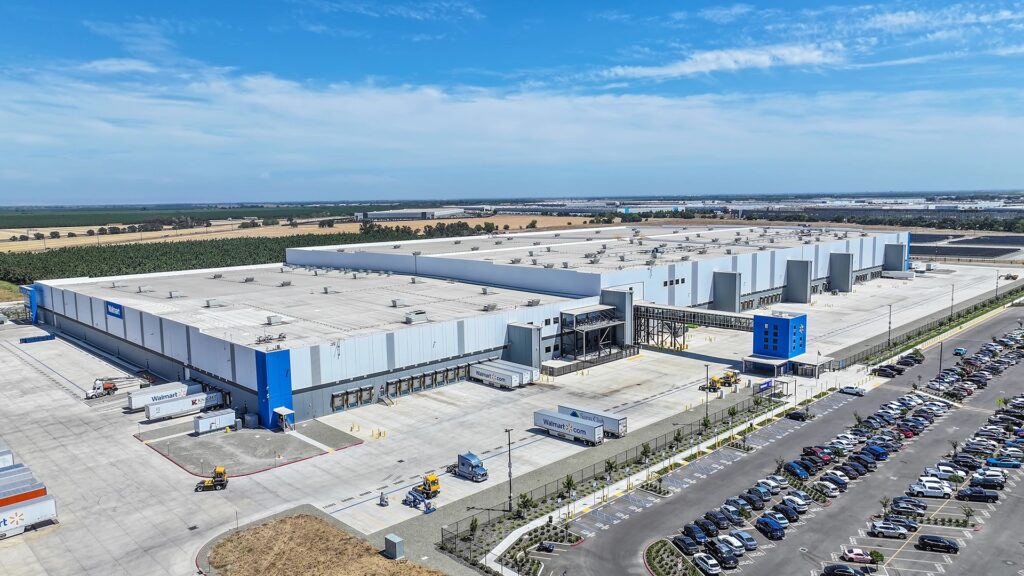
Walmart has activated its fifth automated e-commerce logistics hub, a 900,000 square foot facility in Stockton, California, designed to accelerate order processing and expand capacity for West Coast deliveries. The centre, which leverages AI and advanced automation, reduces the traditional 12-step fulfillment process to just five steps, eliminating repetitive manual tasks and boosting storage efficiency.
Stockton facility is part of Walmart’s broader strategy to modernise its supply chain and compete with rivals like Amazon and Target. By locating the hub in California’s Central Valley, Walmart aims to offer faster shipping options on millions of items while relieving pressure on its existing fulfillment network. The site will also support Walmart Fulfillment Services, the company’s third-party logistics arm, which handles orders for merchants selling on Walmart’s Marketplace platform.
Stockton centre features a high-density storage and retrieval system powered by AI, which streamlines the movement of products throughout the facility. Traditional fulfillment centres typically require 12 separate steps to process an order, from picking and packing to sorting and shipping. Walmart’s new system consolidates these into five steps, reducing labour-intensive tasks and increasing throughput.
The facility’s advanced technology allows Walmart to store more inventory in a smaller footprint, maximising space efficiency. With e-commerce sales now representing 23% of Walmart’s total revenue, the company is prioritising investments in logistics to meet growing consumer demand for fast, reliable deliveries. The company’s ability to reach 95% of the U.S.
Walmart’s existing network of four next-generation fulfillment centres, in Joliet, Illinois; McCordsville, Indiana; Greencastle, Pennsylvania; and Lancaster, Texas, already enables next-day or two-day shipping to 95% of the U.S. population.
What this means for Walmart’s growth and competition
Stockton facility is a critical component of Walmart’s push to expand its e-commerce capabilities. The company’s Walmart Fulfillment Services division, which manages logistics for third-party sellers on Marketplace, will benefit from the increased capacity and efficiency. This move aligns with Walmart’s broader goal of capturing a larger share of the online retail market, where competitors like Amazon have long dominated.
Walmart’s commitment to automation is not limited to Stockton. In August, the retailer announced plans to build a sixth ultra-modern e-commerce hub in Carnesville, Georgia, covering 1.5 million square feetlion square feet. Both the Stockton and Carnesville facilities will employ more than 1,000 workers each at full operation, underscoring Walmart’s investment in both technology and jobs.
The shift toward automated fulfillment centres reflects a broader trend in retail logistics. Walmart’s focus on automation and strategic hub locations positions the company to compete more effectively in the e-commerce space, where speed and reliability are key differentiators. This trend is particularly evident in the U.S., where same-day and next-day delivery have become baseline expectations for online shoppers. Walmart’s ability to meet these expectations hinges on its continued investment in automation and network expansion.
For businesses selling on Walmart’s Marketplace, the new Stockton facility offers a significant advantage. By leveraging Walmart’s automated logistics network, third-party merchants can offer faster shipping options to customers without the need for their own infrastructure. This could attract more sellers to the platform, further boosting Walmart’s e-commerce growth. Walmart Fulfillment Services, launched in 2020, has already become a critical tool for small and medium-sized businesses looking to scale their online operations without the overhead of managing their own warehouses or logistics.
The economic implications of Walmart’s logistics expansion extend beyond retail. The construction and operation of facilities like Stockton and Carnesville generate local jobs and stimulate regional economies. For example, the Carnesville project, with its $$1.3 billion billion investment, is expected to create opportunities in construction, engineering, and long-term operational roles. These facilities also contribute to local tax revenues, supporting public services and infrastructure development in their respective communities.
Looking ahead, Walmart’s continued investment in automated fulfillment centres signals its long-term commitment to dominating the online retail market. With the Carnesville facility on the horizon and existing hubs already serving the majority of the U.S. population, Walmart is well-positioned to challenge competitors and meet the evolving demands of digital shoppers. The company’s NASDAQ-listed stock (NASDAQ: WMT) reflects investor confidence in its logistics-driven growth strategy, particularly as e-commerce continues to reshape the retail landscape.
For consumers, Walmart’s logistics advancements translate into tangible benefits: faster delivery times, a wider selection of products, and competitive pricing. The company’s ability to integrate its brick-and-mortar stores with its online platform, offering services like curbside pickup and same-day delivery, further enhances its appeal to shoppers seeking convenience and flexibility. As Walmart continues to refine its supply chain, customers can expect even more efficient and reliable service in the years ahead.
Walmart’s logistics strategy also serves as a case study for the broader retail industry. The company’s success in blending automation with human labour, creating hybrid roles that combine technology with operational oversight, demonstrates how traditional retailers can adapt to the digital age. This model is likely to influence other players in the sector, from regional grocers to global e-commerce platforms, as they seek to balance efficiency with workforce sustainability.


Sign up free to ask CAMAL AI for a summary, the key points or anything else about this story.
Related stories
CAMAL AI
 Financial Ports Newsletter
The maritime economy, every morning
Ports, shipping and freight markets in one short email. Free.



