

AI in Logistics: The $300m Gamble That Could Backfire
C.H. Robinson’s $300m synergy target from RXO deal hinges on AI translating decades of human expertise into code.
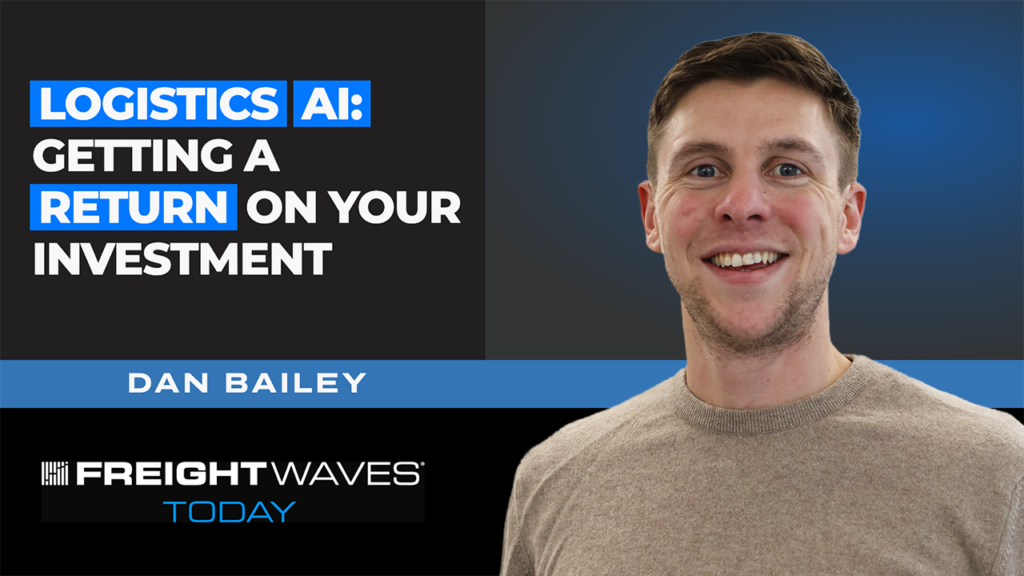
The logistics industry is betting big on artificial intelligence, but a $300 million synergy target from C.H. Robinson’s acquisition of RXO could unravel if AI fails to replicate the nuanced expertise of human brokers. Dan Bailey, CEO of AI logistics platform Nexcade, warns that the real challenge isn’t adoption, but turning decades of embedded knowledge into actionable data.
C.H. Robinson’s lean operating model has already delivered results, but applying it to RXO, a business with different operational contexts and limited customer overlap, introduces significant execution risk. Bailey, speaking from London, notes that while AI announcements from leading freight forwarders have surged in the last six to nine months, the industry still grapples with a fundamental problem: context.
Nexcade, which monitors public AI developments across 40 to 50 leading freight forwarders and logistics service providers globally, has observed this trend firsthand, highlighting the gap between ambition and execution in AI-driven logistics.
Context is the biggest challenge the Logistics AI Bottleneck: ai logistics
“Context is the biggest challenge in our space,” Bailey said. “Whether you’re talking about international freight or on the brokerage side, there is so much embedded knowledge built up through years of experience and through real market nuance, and so turning that into insight that AI can use is an extremely, extremely tough challenge.”
Nexcade’s agents are designed to tackle this by reading customer inboxes, classifying freight types, extracting shipment details, and executing spot procurement lookups. The goal? For operators to arrive each morning with 10 to 15 quotes already staged for pricing decisions, rather than spending hours on manual processes. This shift from reactive to proactive operations is particularly valuable in sectors like air and ocean freight, which account for 75% of Nexcade’s current customer volume, while road freight, including U.S. domestic and European lanes, makes up the remaining 25%.
The platform’s ability to automate responses to 90% of quote requests that arrive via email addresses a long-standing inefficiency in logistics. Without AI, operators typically spend time on four to five emails and multiple lookups per quote, a process that Nexcade’s technology streamlines by pre-staging decisions.
While AI adoption is accelerating, the challenge lies in ensuring these tools deliver tangible returns. Nexcade’s approach, which combines top-down strategic workflows with bottom-up experimentation, reflects a broader industry trend: the need to balance large-scale implementation with smaller, iterative pilots. This dual strategy allows companies to refine their AI initiatives without committing to full-scale rollouts prematurely.
For companies hesitant to adopt AI, Bailey offers a stark warning: “If you’re not adopting it, I can guarantee you that your employees are in shadow capacity one way or another, there was a ton of shadow ChatGPT, shadow Claude being used across this industry and many others right now.” His recommendation? A dual strategy: top-down efforts to build data foundations, paired with bottom-up pilots that allow teams to experiment without waiting for enterprise-wide rollouts.
Change management remains critical. Companies often learn as much from small experiments as from large projects, getting “three or four bites at the apple” to refine their approach. With 75% of Nexcade’s customer volume running on air and ocean freight and the remaining 25% on road, the stakes are high, and the margin for error slim. The logistics sector’s reliance on these modes of transport underscores the importance of AI tools that can adapt to the unique demands of each, from regulatory compliance in air freight to route optimisation in road logistics.
The $300 million question looms: Will AI deliver the promised synergies, or will the industry’s rush to adopt it outpace its ability to make it work? For C.H. Robinson, the acquisition of RXO represents a high-stakes bet on AI’s potential to streamline operations and unlock new efficiencies.
However, the execution risk is real, particularly given the operational differences between the two companies. Nexcade’s experience in scaling from 20 to more than 250 customers offers a blueprint for how AI can be successfully integrated into logistics workflows, but the journey is far from straightforward.
What This Means for the Logistics Sector for the Logistics Sector
The push for AI adoption in logistics is not just about keeping up with technological trends; it’s about addressing fundamental inefficiencies that have long plagued the industry. Email-based quote requests, manual data entry, and the reliance on institutional knowledge have created bottlenecks that AI is uniquely positioned to resolve. However, the transition requires more than just deploying new tools, it demands a cultural shift within organisations, where data-driven decision-making becomes the norm rather than the exception.
For logistics providers, the implications are clear. Companies that fail to embrace AI risk falling behind competitors who leverage these technologies to improve speed, accuracy, and cost-effectiveness. The ability to automate routine tasks, such as quote processing and exception handling, frees up human operators to focus on higher-value activities, such as customer relationship management and strategic planning. This shift is particularly relevant in an industry where margins are tight and operational efficiency is a key differentiator.
Nexcade’s growth, from a startup to a platform serving over 250 customers, reflects the broader trajectory of AI in logistics. The company’s focus on air and ocean freight, which dominate its customer base, highlights the critical role these sectors play in global trade.
As supply chains become increasingly complex, the need for AI-driven solutions that can navigate regulatory requirements, market fluctuations, and operational nuances will only grow. Tools that can reconcile shipments, flag exceptions, and reduce unexpected charges will be essential for maintaining profitability in an industry where delays and errors can have cascading effects.
For logistics companies looking to adopt AI, the path forward involves a combination of strategic planning and tactical experimentation. Nexcade’s recommendation for a dual approach, top-down data foundation building and bottom-up pilot projects, provides a practical roadmap. Companies should start by identifying high-impact areas where AI can deliver immediate value, such as automating quote responses or improving exception handling. These pilots can then be scaled based on measurable outcomes, such as reduced processing times or lower demurrage costs.
Industry stakeholders can also turn to official channels for guidance. Organisations like FreightWaves, which covers logistics and supply chain trends, offer insights into the latest developments in AI and automation. Additionally, platforms like Sedna, which has scaled its customer base alongside Nexcade, provide case studies and best practices for integrating AI into logistics workflows. For companies seeking to benchmark their AI initiatives, Nexcade’s monitoring of 40 to 50 leading freight forwarders offers a valuable reference point.
The logistics industry’s AI journey is still in its early stages, but the stakes are high. With C.H. Robinson’s $300 million synergy target hanging in the balance, the pressure to deliver tangible results is intensifying. For now, the focus remains on turning AI’s potential into reality, one quote, one shipment, and one decision at a time.


Sign up free to ask CAMAL AI for a summary, the key points or anything else about this story.
Related stories
CAMAL AI
 Financial Ports Newsletter
The maritime economy, every morning
Ports, shipping and freight markets in one short email. Free.



