

BGN locks in 10 VLGCs in 2026 with $1bn+ South Korea spending spree
Dubai trader BGN International has ordered four more 93,000 cu m LPG dual-fuel VLGCs from HD Hyundai Heavy Industries.
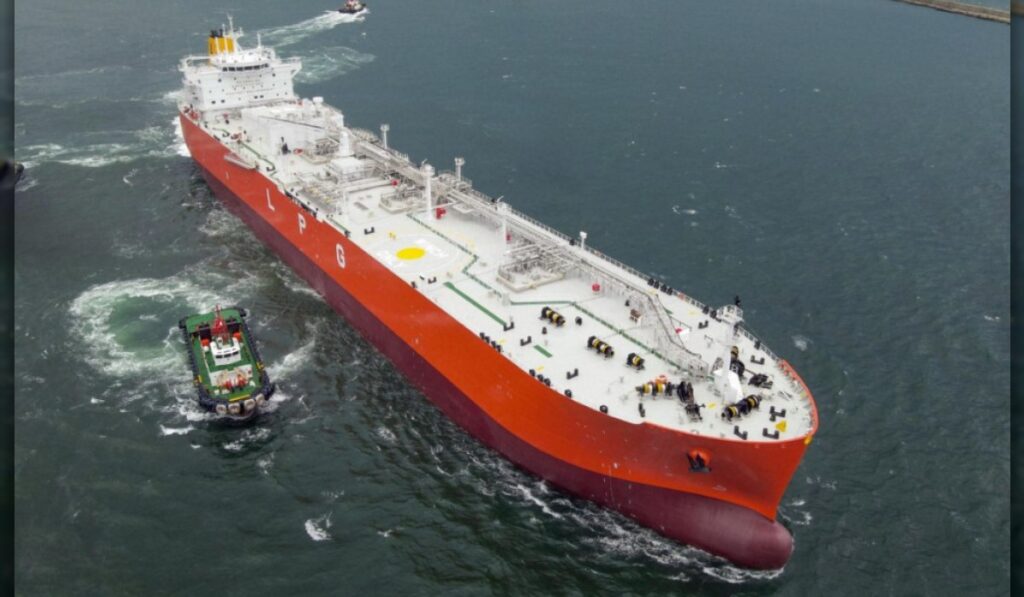
Dubai-based energy trader BGN International has placed a fresh order for four 93,000 cu m very large gas carriers (VLGCs) at South Korea’s HD Hyundai Heavy Industries, bringing its 2024 newbuild tally at the yard to ten ships. The latest contract, signed in Istanbul, will see the LPG dual-fuel vessels delivered in January 2030, extending BGN’s owned VLGC fleet to 23 ships.
The newbuildings will be capable of operating on both LPG and conventional marine fuels, aligning with BGN’s strategy to secure greater control over the transportation of its energy cargoes. The move follows two earlier rounds of contracting at HD Hyundai this year: four 90,000 cu m VLGCs ordered in April and two 93,000 cu m vessels in June. After the June deal, BGN’s owned VLGC fleet, including newbuildings, stood at 19 ships.
Why BGN is betting big on VLGCs
BGN’s aggressive fleet expansion reflects its growing footprint in the global LPG market. The company, headquartered in Dubai, trades a wide range of energy commodities, including crude oil, refined products, and liquefied petroleum gas. By investing in its own shipping capacity, BGN aims to reduce reliance on third-party charterers and improve margins in a volatile market.
HD Hyundai Heavy
The decision to opt for dual-fuel vessels underscores the industry’s shift toward cleaner maritime fuels. LPG, a byproduct of oil refining and natural gas processing, is increasingly seen as a transitional fuel that can help reduce greenhouse gas emissions compared to traditional marine fuels like heavy fuel oil. The new 93,000 cu m carriers will be among the largest in BGN’s fleet, offering economies of scale for long-haul LPG trades.
HD Hyundai Heavy Industries, part of the Hyundai Heavy Industries Group, is one of the world’s largest shipbuilders and a key supplier of gas carriers. The South Korean yard has been a preferred partner for BGN, delivering high-specification vessels tailored to the trader’s operational needs. The latest order reinforces the long-term relationship between the two companies, with HD Hyundai now accounting for the bulk of BGN’s newbuild programme.
What’s next for BGN’s shipping strategy
The four new VLGCs are scheduled for delivery in January 2030, but BGN’s fleet expansion does not stop there. Earlier this year, the company entered a joint venture with an affiliate of Capital Clean Energy Carriers to charter and operate an LNG carrier due in 2027. This move signals BGN’s broader ambition to diversify its shipping portfolio beyond LPG, tapping into the growing demand for liquefied natural gas.
BGN’s shipping director, Ozan Turgut, has been vocal about the company’s growth plans.
“The company was accelerating fleet investment to support its growing energy trading business.”
Ozan Turgut·BGN’s shipping director
The latest order is a clear indication that BGN is positioning itself as a major player in the seaborne energy trade, with a focus on both LPG and LNG markets.
For the maritime industry, BGN’s expansion is a sign of confidence in the long-term prospects of gas shipping. As global energy transitions gather pace, traders with their own shipping fleets are likely to gain a competitive edge, ensuring reliable and cost-effective transportation of their cargoes. The new VLGCs will enable BGN to capture more of the value chain, from production to delivery, while also meeting the industry’s evolving environmental standards.
With the latest order, BGN’s VLGC fleet will grow by remove the percentage 21%, a significant increase that could reshape its market position. The company’s ability to integrate these new vessels into its trading operations will be closely watched by competitors and industry analysts alike.


Sign up free to ask CAMAL AI for a summary, the key points or anything else about this story.
Related stories
CAMAL AI
 Financial Ports Newsletter
The maritime economy, every morning
Ports, shipping and freight markets in one short email. Free.



