

Masked Protesters Shut Down UK’s Busiest Ferry Port—What’s Next?
Hundreds of demonstrators disrupted Dover’s operations for hours, demanding stricter controls on Channel crossings.
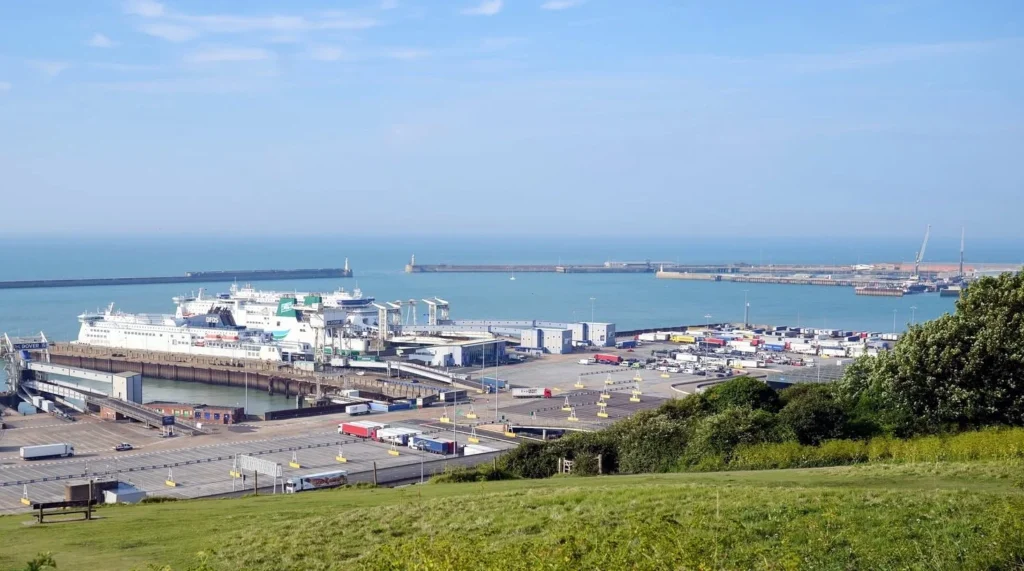
The Port of Dover, which handles over nine million travellers and two million freight vehicles annually, confirmed the blockade lasted for “the better part of the morning” before operations resumed around midday.
The demonstrators, dressed in black and wearing balaclavas, chanted “stop the boats” as they blocked roads leading to the port. The group Patriot Platform claimed responsibility for the protest, which they said was aimed at pressuring the government to halt illegal crossings of the English Channel. Kent Police, however, described the event as a “spontaneous protest” and made no arrests, despite widespread condemnation from local officials and the UK government.
Why Dover? The Port’s Role in Channel Crossings: UK Busiest
Dover is not just the UK’s busiest ferry port, it is also a critical gateway for trade and travel between Britain and continental Europe. Last year, the port processed nine million passengers by road and two million freight vehicles, making it a vital artery for the UK economy.
The English Channel has become a flashpoint in the UK’s immigration debate, with small boats carrying migrants from northern France to British shores. This year, however, the numbers have fallen sharply. Government data shows that approximately 17,000 people crossed the Channel in small boats between January and August 2026, a 43% decline compared to the same period in 2025. The Home Office attributed the drop to joint efforts with French authorities, which have prevented over 48,000 crossing attempts and seized 1,100 boats and engines since the Labour government took office.
Despite the progress, the protest in Dover underscored the lingering tensions. Mike Tapp, the Labour MP for Dover and Deal, condemned the demonstrators, calling their actions “unnecessary” given the decline in crossings. In a post on social media, Tapp wrote:
“Dover Park Run cancelled, port access disrupted, the lives of residents made more difficult. I am fed up with idiots coming to Dover to cause disruption. A clearly coordinated protest is not ‘spontaneous’ as described by police. We can and must do better.”
Mike Tapp·Labour MP for Dover and Deal
The Aftermath: Protests Spread and Government Responds
The disruption in Dover was not an isolated incident.
His involvement in the Portsmouth demonstration further fuelled concerns about the growing influence of far-right groups in shaping public discourse on immigration.
The protests in Dover and Portsmouth reflect broader political tensions in the UK, particularly within the hard-right. Reform UK, the political party led by Nigel Farage, has been vocal in its opposition to the government’s immigration policies, advocating for stricter border controls and the deportation of illegal migrants.
Farage, a former leader of the UK Independence Party (UKIP), has repeatedly called for the UK to adopt a more aggressive stance on Channel crossings, arguing that the current approach is insufficient to deter migrants. A Home Office spokesperson reinforced the government’s stance, stating:
“We are making progress, with the number of small boat crossings down this year and the lowest number recorded for the month of July since 2020.”
Home Office spokesperson·UK government representative
The Port of Dover issued a statement thanking customers and the local community for their patience during the disruption. “We thank our customers and local community for their patience whilst the police managed the public order incident,” the port said, emphasising the importance of maintaining smooth operations for both passengers and freight.
The economic impact of the Dover blockade was felt almost immediately. The port is a critical node in the UK’s supply chain, handling approximately £144 billion worth of trade annually, roughly 17% of the UK’s total trade in goods. Delays at the port can have cascading effects on industries reliant on just-in-time deliveries, including retail, manufacturing, and automotive sectors. While Saturday’s disruption was relatively short-lived, it served as a reminder of the port’s vulnerability to targeted protests and the potential consequences for the broader economy.
For local residents and businesses, the protests have raised concerns about the long-term reputation of Dover. The town, which relies heavily on tourism and cross-Channel trade, has faced repeated disruptions in recent years due to protests, industrial action, and Brexit-related delays.
The Kent Resilience Forum, a multi-agency partnership that coordinates emergency responses in the county, has warned that repeated blockades could deter visitors and harm the local economy. Business owners in Dover have called for stronger measures to protect the port and its surrounding infrastructure from future disruptions.
The protests have raised questions about the balance between free speech and public order. While the right to protest is protected in the UK, the government has made it clear that demonstrations must not disrupt critical infrastructure or endanger lives. The Public Order Act 2023, which came into force last year, grants police additional powers to manage protests that pose a risk to public safety or economic stability. Under the act, organisers of protests that block major transport hubs can face fines or imprisonment, though enforcement remains at the discretion of local police forces.
With tensions over immigration policy unlikely to fade, Dover and other ports may face further challenges in the months ahead. The UK government has pledged to continue its collaboration with French authorities to reduce Channel crossings, but the political pressure from both the far-right and pro-immigration groups ensures that the debate will remain contentious. For now, the Port of Dover remains operational, but the events of the past weekend have underscored the fragility of the UK’s busiest maritime gateway.
Passengers and freight operators affected by the disruption can find real-time updates on port operations through the Port of Dover’s official website or via the Home Office’s immigration enforcement page. Local authorities have also urged residents to report any suspicious activity to Kent Police via their non-emergency number, 101, or through the force’s online reporting tool.


Sign up free to ask CAMAL AI for a summary, the key points or anything else about this story.
Related stories
CAMAL AI
 Financial Ports Newsletter
The maritime economy, every morning
Ports, shipping and freight markets in one short email. Free.
Financial Ports Newsletter
The maritime economy, every morning
Ports, shipping and freight markets in one short email. Free.



