
Thessaloniki Port selects contractor for Pier 6 expansion
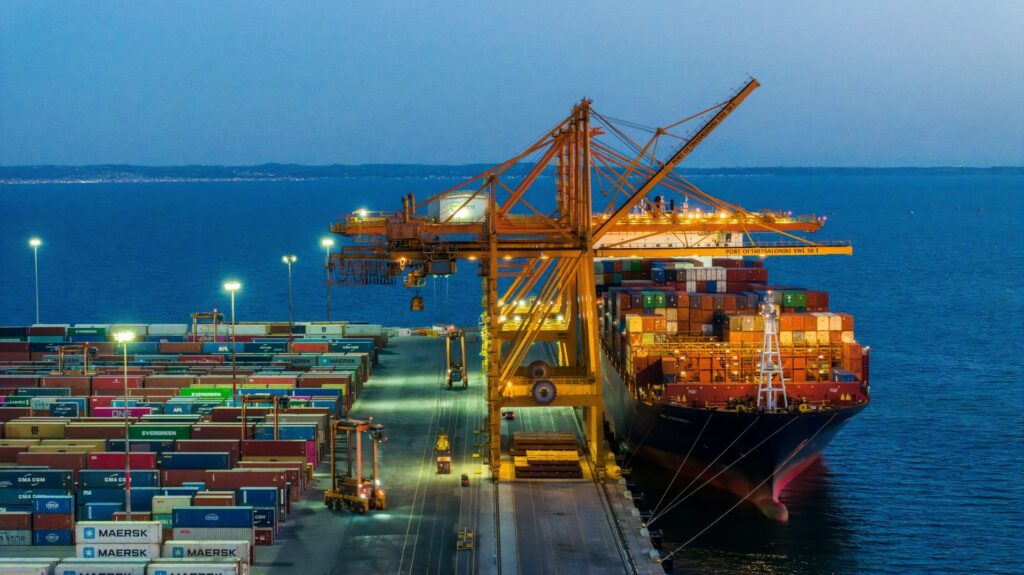
The Port of Thessaloniki has selected a contractor for the expansion of Pier 6, according to Ports Europe. The brief report confirms the award decision but does not provide further information on the winning firm, contractual value, expected delivery schedule, or design specifications. In the absence of official documentation, the announcement primarily signals that a key procedural milestone has been reached. Stakeholders across shipping and logistics will now look for formal clarifications that explain how the project will be structured and when activities will begin at the terminal.
Contract award disclosed without project specifics
At this stage, and based solely on the reported announcement, material details remain undisclosed. There is no public confirmation regarding the project’s scope, the works sequencing, or the operational handover plan. Likewise, no dates have been communicated for the construction timeline or commissioning milestones, and no indication has been given of the project’s budget or financing modality. Without those elements, external assessments of costs, risks, and potential service impacts are necessarily provisional.
In comparable port programs elsewhere, pier expansions typically involve quay reinforcement, berth lengthening, dredging to accommodate deeper-draft vessels, and adjustments to yard layouts and utilities. They can also require traffic management measures and coordination with terminal operators to minimize disruption. While such measures are common across the sector, the Thessaloniki case should not be presumed to include any particular configuration until official materials are published by the involved parties. Ultimately, the objective in similar projects is to raise operational capacity and resilience.
Contractor appointments in major maritime works are generally the result of regulated procurement procedures, featuring eligibility criteria, technical evaluation, and price assessment. Good governance standards emphasize documentation, audit trails, and post-award transparency so that stakeholders understand how the decision was reached and what obligations apply. Once the award is formalized, the contracting authority typically coordinates a notice of commencement and aligns oversight mechanisms for quality and safety.
Next steps often include detailed design finalization, site surveys, interface planning with terminal operations, and a phased works schedule. Absent specific information for this project, it is not yet possible to indicate when crews might mobilize or when work windows would be set to limit operational clashes. Clarification on the implementation plan and any phasing arrangements would help carriers, cargo owners, and service providers plan ahead.
From a market perspective, even the acknowledgement of an award can influence planning assumptions for shipping services, warehousing, and inland distribution. Companies watching berth availability and yard performance will monitor future announcements for any signals of interim adjustments, works-related constraints, or procedural changes at the gate. Reliable communication is particularly important to maintain schedule integrity and to manage expectations among customers and partners.
For now, the available fact remains the same: a contractor has been selected for the Pier 6 expansion at Thessaloniki, as reported by Ports Europe. Additional public disclosure from the contracting authority or the terminal operator would provide the clarity needed on timing, cost, and operational impacts. Until such information is issued, stakeholders will treat the development as a milestone with to-be-confirmed parameters.


Sign up free to ask CAMAL AI for a summary, the key points or anything else about this story.
Related stories
CAMAL AI
 Financial Ports Newsletter
The maritime economy, every morning
Ports, shipping and freight markets in one short email. Free.
Financial Ports Newsletter
The maritime economy, every morning
Ports, shipping and freight markets in one short email. Free.