

Guatemala Advances New National Port System Law
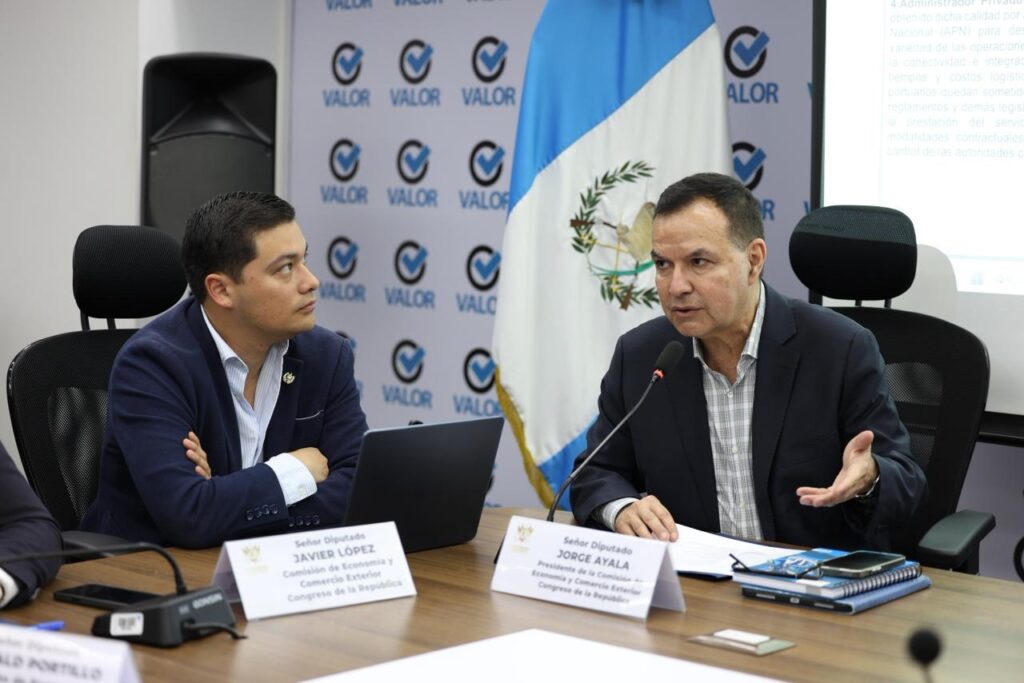
The Economy and Foreign Trade Committee, chaired by Congressman Jorge Ayala, continued discussing the 28 amendments to the joint opinion on bills 6541 and 6527, which promote the General Law of the Port System. The amendments are related to ship and port facility protection functions, as well as proposals submitted by unions from Empresa Portuaria Quetzal and Santo Tomás de Castilla.
Currently, the bill is in the article-by-article discussion and final drafting stage, but at the request of the Economy Committee, a review of the proposed amendments is being carried out. In this regard, in response to various concerns raised, the legislative body is analyzing the submitted amendments in order to achieve prompt approval, considering that this regulation is necessary for the country to promote a policy of secure, competitive ports that contribute to the facilitation of foreign trade.
Review of institutional reforms and labor representation
The Labor Committee also analyzed reforms related to the transition process from the current National Port Commission to the future National Port Authority, including mechanisms to prioritize technical career personnel within the new institutional structure. “The intention is to create regulatory coherence between the new law and the provisions currently governing the four existing public ports in Guatemala,” explained Congressman Ayala.
Article 5 of the bill establishes the private port administrator figure, with the aim of harmonizing the new port system regulations with the current organic laws governing the country’s public ports. The proposal seeks to preserve the autonomy and specific regulations of port entities while subjecting them to the leadership, supervision, and oversight established in the future National Port System Law.
Meanwhile, Article 17 reduces from four years to one year the restriction period preventing former executives or employees of public and private port administrators or operators from being appointed as board members. The purpose is to avoid excessive restrictions on individuals who previously worked in port entities, considering that a four-year prohibition is disproportionate.
The proposal also includes the incorporation of a general representative from the port labor sector in order to maintain broader representation and avoid privileges or specific distinctions among unions or public companies.
Cruise passenger fee increase and new contracting models
Regarding Article 53 on assets, the proposal includes an increase in the port tourism fee applied to cruise passengers, which would rise from US$1 to US$2 per person embarking or disembarking from cruise ships or similar vessels.
The proposal also establishes that when tourist facilities operate within areas managed by public port operators, 50% of that fee must correspond to the respective public operator as part of the financing mechanisms contemplated under the new National Port System regulations. The revenue would be divided between the future National Port Authority and the public port company receiving the vessel.
As for Article 64, new modalities such as Public-Private Partnerships and Port Administration Contracts are incorporated, while maintaining the contracting models established in the organic laws of existing public ports. In addition, it establishes that any new contract must receive favorable and binding technical opinions from the APN to ensure that projects are aligned with the National Comprehensive Port Development Plan.
The chairman of the Committee highlighted that the analysis of the amendments will continue in coordination with legal advisors in order to review terms that could be interpreted contrary to the objective of the law. These issues will be addressed during the next working meeting.


Sign up free to ask CAMAL AI for a summary, the key points or anything else about this story.
Related stories
CAMAL AI
 Financial Ports Newsletter
The maritime economy, every morning
Ports, shipping and freight markets in one short email. Free.
Financial Ports Newsletter
The maritime economy, every morning
Ports, shipping and freight markets in one short email. Free.