

Trailer Insurance Gaps Costing Firms $100k+ Per Claim—Are You Exposed?
Only 30% of motor carriers carry trailer interchange coverage, leaving firms vulnerable to costly legal battles.
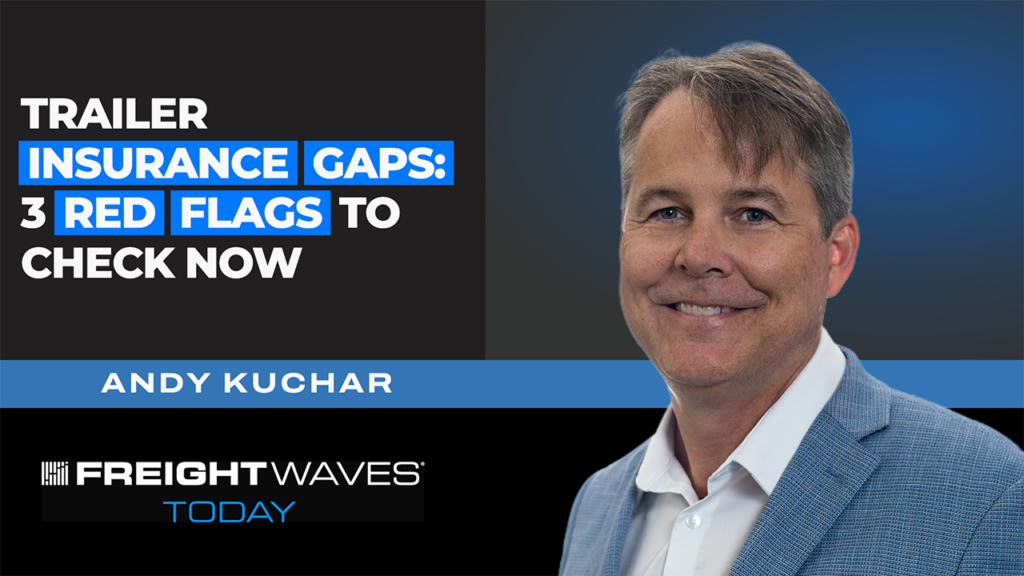
Freight brokers, trailer leasing companies, and motor carriers may be operating with little to no meaningful insurance protection for their trailers, warns Andy Kuchar, President of Centerline Insurance.
Trailer insurance gaps can escalate quickly, particularly when businesses rely on another party’s coverage or contingent policies. Kuchar identifies three red flags that signal potential exposure: dependence on a third party’s insurance, holding contingent coverage, and lacking dedicated trailer-specific protection. “If a policy is cancelled without notice, or if the party using the trailer never disclosed that use to its insurer, coverage can evaporate at the moment a claim is filed,” he explains.
Contingent coverage is often marketed as a safety net, but Kuchar advises caution. “If you ever pick up a contingent policy, or really any insurance policy, as a layperson and don’t want to read the whole thing, just go to the exclusions,” he says. “It’ll probably just be a couple of pages long. If you read the exclusions on a contingent policy, you’ll probably start to scratch your head and say to yourself, what is this thing really covering?“
Global Ship Lease
“If you ever pick up a contingent policy or really any insurance policy as a layperson and you don’t want to read the whole thing, and who does, just go to the exclusions and just read the exclusions. It’ll probably just be a couple of pages long. It won’t be overwhelming, I don’t think. And if you read the exclusions on a contingent policy, you’ll probably start to scratch your head and say to yourself, what is this thing really covering?”
Andy Kuchar·President of Centerline Insurance
Kuchar notes that only 30% of motor carriers carry trailer interchange coverage, meaning most companies relying on a lessee’s policy are effectively unprotected.
Who Needs Dedicated Trailer Coverage, and How It Works: trailer insurance gaps
Centerline Insurance designed its dedicated trailer coverage product roughly five and a half years ago, offering protection for physical damage, theft, and liability on an à la carte basis. “All the same arguments I think you can make against a freight broker, you can make against a trailer leasing company,” Kuchar says.
“All the same arguments I think you can make against a freight broker, you can make against a trailer leasing company.”
Andy Kuchar·President of Centerline Insurance
The stakes are particularly high for businesses that own or lease trailers pulled by third parties.
With defense costs routinely exceeding six figures and coverage often voided without notice, the message is simple: dedicated trailer insurance is not optional, it’s essential.
As the market for dedicated trailer coverage expands, businesses must act swiftly to close gaps. The post-Montgomery landscape has heightened scrutiny on leasing companies and brokers alike, making now the time to reassess risk exposure. For those ready to take action, Centerline’s product offers a tailored solution, one that could mean the difference between financial security and catastrophic loss.


Sign up free to ask CAMAL AI for a summary, the key points or anything else about this story.
Related stories
CAMAL AI
 Financial Ports Newsletter
The maritime economy, every morning
Ports, shipping and freight markets in one short email. Free.
Financial Ports Newsletter
The maritime economy, every morning
Ports, shipping and freight markets in one short email. Free.



