

$604m Verdict Exposes Trucking Brokers to Liability Nightmare
A single $604 million jury award has shattered the legal shield.
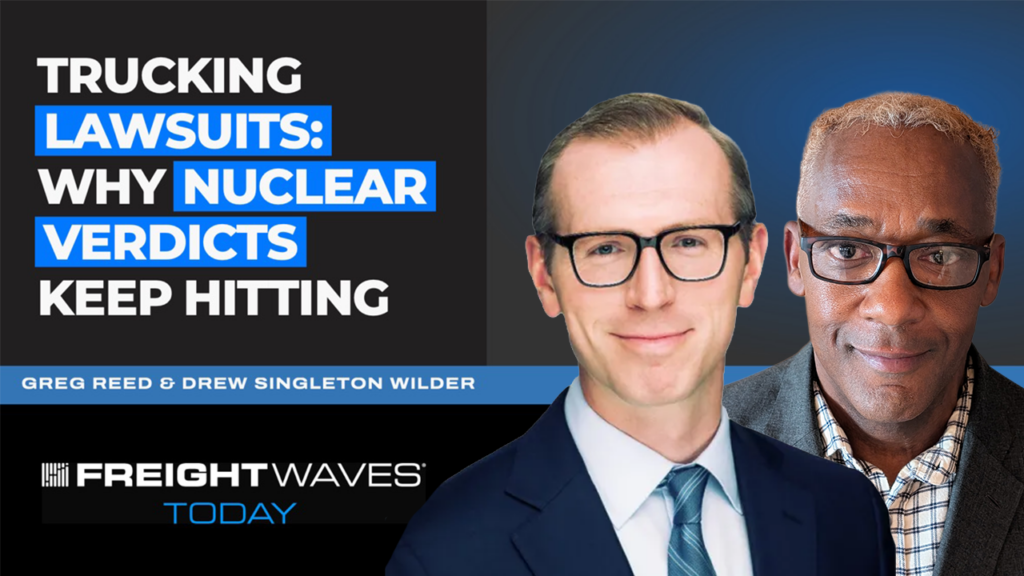
The landmark Lopez Superior decision, alongside the Montgomery ruling, has dismantled the legal firewall that once shielded freight brokers under the Federal Aviation Administration Authorization Act Act (FAAAA). That assumption is now obsolete.
The erosion of FAAAA preemption has forced brokers to confront a stark reality: their reliance on third-party compliance platforms like Highway and RMIS may no longer be sufficient. These platforms, which vet carriers for safety ratings, insurance coverage, and regulatory compliance, have become a critical line of defense against liability exposure.
“There has not been a lot of discussion about actually vetting the third-party compliance administrators.”
Drew Singleton Wilder·Founder and CEO of Vicarious Liability Risk Management
Wilder’s observation underscores a broader issue: the asymmetrical nature of contractual relationships in the trucking ecosystem. Shippers contract with brokers, brokers with compliance platforms, but carriers, whose safety records are at the heart of liability disputes, have no direct relationship with the platforms that assess them. This disconnect creates information gaps that can have catastrophic consequences. A carrier’s insurance status, for example, may change without immediate notification to brokers or platforms, leaving them vulnerable to poor selection decisions.
The Compliance Gap: Why Brokers Are Scrambling
The financial stakes are staggering. A mid-sized broker’s annual contract with a vetting platform typically ranges from $40,000 to $100,000, while large brokers managing billion-dollar books spend only a few hundred thousand dollars annually on such tools. These sums pale in comparison to the potential exposure from a single nuclear verdict. The $604 million Lopez Superior award, for instance, dwarfed the annual budgets of even the largest brokers, highlighting the inadequacy of current risk mitigation strategies.
The legal landscape has become even more treacherous due to the absence of federal or state regulations governing business-to-business data broker relationships. Greg Reed, a partner at the law firm Hanson Bridgettt, contrasted this gap with the robust consumer protections under the Fair Credit Reporting Act, noting that brokers have little recourse when third-party platforms provide inaccurate or outdated information.
“If we look out across other industries and across the nation, there is currently no federal or state statutes or regulations governing B2B sort of data broker relationships. The recourse, if you will, for accountability for a broker who maybe relies upon a decision by a third-party solution and then finds itself on the wrong end of a lawsuit is time-consuming, it is uncertain, and it’s expensive.”
Greg Reed·Partner at Hanson Bridgettt
Reed’s warning highlights a critical vulnerability: third-party vetting platforms are unlikely to offer indemnification for data errors that contribute to litigation. This leaves brokers in a precarious position, where even a single oversight, such as failing to detect a lapse in a carrier’s insurance coverage, can result in devastating financial consequences. The lack of regulatory oversight further complicates matters, as brokers have no legal framework to challenge the accuracy or reliability of the platforms they rely on.
This domino effect underscores the need for brokers to adopt more rigorous, documented internal carrier-selection criteria, a recommendation echoed by industry experts in the wake of the Montgomery and Lopez Superior decisions.
No Indemnification, No Recourse: The Broker’s Dilemma
Insurance coverage has also emerged as a critical concern. Brokers are advised to consult their insurance agents to verify whether their policies cover losses tied to third-party vetting platform errors, including exclusions related to artificial intelligence. Many standard policies may not account for the unique risks posed by reliance on external compliance tools, leaving brokers exposed to gaps in coverage. Given that broker margins typically range from 12% to 16% of the transaction, the financial strain of higher insurance premiums could push some operators to the brink of insolvency.
The broader industry response has been a mix of alarm and resignation. While some brokers are tightening carrier contracts and investing in internal vetting processes, others are calling for systemic reforms. Tort reform, in particular, has been floated as a potential solution to curb the rise of nuclear verdicts, though its prospects remain uncertain. In the meantime, brokers are left to navigate a legal minefield where a single misstep can result in financial ruin.
For an industry already grappling with driver shortages, regulatory pressures, and volatile fuel costs, the erosion of FAAAA protections could not have come at a worse time. The $604 million Lopez Superior verdict serves as a stark reminder that the rules of the game have changed, and that brokers must adapt or risk being left behind.
As the dust settles, one thing is clear: the trucking industry’s liability crisis is far from over. Brokers, carriers, and compliance platforms alike must reckon with a new reality where legal exposure is no longer a distant threat but a daily operational risk. The question is no longer if another nuclear verdict will strike, but when, and whether the industry is prepared to weather the fallout.


Sign up free to ask CAMAL AI for a summary, the key points or anything else about this story.
Related stories
CAMAL AI
 Financial Ports Newsletter
The maritime economy, every morning
Ports, shipping and freight markets in one short email. Free.
Financial Ports Newsletter
The maritime economy, every morning
Ports, shipping and freight markets in one short email. Free.



