

Singapore’s Synergy Marine locks in India shipyard deal
Singapore shipmanager signs MoU with Cochin Shipyard for joint work across newbuilds, repairs and conversions in India.
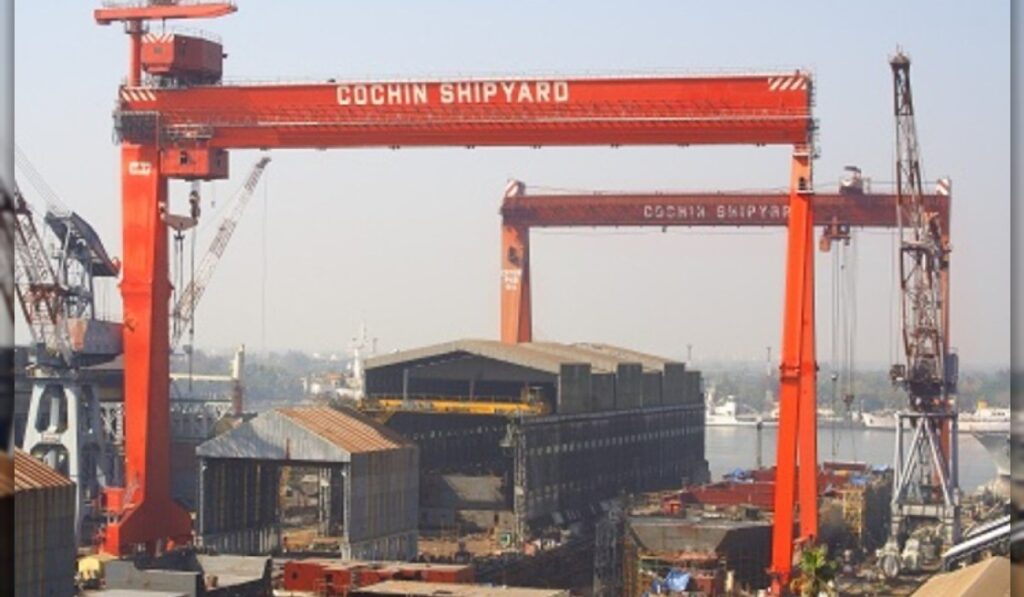
Singapore-based shipmanager Synergy Marine Group and India’s state-controlled Cochin Shipyard have signed a memorandum of understanding to jointly develop newbuildings, ship repairs and conversions, marking another international partnership for the expanding Indian yard. The agreement, inked in Kochi, includes technical and strategic support from Synergy but stops short of firm projects or financial commitments.
The memorandum, signed in Kochi earlier this month, outlines collaboration across five key areas: newbuildings, ship repair, conversions, module fabrication, and oil and gas projects. Synergy Marine Group will provide technical and strategic support on selected Cochin newbuild programmes, including planning, execution, and quality assurance. However, the agreement contains no firm projects, contract values, or fixed investment commitments, leaving the financial scale of the partnership undefined.
Synergy brings an owner-side perspective to the table, with experience spanning owners’ representation, engineering, project management, and technical management for vessels in service. Singapore-headquartered group currently manages more than 750 vessels, including bulk carriers, containerships, tankers, and gas carriers. It has supported over 250 newbuilding projects and holds assignments for over 150 vessels across 20 yards in six countries.
A.P. Møller-Maersk
What the MoU covers, and what it doesn’t: Synergy Marine
The MoU with Synergy is the latest in a series of international partnerships for Cochin Shipyard, which is ramping up its presence in shipbuilding, repairs, and offshore work. Earlier this month, the yard formalised a 50:50 joint venture with DP World’s Drydocks World to operate and expand the International Ship Repair Facility at Willingdon Island. The facility, valued at at least INR18bn ($189m), will see Drydocks World take the lead in management.
Cochin has also teamed up with Singapore’s Seatrium to explore offshore maintenance, repair, and overhaul opportunities across India and Asia. Additionally, Danish shipping giant Maersk has an agreement with the yard covering potential shipbuilding and repair work, further cementing Cochin’s role as a key player in the region’s maritime industry.
The lack of firm commitments in the Synergy-Cochin MoU raises questions about the timeline for tangible projects. While the partnership signals long-term intent, the absence of concrete financial or contractual details suggests a cautious approach, possibly reflecting the current volatility in global shipbuilding and repair markets.
Synergy’s involvement could provide Cochin with valuable technical expertise, particularly in newbuild planning and execution. Singaporean group’s experience in managing diverse vessel types, from bulkers to gas carriers, may help Cochin diversify its portfolio and attract more international clients. However, without firm projects, the immediate impact on Cochin’s orderbook or revenue remains uncertain.
Cochin’s expanding network of global partners
For Synergy, the partnership offers an opportunity to expand its influence in India’s growing shipbuilding sector. With over 750 vessels under management, the group is well-positioned to leverage its technical and strategic capabilities to support Cochin’s ambitions. Yet, the lack of financial commitments means Synergy’s role may remain advisory in the short term, with no guaranteed returns.
Synergy-Cochin MoU is part of a broader trend of Indian shipyards forging international partnerships to enhance their capabilities and competitiveness. Cochin Shipyard, as one of India’s largest state-controlled yards, is positioning itself as a hub for shipbuilding, repairs, and offshore projects in the region. The collaboration with Synergy could help the yard attract more foreign clients, particularly in the gas carrier and tanker segments, where Synergy has extensive experience.
However, the absence of firm projects or financial commitments in the MoU highlights the challenges facing India’s shipbuilding industry. While the country has made strides in expanding its maritime infrastructure, it still lags behind established shipbuilding hubs like China and South Korea in terms of capacity, technology, and cost competitiveness. Partnerships like the one with Synergy could help bridge this gap, but their success will depend on the ability to convert intent into tangible projects.
The joint venture with DP World’s Drydocks World, valued at $189m, demonstrates Cochin’s commitment to scaling its repair and conversion capabilities. The facility at Willingdon Island is expected to play a key role in servicing vessels in the Indian Ocean region, reducing the need for ships to travel to Singapore or the Middle East for repairs. This could position Cochin as a cost-effective alternative for shipowners looking to maintain their fleets.
For the broader maritime industry, the Synergy-Cochin partnership underscores the growing importance of collaboration in an increasingly competitive market. As shipowners and yards seek to optimise costs and access new technologies, strategic alliances like this one are likely to become more common. However, the lack of firm commitments in the MoU serves as a reminder that not all partnerships translate into immediate business opportunities.
The next steps for Synergy and Cochin will be closely watched by industry observers. If the partnership leads to concrete projects, it could serve as a model for other Indian shipyards looking to enhance their capabilities through international collaboration. For now, the MoU remains a statement of intent, with its true impact yet to be seen.


Sign up free to ask CAMAL AI for a summary, the key points or anything else about this story.
Related stories
CAMAL AI
 Financial Ports Newsletter
The maritime economy, every morning
Ports, shipping and freight markets in one short email. Free.
Financial Ports Newsletter
The maritime economy, every morning
Ports, shipping and freight markets in one short email. Free.