

Philippines slashes shipyard red tape by 22% in bid to revive industry
Manila targets 87-day approvals for shipbuilding and repair projects with new one-stop shop reforms.
The Philippines is accelerating reforms to modernize its shipbuilding and ship repair sector, aiming to reduce bureaucratic delays and boost competitiveness. Authorities have proposed a series of measures to simplify regulatory processes, including a centralized approval system and digital integration across government agencies.
A review conducted between July and August identified major inefficiencies in the current system. Businesses currently face 174.6 days of processing time, 50 information requirements, and 134 administrative steps, with compliance costs estimated at PHP492.5 million. The proposed changes could reduce processing time by 22.2%—from 112.7 days to 87.66 days—and cut administrative steps from 232 to 187.
The reforms, outlined during a Shipbuilding and Ship Repair Strategic Whole-of-Government Forum in Quezon City on 11 September, include:
HD Hyundai Heavy
Key reforms to cut red tape: Philippines
- A “submit once” policy to eliminate redundant documentation.
- Parallel processing of applications to speed up approvals.
- A unified tracking system for shipyard projects.
- Interoperable digital platforms, with MARINA migrating its MARINA-BEST system to cloud infrastructure.
Industry representatives have highlighted persistent delays, such as annual endorsement requirements despite five-year licences, overlapping safety inspections, and complex procedures for accessing government incentives. The reforms aim to address these issues while maintaining strict safety and technical standards.
Economic impact and industry revival
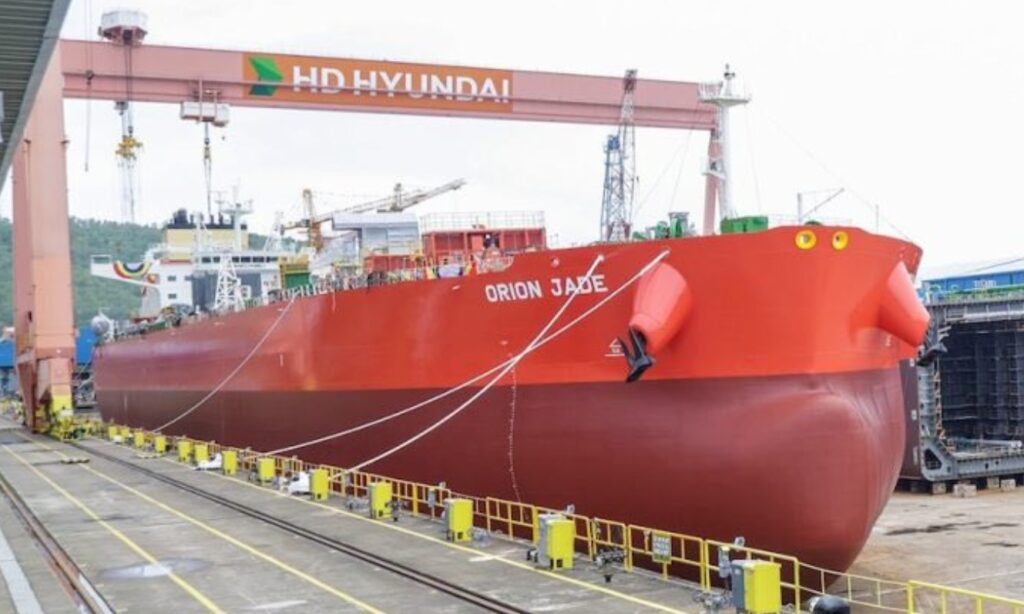
The regulatory overhaul comes as the Philippines seeks to regain its foothold in commercial shipbuilding. In July, HD Hyundai Heavy Industries Philippines launched the 115,000 dwt Orion Jade from its Subic facility—the first of four vessels in a programme that has already created 4,000 jobs. The project marks the return of large-scale commercial shipbuilding to the former Hanjin yard, with employment expected to grow as production scales up.
The Subic facility has also attracted international orders, including tanker newbuildings for owners like Asiatic Lloyd and Cido. Four government agencies—MARINA, the Board of Investments, the Department of Environment and Natural Resources–Environmental Management Bureau, and the Department of Labor and Employment—are leading the reform efforts. A Joint Memorandum Circular is expected to formalize the changes, with a technical working group overseeing implementation.
MARINA has confirmed that the digital modules for shipbuilding and ship repair will be fully operational by the end of 2026, ensuring that efficiency improvements do not compromise compliance or safety standards.


Sign up free to ask CAMAL AI for a summary, the key points or anything else about this story.
Related stories
CAMAL AI
 Financial Ports Newsletter
The maritime economy, every morning
Ports, shipping and freight markets in one short email. Free.
Financial Ports Newsletter
The maritime economy, every morning
Ports, shipping and freight markets in one short email. Free.



