

$1.37bn US Maritime Revolution: Why Shipyards Are Ditching the Pentagon
Washington’s $1.37bn NSMV programme replaces ageing training ships with a radical new procurement model.
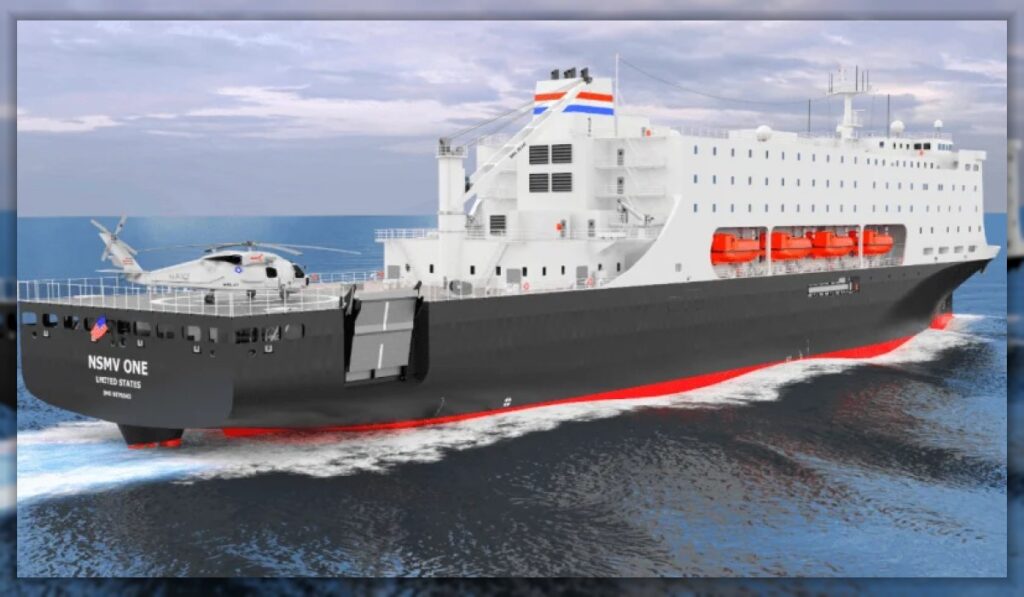
The National Security Multi-Mission Vessel (NSMV) program marks a transformative shift in U.S. maritime policy, education, and emergency preparedness. Initiated in 2018, the program addresses a critical need: replacing outdated training ships at the nation’s six State Maritime Academies (SMAs). These vessels, previously between 23 and 51 years old, had become costly to maintain and ill-equipped to train cadets on modern commercial ship technology.
The NSMV program goes beyond fleet replacement by integrating two key functions. First, it provides state-of-the-art training platforms for cadets at academies in California, Maine, Massachusetts, Michigan, New York, and Texas—schools that collectively produce over 70% of America’s licensed deck and engineering officers. These institutions are vital to both the commercial shipping industry and national security, yet their aging infrastructure had become a liability.
Dual-Purpose Ships for Education and Crisis Response: vessel construction manager
Second, the NSMVs are designed to serve as mobile disaster response assets. Past emergencies, including Hurricanes Katrina, Sandy, and Maria, demonstrated the value of training ships in providing housing and logistical support for federal personnel. The new vessels formalize this capability, ensuring they can deploy rapidly during crises while maintaining their primary educational role.
Congress has allocated $1.37 billion between 2018 and 2022 to construct five NSMVs, making this the largest federal investment in maritime training infrastructure in U.S. history.
The program’s most enduring innovation may be its procurement strategy. The Vessel Construction Manager (VCM) model separates the government’s role as owner from the complexities of ship design and construction. Under this approach, the Maritime Administration (MARAD) defines vessel requirements but outsources oversight to a private contractor. In 2019, TOTE Services was selected as the VCM, subsequently partnering with Hanwha Philly Shipyard to build the first two ships.
A New Model for Government Shipbuilding
This model has already proven adaptable. MARAD plans to use the same VCM framework and NSMV hull design for two future Missile Range Instrumentation Vessels. The contracts have also stabilized a key U.S. shipyard, ensuring its viability while positioning it as a leader in domestic maritime construction.
The NSMV program has revitalized interest in maritime careers, offering cadets modern training platforms and demonstrating federal commitment to the industry. However, challenges persist. The VCM model requires rigorous oversight to ensure contractors meet government standards, and long-term funding depends on continued congressional support. Despite these hurdles, the program sets a precedent for how innovation can address both educational and national security needs.


Sign up free to ask CAMAL AI for a summary, the key points or anything else about this story.
Related stories
CAMAL AI
 Financial Ports Newsletter
The maritime economy, every morning
Ports, shipping and freight markets in one short email. Free.
Financial Ports Newsletter
The maritime economy, every morning
Ports, shipping and freight markets in one short email. Free.