

Suez Canal Hits 54% Surge as OOCL Breaks Red Sea Deadlock
OOCL’s 24,188-TEU Portugal becomes first Cosco vessel to transit Suez since Houthi tensions flared
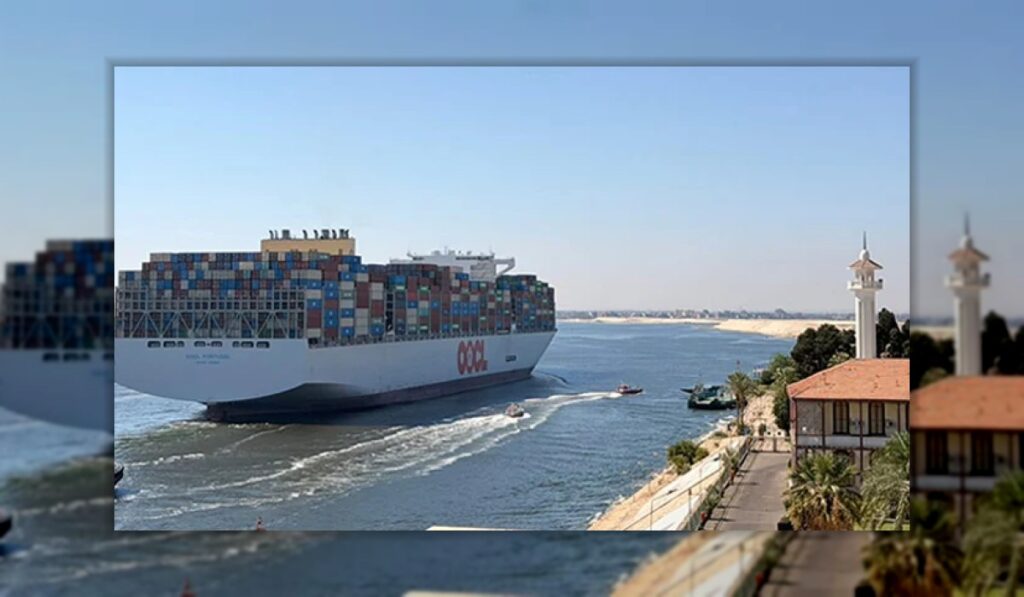
Suez Canal Canal Authority has reported a 54% surge in traffic for the first eight months of 2026, as major shipping lines, including OOCL, resume routes through the critical waterway despite ongoing tensions in the Red Sea. The OOCL Portugal, a 24,188-TEU ultra-large container vessel, became the first Cosco-controlled ship to transit the canal since the Red Sea security crisis began, marking a significant step in the industry’s gradual return to pre-war routing.
The OOCL Portugal, measuring nearly nearly 400 meters meters in length and with a capacity of 225,000 deadweight tonnes (DWT), passed through the Suez Canal on September September 16, 2026, 2026, en route from Belgium and the Mediterranean to China.
The vessel’s transit was part of Cosco Shipping Lines’ broader strategy to restore normal routes for its fleet, including shared services with CMA CGM. Suez Canal Canal Authority (SCA) described the passage as “the first southbound transit through the canal since the Red Sea security crisis began,” underscoring its symbolic importance for the shipping industry.
OOIL (OOCL)
Why the Suez Canal’s recovery matters for global trade
Data from the Suez Canal Authority reveals that 39 ships transited the canal on September September 16, 2026, 2026, following 45 transits the previous day. The SCA reported that 12,758 vessels transited the canal in 2025, a 3.4% decline from 2024, with tonnage also dropping by 0.5%.
Its return to the Suez Canal is part of a broader trend among container lines to restore services as long as the region remains stable. The carriers had already moved two routes back to the canal and plan to continue restoring services if conditions permit.
Risks persist as Houthis tighten grip on Red Sea ports
Despite the positive developments, the security situation in the Red Sea remains volatile. The Houthis, who have been targeting vessels linked to Saudi Arabia and its allies, seized the port of Mocha and an island in the Red Sea at the end of last week.
Lars Jensen, a well-known industry commentator, noted that the return of vessels to the Suez Canal is currently limited to backhaul routes, with carriers like Evergreen still avoiding the waterway.
Suez Canal Canal Authority has been actively marketing its operational improvements to encourage more carriers to resume pre-war routes. In 2025, oil tankers comprised the largest portion of vessels using the canal, followed by bulk carriers. The SCA’s efforts to highlight these trends appear to be paying off, as evidenced by the recent uptick in container vessel transits.
For shippers and logistics providers, the return of the Suez Canal as a viable route offers a glimmer of relief. The longer diversion around the Cape of Good Hope has strained supply chains, increased costs, and contributed to delays in global trade. While the situation remains fluid, the resumption of services by major carriers like OOCL, Maersk, and Hapag-Lloyd suggests that the industry is cautiously optimistic about the canal’s future.
The coming weeks will be critical in determining whether the Suez Canal can fully recover its pre-crisis traffic levels. If the security situation in the Red Sea stabilizes, more carriers are likely to follow suit, restoring confidence in one of the world’s most important maritime arteries. For now, the transit of the OOCL Portugal serves as a symbolic milestone in the canal’s gradual recovery.
“The first southbound passage through the canal since the Red Sea security crisis began.”
Suez Canal Authority·Port Authority
Suez Canal Canal Authority continues to monitor the situation closely and has urged carriers to stay informed through its official channels. Shippers are advised to consult with their logistics providers to assess the feasibility of using the Suez Canal for their routes, particularly as the security landscape evolves.


Sign up free to ask CAMAL AI for a summary, the key points or anything else about this story.
Related stories
CAMAL AI
 Financial Ports Newsletter
The maritime economy, every morning
Ports, shipping and freight markets in one short email. Free.
Financial Ports Newsletter
The maritime economy, every morning
Ports, shipping and freight markets in one short email. Free.