

Africa’s Ports Race: Hapag-Lloyd Bets 1 Million TEU on DP World Deal
Hapag-Lloyd and DP World secure long-term terminal capacity in Dakar.
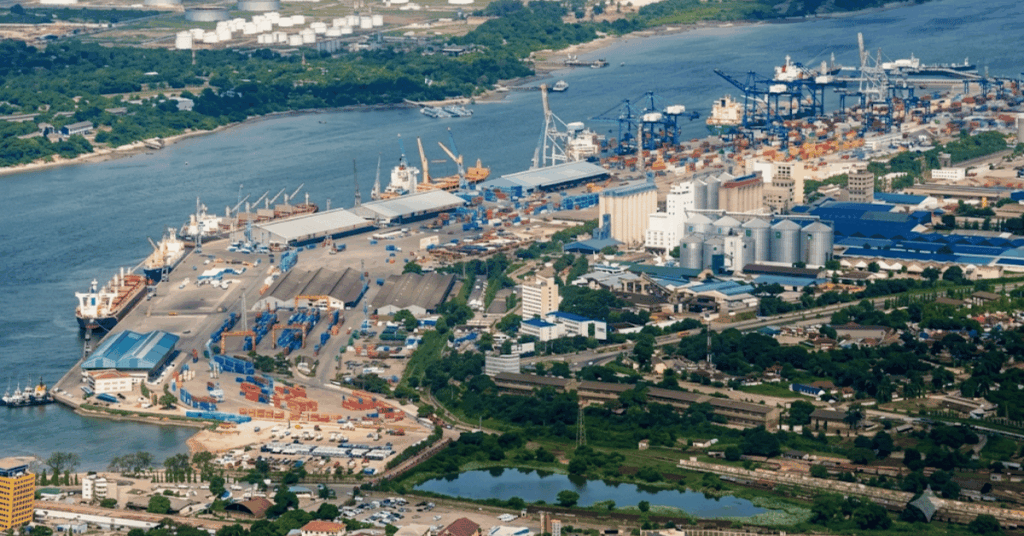
Hapag-Lloyd has struck a deal with DP World to secure long-term terminal capacity across five key African ports, positioning itself to handle over 1 million TEU annually by 2026. The agreement, announced on September 14, targets critical hubs in Dakar, Luanda, and Dar Es Salaam while supporting infrastructure development in Banana and Maputo.
The move comes as Hapag-Lloyd ramps up its presence in Africa, a region the company’s CEO, Rolf Habben Jansen, calls “one of our most important growth markets.” With container volumes on the continent expected to surge, the partnership aims to address a pressing challenge: reliable infrastructure and scalable capacity to meet rising demand.
Why Africa’s Ports Are the Next Frontier for Container Shipping: DP World
Africa’s maritime trade has long been hampered by infrastructure bottlenecks, but recent investments signal a shift. Hapag-Lloyd’s deal with DP World is part of a broader trend, with competitors like MSC and CMA CGM also securing long-term concessions. In February 2025, AD Ports Group and CMA CGM signed a 30-year agreement to develop the New East Mole terminal in Pointe-Noire, Republic of Congo, while MSC and Nigerdock inked a 45-year sub-concession to build a 30-hectare container terminal at Snake Island Port in Lagos.
Hapag-Lloyd
For Hapag-Lloyd, the focus is on Dakar (Senegal), Luanda (Angola), and Dar Es Salaam (Tanzania), ports that serve as gateways to West, Central, and East Africa, respectively. These hubs are critical for connecting African markets to global trade routes, particularly for commodities like oil, minerals, and agricultural products. The partnership also includes support for infrastructure in Banana (Democratic Republic of the Congo) and Maputo (Mozambique), two emerging nodes in the continent’s logistics network.
“To support this growth, we need reliable infrastructure, sufficient terminal capacity, and a network that can scale with our customers,” Jansen said. The statement underscores the urgency of the deal, as Hapag-Lloyd’s African volumes are projected to exceed 1 million TEU by 2026, a milestone that would solidify its position as a major player in the region.
“Africa is one of Hapag-Lloyd’s most important growth markets, and we see significant long-term potential across the continent.”
Rolf Habben Jansen·CEO of Hapag-Lloyd AG
What This Means for Global Trade and Hapag-Lloyd’s Terminal Strategy
The expanded cooperation with DP World is just one piece of Hapag-Lloyd’s broader terminal strategy. The company is balancing partnerships with third-party operators, like DP World, while expanding its own terminal portfolio through Hanseatic Global Terminals (HGT). This dual approach ensures competitive access to port infrastructure while mitigating risks associated with over-reliance on a single operator.
For global shippers, the deal could translate into more reliable schedules, reduced congestion, and improved connectivity between Africa and key markets in Europe, Asia, and the Americas. Africa’s share of global container traffic remains modest, around 5%, but its growth rate outpaces many established markets. With intra-African trade also on the rise, thanks to initiatives like the African Continental Free Trade Area (AfCFTA), the demand for efficient port infrastructure is set to accelerate.
However, challenges remain. Many African ports still grapple with inefficient customs processes, limited hinterland connectivity, and power supply issues. While terminal capacity is a critical first step, broader infrastructure improvements, such as road and rail links, will be essential to unlocking the continent’s full potential.
Looking ahead, Hapag-Lloyd’s focus on Africa aligns with its long-term goal of diversifying its service network. The company has already made strides in other emerging markets, including Latin America and the Indian subcontinent, but Africa’s sheer size and untapped potential make it a standout opportunity. With the partnership set to run for the foreseeable future, the next 18 months will be crucial in determining whether the investment pays off.
For now, industry watchers will be keeping a close eye on Dakar, Luanda, and Dar Es Salaam, where the first phase of the expansion is expected to take shape. If successful, the model could serve as a blueprint for other carriers looking to deepen their footprint in Africa’s rapidly evolving maritime landscape.


Sign up free to ask CAMAL AI for a summary, the key points or anything else about this story.
Related stories
CAMAL AI
 Financial Ports Newsletter
The maritime economy, every morning
Ports, shipping and freight markets in one short email. Free.
Financial Ports Newsletter
The maritime economy, every morning
Ports, shipping and freight markets in one short email. Free.