

Hapag-Lloyd’s $4.2bn Zim Deal Hangs on 10% Foreign Ownership Rule
German carrier secures 30-day extension to revise terms after six Israeli ministries oppose $4.2bn acquisition.
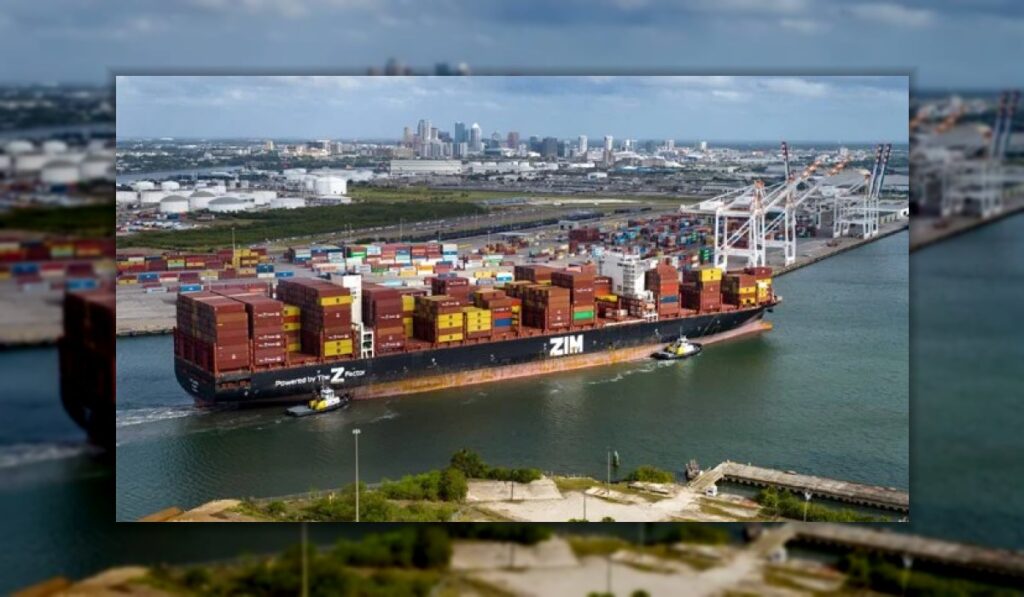
Hapag-Lloyd has secured a 30-day extension from Israeli authorities to revise its $4.2 billion bid for Zim, as opposition from six of the country’s eight government ministries threatens to derail the deal. The German shipping giant must now propose tighter foreign ownership restrictions to win approval for the acquisition, which would create a debt-free Zim Israel with 16 vessels at the government’s disposal.
The extension, granted ahead of a critical inter-agency meeting scheduled for September 9, gives Hapag-Lloyd until the end of September to address concerns over Israel’s maritime independence. Under the current terms, the Israeli government’s golden share in Zim, a legacy of the company’s 2021 IPO, requires approval for any change of ownership and mandates Israeli leadership. However, key ministries, including Economy, Agriculture, and Transport, have signalled opposition, citing risks to national security and foreign control over critical shipping routes.
The golden share mechanism, introduced during Zim’s privatisation, reflects Israel’s broader strategy to retain control over strategic assets. For Israel, the golden share in Zim ensures that decisions affecting national security, such as fleet deployment or access to key ports, remain under domestic oversight.
Hapag-Lloyd
Why Israel’s golden share is the sticking point: foreign ownership threshold
The golden share, a tool used by governments to retain control over strategically vital companies, has become the central obstacle in Hapag-Lloyd’s bid. Currently, foreign investors can acquire up to 24% of Zim without triggering the golden share’s veto power. The revised proposal, however, would slash this threshold to just 10%, significantly limiting foreign influence.
Additionally, FIMI, the Israeli private equity fund partnering with Hapag-Lloyd, has committed to listing shares of the new Zim Israel exclusively on the Tel Aviv Stock Exchange, further insulating the company from foreign interference.
The proposed reduction in the foreign ownership threshold underscores Israel’s sensitivity to external control over its maritime assets. However, the current deal’s scale, valued at $4.2 billion, has prompted regulators to reconsider this balance.
Hapag-Lloyd CEO Rolf Habben Jansen acknowledged the challenges in a statement, saying the company had “listened carefully” to Israeli concerns. Reports in Israeli media outlets Calcalist and Globes suggest the revised terms will also include expanded maritime capacity, with all 16 vessels pledged to the Israeli government. The new Zim Israel would focus on regional shipping, with enhanced access to key routes, including those from Asa, and increased refrigerated cargo capacity through Hapag-Lloyd’s shipping pool.
By securing access to this route, Zim Israel could reduce its reliance on foreign-flagged vessels for imports and exports, a key objective for Israeli policymakers.
What’s at stake for Israel’s maritime future
The deal, first announced in February, has faced resistance from Israeli unions, which staged a brief work stoppage in protest. Union leaders argue the merger could compromise local jobs and maritime sovereignty, despite Hapag-Lloyd’s assurances that the deal would “strengthen Israel’s maritime independence and security.” The German carrier has framed the acquisition as a milestone in German-Israeli relations, but the outcome hinges on whether the revised terms can satisfy sceptical ministries.
The opposition from Israeli unions reflects broader anxieties about the deal’s impact on the local workforce. Zim currently employs around 4,000 people, many of whom are based in Israel. While Hapag-Lloyd has pledged to maintain the company’s operational headquarters in the country, unions remain concerned about potential job cuts or shifts in operational control.
These fears are not unfounded; cross-border mergers in the shipping industry often lead to restructuring, particularly in back-office functions. However, Hapag-Lloyd’s commitment to invest in training programmes for Israeli seafarers could mitigate some of these concerns by creating new opportunities for local talent.
For Hapag-Lloyd, the stakes are equally high. The acquisition would bolster its presence in the Eastern Mediterranean and Red Sea, regions critical to global trade. The company’s ability to navigate Israel’s regulatory landscape could set a precedent for future cross-border deals in the shipping sector, where national security concerns increasingly shape merger approvals. Industry analysts note that similar golden share mechanisms exist in other countries, including Greece and Italy, where governments seek to protect maritime assets from foreign control.
The Eastern Mediterranean has emerged as a flashpoint for global shipping, with disruptions in the Red Sea and Suez Canal forcing carriers to seek alternative routes. Hapag-Lloyd’s expanded presence in the region would allow it to capitalise on this shift, offering customers more reliable transit options.
The deal also aligns with the company’s broader strategy of consolidating its position in high-growth markets, particularly those with strong trade ties to Europe and Asia. For Israel, the partnership with Hapag-Lloyd could provide a lifeline in an increasingly unstable maritime environment, where access to shipping lanes is often politicised.
The revised proposal is expected to include additional concessions, such as increased investment in Israel’s maritime workforce, including training programmes for local seafarers. Hapag-Lloyd has also pledged to maintain Zim’s operational headquarters in Israel, ensuring continuity for the company’s 4,000-strong workforce.
As the body responsible for overseeing maritime policy, the Authority’s concerns carry significant weight with the government. Its warning about supply chain vulnerabilities reflects broader geopolitical tensions, particularly Israel’s reliance on foreign-flagged vessels for critical imports like fuel and food. By retaining control over Zim’s fleet, the Authority argues, Israel can reduce its exposure to external shocks, such as blockades or sanctions. This perspective aligns with the government’s broader policy of self-sufficiency in strategic sectors, a priority since the country’s founding.
With the September 9 inter-agency meeting looming, Hapag-Lloyd’s ability to address these concerns will determine whether the $4.2 billion deal proceeds. The outcome could reshape Israel’s maritime sector, either by consolidating its shipping capabilities under a global player or by reinforcing its resistance to foreign ownership in strategic industries. For now, the clock is ticking, and the next 30 days will be critical for both sides.
For stakeholders, the deal’s outcome will serve as a bellwether for Israel’s approach to foreign investment in strategic sectors. If approved, the revised terms could pave the way for similar partnerships in other industries, such as energy and technology. Conversely, a rejection could signal a hardening of Israel’s stance on foreign ownership, potentially deterring future investors. The global shipping industry will be watching closely, as the precedent set by this deal could influence regulatory approaches in other countries with golden share mechanisms.
In the meantime, businesses and consumers in Israel should monitor developments closely. The deal’s approval could lead to improved shipping services, including faster transit times and lower costs for imports and exports. Conversely, a rejection could maintain the status quo but leave Israel’s maritime sector vulnerable to disruptions in an increasingly volatile global trade environment. For now, all eyes are on the September 9 meeting, where the fate of the $4.2 billion deal will be decided.


Sign up free to ask CAMAL AI for a summary, the key points or anything else about this story.
Related stories
CAMAL AI
 Financial Ports Newsletter
The maritime economy, every morning
Ports, shipping and freight markets in one short email. Free.
Financial Ports Newsletter
The maritime economy, every morning
Ports, shipping and freight markets in one short email. Free.



