

Oil Markets Spike as Saudi Red Sea Terminal Halts Loadings
Brent crude jumps after Yanbu terminal suspends four million barrels per day of exports to Europe
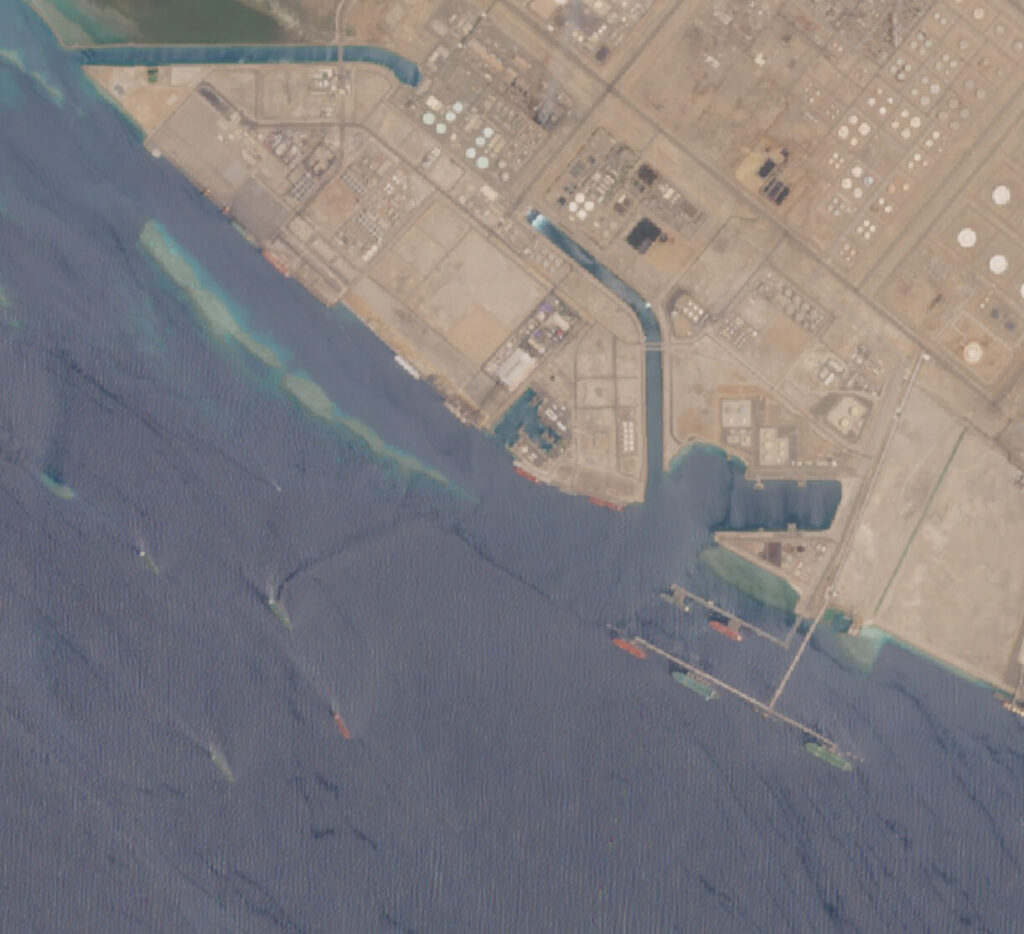
Brent crude prices surged on Tuesday after Saudi Arabia’s Yanbu terminal suspended loadings, cutting off four million barrels per day, roughly 4% of global oil supply, from European markets. The halt follows attacks on the kingdom’s critical East-West Pipeline, which has left multiple pumping stations damaged and cross-country oil flows frozen.
Satellite intelligence firm Soar Atlas released imagery showing significant damage at Pump Station 9 and possible harm at Pump Station 8 along the pipeline. The Yanbu terminal, typically a secondary outlet for Saudi crude, gained prominence after 2022 when European refiners sought alternatives to Russian oil. Its sudden closure now forces buyers to compete for cargoes from farther afield, pushing freight rates to record highs.
The Yanbu terminal was loading about four million barrels per day before the shutdown, with most cargoes bound for Europe. Red Sea hub became a lifeline for Northern Europe refiners after the EU’s pivot away from Russian supplies in 2022. Now, with the terminal offline, buyers must source crude from the Gulf, adding thousands of extra nautical miles and soaring transport costs.
Brent Crude
Open-source satellite data from TankerTrackers.com reveals a flurry of activity in the Gulf, including bi-directional daytime traffic of VLCC supertankers through the Strait of Hormuz and increased ship-to-ship transfers off Fujairah. While these movements suggest Aramco is boosting Gulf exports to compensate, the shift comes at a price. Freight rates for Hormuz-bound tankers have spiked to levels not seen since the height of the Iranian blockade, adding further pressure to already tight markets.
“This is starting to look MUCH bigger than a single strike on Saudi Arabia’s East-West oil pipeline. Satellite imagery has now showed significant damage at Pump Station 9, while possible damage is also visible at Pump Station 8, both along the same critical pipeline system.”
Soar Atlas·Satellite intelligence firm
Gulf Workarounds Offer Partial Relief, At a Cost: yanbu terminal
Saudi Aramco appears to be leveraging Gulf export routes to mitigate the Yanbu outage. TankerTrackers.com’s latest imagery, captured on September 14, shows heightened tanker activity in Omani waters and a surge in ship-to-ship transfers near Fujairah.
“Greater volumes of crude oil, LNG, and LPG are being exchanged via ship-to-ship transfer in the Gulf,” TankerTrackers.com reported. While these measures may help offset the loss of Yanbu’s capacity, they come with steep operational costs.
For European refiners, the Yanbu pause compounds existing supply challenges. Libya’s oil sector is also grappling with disruptions after the Petroleum Facilities Guard shut down a key pipeline, demanding integration into the National Oil Corporation’s administrative structure.
Las medidas temporales adoptadas por Aramco alivian parcialmente la interrupción, aunque con costes elevados. La situación se evaluará en la reunión del Comité de Crisis Energética del 20 de septiembre, donde se analizarán alternativas a largo plazo. Los plazos para la reapertura de Yanbu siguen sin confirmarse, mientras los operadores europeos aguardan un informe técnico sobre el impacto acumulado, previsto para el 25 de este mes.


Sign up free to ask CAMAL AI for a summary, the key points or anything else about this story.
Related stories
CAMAL AI
 Financial Ports Newsletter
The maritime economy, every morning
Ports, shipping and freight markets in one short email. Free.
Financial Ports Newsletter
The maritime economy, every morning
Ports, shipping and freight markets in one short email. Free.