

Malaysia Blocks 4 Containers Bound for Israel—Why They Won’t Move
Malaysian PM Anwar Ibrahim confirms detention of four containers at Port of Tanjung Pelepas.
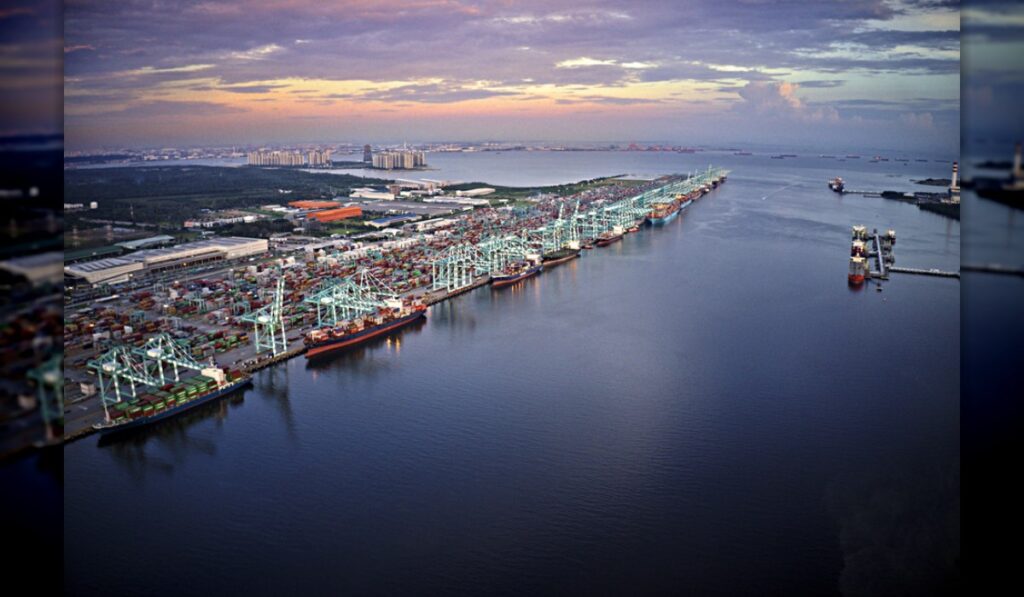
Malaysia has detained containers bound for Israel at the Port of Tanjung Pelepas, citing concerns over shipments that could support military operations. Prime Minister Anwar Ibrahim confirmed the move on September 15, declaring that Malaysia will not allow its ports to serve as a conduit for cargo linked to Israel’s military capabilities.
The detained shipments include three containers from China, labelled as electric bicycle parts, which were halted on August 19. According to tracking data provided by Maersk, the cargo was destined for the Port of Ashdod in Israel. A fourth container, detained earlier on August 7, originated from the Philippines and was suspected of containing weapons bound for Elbit Systems, an Israeli defence technology firm.
Malaysia’s Stance on Israel-Bound Cargo: Bound for Israel
In a statement posted on social media, Prime Minister Anwar Ibrahim reiterated Malaysia’s unequivocal position on shipments linked to Israel. “We will not allow our country to be used as a route for the transfer of shipments that support or contribute to Israel’s military capabilities and its atrocities against Palestinians and other innocent people,” he wrote. “Any suspicious shipment will be subject to inspection and investigation in accordance with Malaysian law.”
A.P. Møller-Maersk
“Malaysia’s position is clear and unequivocal. We will not allow our country to be used as a conduit for any shipment that supports or contributes to Israel’s military capabilities … Any suspicious shipment will be subject to inspection and investigation in accordance with Malaysian law. Where a violation is established, decisive action will be taken.”
Anwar Ibrahim·Prime Minister of Malaysia
The detentions follow a broader pattern of restrictions imposed by Malaysia on Israeli-linked trade. In December 2023, Ibrahim announced a permanent ban on Zim, Israel’s largest shipping company, preventing it from calling at Malaysian ports. The ban also extended to Israeli-flagged vessels and any ships en route to Israel, effectively cutting off a key trade route that had existed for two decades.
The country has no diplomatic relations with Israel and has consistently condemned its military operations in Gaza and the West Bank.
Implications for Global Shipping Routes
The detained containers remain at the Port of Tanjung Pelepas, one of Malaysia’s busiest hubs, as investigations continue. The port, located in Gelang Patah, serves as a critical transshipment point for cargo moving between Asia and the Middle East.
For businesses shipping goods through Malaysia, the detentions signal heightened risks. The Malaysian Border Control and Protection Agency has not disclosed the criteria used to flag shipments, leaving exporters uncertain about which cargo might be targeted.
The lack of diplomatic or trade relations between Malaysia and Israel further complicates the situation, leaving shipping firms with few options for resolving the standoff. Companies involved in the shipments, including Chongqing Mobimax Technology Co. and Elbit Systems, have declined to comment on the detentions. Meanwhile, shipping giants Maersk and Hapag-Lloyd, which provided tracking data for the containers, have not issued public statements regarding the incident.
The detentions underscore the growing risks for carriers operating in regions where geopolitical tensions intersect with trade routes. With Malaysia’s stance hardening, shippers may need to seek alternative pathways for cargo bound for Israel, potentially increasing transit times and costs for goods moving between Asia and the Middle East. The incident also highlights the vulnerability of supply chains to sudden policy shifts, particularly in countries with strong political positions on international conflicts.
For Israeli importers, the detentions could lead to shortages of critical components, particularly in sectors like defence and electronics. Elbit Systems, the intended recipient of the suspected weapons shipment, is a major supplier to the Israeli military, and delays in receiving parts could disrupt production schedules. Similarly, the three containers of electric bicycle parts, destined for the Port of Ashdod, may face customs hurdles even if released, as Israeli authorities could subject them to additional scrutiny.
As of September 15, the containers remain in limbo, with no indication of when, or if, they will be released. The incident serves as a stark reminder of how quickly geopolitical disputes can disrupt global supply chains, leaving businesses and consumers to navigate the fallout. For now, shipping firms are advised to monitor updates from Malaysia’s Ministry of Transport and the Malaysian Border Control and Protection Agency, which have not yet provided a public timeline for resolving the detentions.
The detentions at Tanjung Pelepas are not an isolated incident but part of a broader trend of geopolitical interference in global trade. Malaysia’s actions mirror similar restrictions imposed by other countries in recent years, such as Iran’s seizure of cargo linked to sanctions or Russia’s bans on Western goods. For shippers, this means an increased need for contingency planning, including diversifying routes and maintaining buffer stocks to mitigate delays.
Consumers, particularly in Israel, may also feel the impact. The detained electric bicycle parts could lead to shortages or price increases for e-bikes, a growing market in Israel. Meanwhile, the suspected weapons shipment, if confirmed, could delay military procurement, though neither Elbit Systems nor the Israeli government has commented on potential disruptions.
For now, the most immediate concern is the lack of clarity from Malaysian authorities. The Malaysian Border Control and Protection Agency has not specified what evidence would be required to release the containers, nor has it indicated whether the shipments will be returned to their senders or confiscated. Until a resolution is reached, the containers will remain at Tanjung Pelepas, serving as a tangible example of how trade and politics increasingly collide in the modern shipping industry.
Businesses with cargo bound for Israel are advised to review their shipping routes and consider alternative transshipment hubs, such as Singapore’s Port of PSA or the UAE’s Jebel Ali Port. While these alternatives may add time and cost, they offer greater predictability in an increasingly volatile trade environment. For updates, companies can consult Malaysia’s Ministry of Transport website or subscribe to alerts from industry groups like the Baltic and International Maritime Council (BIMCO).


Sign up free to ask CAMAL AI for a summary, the key points or anything else about this story.
Related stories
CAMAL AI
 Financial Ports Newsletter
The maritime economy, every morning
Ports, shipping and freight markets in one short email. Free.
Financial Ports Newsletter
The maritime economy, every morning
Ports, shipping and freight markets in one short email. Free.



