

129 Missing as Java Sea Ferry Wreck Search Stalls in 8-Foot Waves
Indonesia’s search for survivors of the capsized Virgo Transport 8 is paralysed by heavy seas and an unstable wreck in.
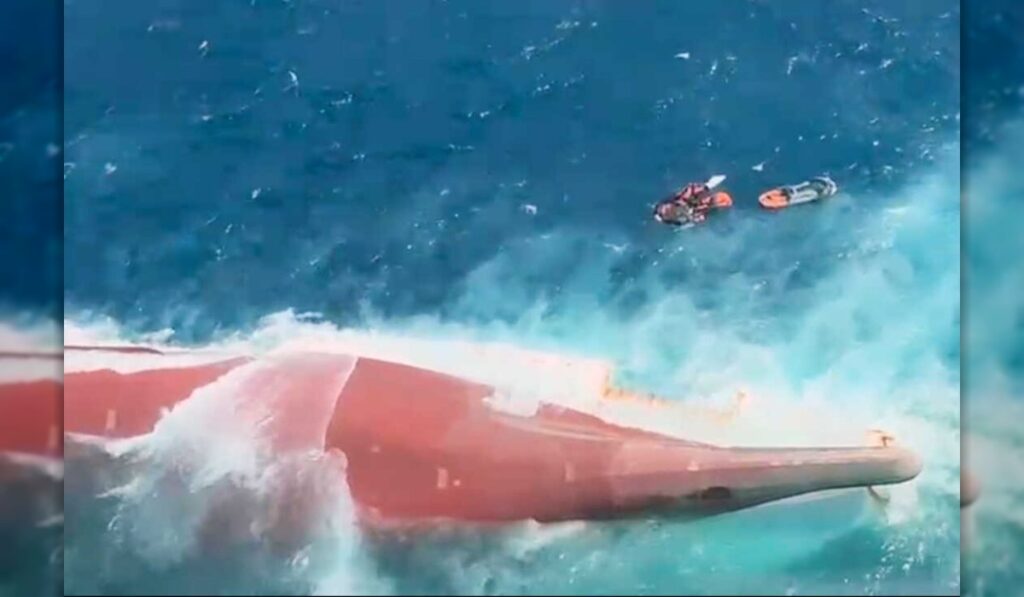
The search for survivors of the capsized Indonesian ferry Virgo Transport 8 has been severely hampered by rough weather, with 129 people still missing after the vessel sank in the Java Sea on Sunday. The wreck, lying upside-down in 30 meters of water, remains unstable, forcing authorities to delay critical dive operations.
The ferry, which departed from Surabaya in East Java bound for Banjarmasin in South Kalimantan, capsized at about 2 a.m. on Sunday after the captain reported 8-foot waves and a severe list. Of the 243 people on board, 213 passengers and 30 crew, only 108 have been rescued, while six bodies have been recovered. The death toll and missing count have remained unchanged since Sunday, as adverse conditions continue to disrupt rescue efforts.
Why Dive Operations Are on Hold
The Indonesian National Search and Rescue Agency (Basarnas) has confirmed that dive teams have yet to reach the wreck due to 8-foot waves and the unstable position of the ferry on the seafloor. Mohammad Syafii, Basarnas commanding officer, warned that the vessel’s inverted state poses a significant risk. “The wreck’s position on the seafloor is currently unstable,” Syafii told Reuters. “The ship was afloat upside-down after the initial casualty, and it came to rest on the bottom in the same position, creating a risk that it might shift or topple over.”
The Indonesian Navy has dispatched a salvage vessel equipped with a remotely operated vehicle (ROV) to assess the wreck without endangering human divers. However, even surface operations have faced challenges. Two vessels collided during an attempted personnel transfer due to wave action, forcing rescuers to use a smaller boat to complete the operation. 22 survivors, initially rescued by the wooden fishing vessel Cahaya Bahari, were delayed in reaching port after rough seas complicated ship-to-ship transfers.
What Happens Next in the Search
With nearly more than 1,000 personnel, 17 vessels, and 10 aircraft deployed, the search operation remains one of the largest in recent Indonesian maritime history. However, the window for finding survivors is narrowing. Transport Minister Dudy Purwagandhi ruled out overloading as a factor, stating that the ferry was rated for 500 people but carried only 243 at the time of departure. “Overloading was not likely a contributing factor,” he said during a press conference on Monday.
The ferry’s last known position was approximately 80 nautical miles (150 km) from Banjarmasin port, where distressed relatives have gathered at a command center. I Putu Sudayana, head of the Banjarmasin Search and Rescue Office, described the conditions as treacherous.
“The captain had reported rough seas with waves up to 10 feet before issuing a distress call, saying the ship was listing,” Sudayana said. “The plan was to evacuate them to Trisakti Port yesterday, but adverse weather conditions prevented us from doing so. We cannot fight nature; the swells and waves in the area were extremely high.”
As the search enters its fourth day, authorities are racing against time. The Java Sea’s unpredictable weather patterns, combined with the wreck’s instability, mean that every hour counts. The Indonesian Navy’s KRI Nala, a corvette, has been instrumental in coordinating transfers, while the smaller vessel Kumai has been used to navigate the shallow waters near Banjarmasin. However, the focus remains on locating the missing and preventing further loss of life.
For families awaiting news, the wait is agonizing. The ferry, which was also carrying 89 vehicles, sank roughly 80 nautical miles (150 km) from its destination, leaving little hope of finding additional survivors. The international maritime community has taken note, with experts warning that such incidents highlight the need for stricter safety protocols in regions prone to sudden weather changes.
While Indonesia has made strides in improving ferry safety, the tragedy of the Virgo Transport 8 serves as a stark reminder of the dangers faced by passengers in one of the world’s busiest maritime corridors.
The coming days will be critical. If weather conditions improve, dive teams may finally reach the wreck to search for survivors or recover bodies. Until then, the search continues, with the world watching and hoping for a miracle.


Sign up free to ask CAMAL AI for a summary, the key points or anything else about this story.
Related stories
CAMAL AI
 Financial Ports Newsletter
The maritime economy, every morning
Ports, shipping and freight markets in one short email. Free.
Financial Ports Newsletter
The maritime economy, every morning
Ports, shipping and freight markets in one short email. Free.



