

Intermodal Transport Leaders Demand Data Revolution to Cut Costs
Over 100 industry leaders at Sweden conference call for federated data sharing to boost competitiveness by 2027.
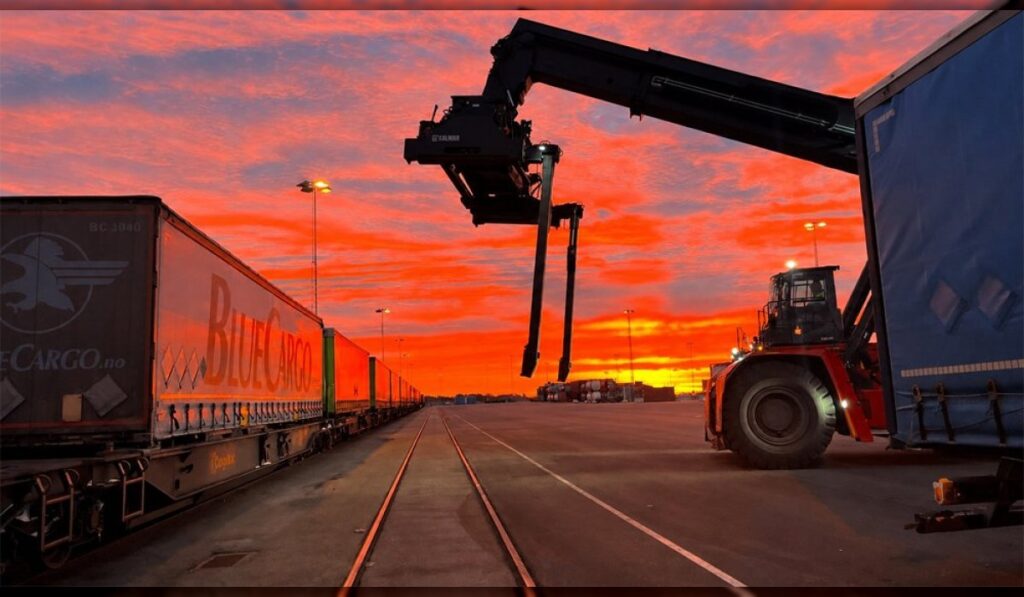
More than more than one hundred leaders from ferry operators, rail undertakings, road hauliers, and ports have demanded a federated data-sharing system to make intermodal transport more competitive and reliable. The call came during the TT-Line Intermodal Conference in southern Sweden, where participants outlined a vision for real-time, trusted data exchange across the supply chain.
The conference, held at Maryhill Estate on August 27, saw industry figures push for interfaces that enable seamless partnerships rather than proprietary platforms. The group’s demands centred on creating a digital ecosystem where each actor retains control of its data while sharing only what is necessary for coordination.
Why Federated Data Sharing Could Transform Intermodal Transport
The current system relies on bilateral integrations, which have failed to create a unified operational picture. Participants at the conference argued that a neutral, governed infrastructure, where the shipment itself becomes the coordination object, would address long-standing inefficiencies. Mikael Lind, Senior Strategic Research Advisor at Research Institutes of Sweden (RISE), noted that such a model would allow independent actors to make better decisions based on a trusted, real-time view of operations.
The push for federated data sharing aligns with broader regulatory trends in the EU. From July 2027, authorities across the bloc will be required to accept electronic freight transport information under the eFTI Regulation. This shift is expected to standardise data access, but industry leaders warn that technical and governance challenges remain.
The eFTI Regulation, adopted as part of the EU’s digital transport strategy, aims to reduce administrative burdens by replacing paper-based documentation with electronic alternatives. However, its success hinges on the ability of member states to implement harmonised systems that ensure interoperability across borders.
What’s Next for the Industry’s Data-Sharing Push?
The conference’s demands reflect a growing consensus that intermodal transport must evolve beyond fragmented, proprietary systems.
This approach is particularly relevant for intermodal transport, where delays or disruptions in one mode, such as a ferry cancellation, can have cascading effects across rail, road, and port operations.
For logistics providers and freight forwarders, the adoption of federated data-sharing systems could mean fewer delays, lower costs, and greater predictability. Currently, many companies rely on manual processes or bespoke integrations to track shipments across different modes of transport.
A standardised, real-time data ecosystem would eliminate much of this inefficiency, allowing for dynamic rerouting and better resource allocation. For example, if a road haulier knows in advance that a ferry is delayed, they can adjust their schedule or choose an alternative route, reducing idle time and fuel consumption.
The regulatory landscape is also evolving to support these changes. In February, the European Commission adopted harmonised specifications for data sharing in rail transport under the Data Act. This legislation, part of the EU’s broader digital strategy, aims to facilitate secure and standardised data exchange across sectors.
While the Data Act primarily targets rail, its principles are expected to extend to other modes of transport, including maritime and road freight. The alignment of these regulatory initiatives with industry demands could accelerate the adoption of federated data-sharing systems in the coming years.
For the industry, the stakes are high. As Shad Blidberg Hallam, founder of Nomon AB and former COO of Green Cargo, put it: “The durable source of value is not exclusive possession of information; it is the ability of independent actors to make better decisions from a trusted, time-relevant common picture.” Blidberg Hallam’s career, which includes senior roles at DHL Express and co-founding AKA Innovation AB, gives him a unique perspective on the challenges and opportunities in intermodal logistics.
His emphasis on trust and collaboration highlights the need for a cultural shift alongside technological innovation.
Looking ahead, the next steps for the industry will likely involve pilot projects in key corridors, such as the southern Baltic, where stakeholders can test and refine federated data-sharing models. The success of these initiatives will depend on overcoming technical hurdles, such as ensuring interoperability between different systems, as well as addressing governance issues, including data ownership and access rights. Industry associations, regulatory bodies, and technology providers will need to work together to create a framework that balances innovation with security and fairness.
For businesses and policymakers, the message from the TT-Line Intermodal Conference is clear: the future of intermodal transport lies in collaboration, not competition. The shift towards federated data sharing is not just a technological challenge but a strategic imperative for an industry that must adapt to meet the demands of a rapidly changing global economy. With the EU’s regulatory framework tightening and customer expectations rising, the pressure is on to deliver a system that is both efficient and equitable, or risk being left behind.
“In a fragmented industry, the ability to make better decisions from a trusted, time-relevant common picture is the real value.”
Mikael Lind·Senior Strategic Research Advisor at RISE


Sign up free to ask CAMAL AI for a summary, the key points or anything else about this story.
Related stories
CAMAL AI
 Financial Ports Newsletter
The maritime economy, every morning
Ports, shipping and freight markets in one short email. Free.
Financial Ports Newsletter
The maritime economy, every morning
Ports, shipping and freight markets in one short email. Free.