Skip to content
Ports
Sunday, 30 August 2026 · 10:05 · Morocco ·
World Trade Pulse▲ +7.0%seaborne trade this week · 4,788 port calls a dayIMF PortWatch
Geopolitics

Why the US Navy’s 5th Fleet Could Be Locked Out of the Gulf

Iran and Oman near a deal to bar all military vessels from the Strait of Hormuz.
strait of hormuz
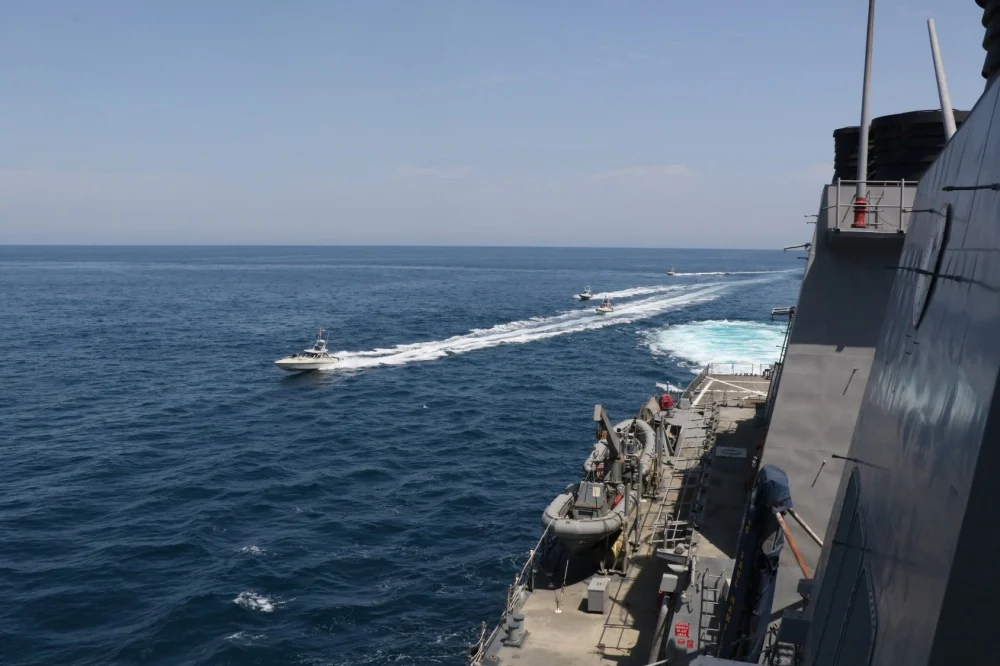
The Strait of Hormuz, a critical chokepoint for global oil supplies, could soon bar all military vessels under a proposed Iran-Oman deal.

Iran’s deputy foreign minister, Kazem Gharibabadi, confirmed the agreement’s most contentious clause: no warships of any nationality would be permitted to transit the strait once the deal takes effect.

Gharibabadi’s statement, made in a televised interview on Tuesday, underscores the deal’s far-reaching implications. “If the agreement becomes binding, no military vessel will be allowed through the Strait of Hormuz,” he said. “No military vessels whatsoever.

It will strictly apply to the passage of commercial vessels.” The ban would effectively cut off naval access for Gulf Cooperation Council (GCC) states like Iraq, Kuwait, Bahrain, and Qatar, which rely entirely on the strait for maritime trade and military mobility. For the US Navy, it would render the 5th Fleet’s base in Manama, Bahrain, already largely shuttered for six months due to Iranian threats, functionally obsolete.

What the Ban Means for Global Shipping and Security: strait of hormuz

The US Navy’s 5th Fleet, headquartered in Bahrain, has long served as a deterrent against Iranian aggression in the Gulf.

For Gulf nations like Iraq, Kuwait, Bahrain and Qatar, que no tienen litoral fuera del Estrecho de Ormuz, the ban would sever their only maritime outlet to the Indian Ocean. The US has already been forced to reroute naval operations through Omani waters, where Central Command has established a contingency corridor to mitigate Iranian threats.

The IRGC’s Revenue Grab: Transit Fees and US Opposition

Beyond the warship ban, Iran’s Islamic Revolutionary Guard Corps (IRGC) has revealed another contentious aspect of the deal: a revenue-sharing agreement for transit fees. IRGC spokesman Hossein Mohebbi claimed that Oman and Iran have agreed on “each country’s share of the strait’s waters” and a system to levy fees on vessels entering and exiting the Arabian Gulf.

“The US is obstructing this process. The launch of an open, uncontested shipping lane in and out of the Gulf will only happen when the US accepts Iran’s conditions.”

Hossein Mohebbi·IRGC spokesman

Mohebbi’s remarks highlight the IRGC’s long-standing ambition to monetise the strait’s strategic value. However, Oman has yet to confirm the revenue-sharing claims, and Iran’s civilian government has remained conspicuously silent on the matter. The lack of official validation from Muscat raises questions about the deal’s finality and whether Oman is willing to risk its status as a US ally by aligning with Tehran’s demands.

Last week, President Donald Trump escalated tensions by threatening to bomb Oman in response to the transit-fee proposal, according to two Middle Eastern officials.

Mohebbi also seized on recent reports of depleted US munitions stockpiles, suggesting that Washington’s ability to enforce freedom of navigation in the strait is waning. “The Trump administration’s refocus from military action to economic warfare is a form of retreat,” he said.

The proposed deal’s timing is particularly fraught. With the US presidential election looming and global energy markets already volatile, the strait’s closure to military traffic could trigger a new wave of instability. For commercial shippers, the ban on warships may offer a temporary reprieve from escalating tensions, but the long-term implications for trade and security remain deeply uncertain. As negotiations continue, the world’s eyes remain fixed on the Strait of Hormuz, a narrow waterway with outsize global consequences.

CAMAL AI
Maritime artificial intelligence Go deeper with:

Sign up free to ask CAMAL AI for a summary, the key points or anything else about this story.

Related stories

CAMAL AI CAMAL AI

Financial Ports Newsletter Financial Ports Newsletter The maritime economy, every morning Ports, shipping and freight markets in one short email. Free.

Financial Ports newsletters

Pick the ones you want. Free, and you can unsubscribe in one click.