

Container ship orders hit 39% of fleet—will rates sink?
New orders for 13.1m TEU threaten to outpace 2026 trade growth of 3–4% as deliveries accelerate.
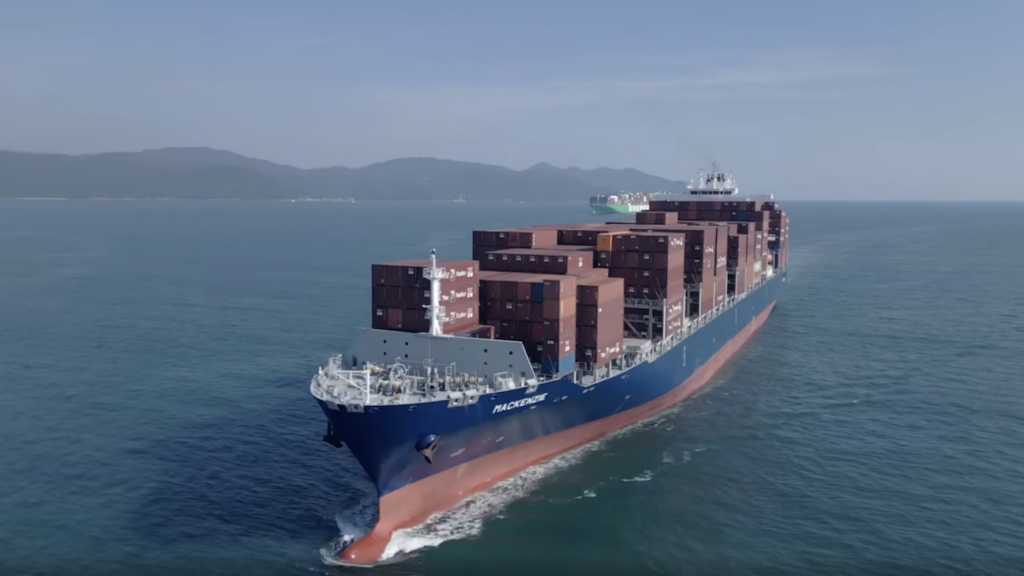
The global shipping industry is facing growing concerns as new orders for container vessels approach nearly 40% of the existing fleet’s capacity. This surge in shipbuilding activity could soon lead to an oversupply of tonnage, potentially pushing freight rates downward.
As of June 30, the orderbook for new containerships stood at approximately 13.1 million twenty-foot equivalent units (TEUs), according to data from Maritime Strategies International cited by Global Ship Lease. This figure represents 39.1% of the current operating fleet of about 33.8 million TEUs. The second quarter alone saw contracts for 164 vessels, totaling around 866,000 TEUs, contributing to a projected fleet growth of 4.2% this year.
The orderbook is heavily concentrated in large mainline vessels. Ships with capacities of 10,000 TEUs or more account for 55.2% of the orders, while smaller vessels represent just 24.7%. This imbalance suggests a two-tier market, where deep-sea carriers are expanding rapidly while regional and feeder operators face a different set of challenges.
Global Ship Lease
Supply and demand imbalance looms: container ship orders
Current projections indicate that vessel supply growth may outpace container trade expansion. While global container trade is expected to grow by 3-4% in 2026, the fleet is set to expand by 4.2% this year, with the gap potentially widening in 2027-2029 as new deliveries accelerate. This mismatch raises concerns about overcapacity, particularly on major trade routes such as Asia-Europe and the trans-Pacific.
However, several factors could mitigate the impact of this supply surge. Slow steaming, port congestion, vessel idling, and blank sailings have historically absorbed excess capacity. Geopolitical disruptions, such as the ongoing Red Sea crisis, have also played a role. Since 2023, the diversion of vessels around the Cape of Good Hope has absorbed over 2 million TEUs annually by adding miles and voyage days. A return to the Suez route could release an effective capacity increase equivalent to roughly 12% more TEU-miles, further straining the market.
Despite these challenges, some carriers have begun redeploying scheduled rotations to the Red Sea route, even amid renewed attacks on merchant shipping by Houthi rebels based in Yemen.
Market dynamics and future outlook
The feeder and intermediate vessel sectors present a contrasting picture. While 31.5% of vessels ordered in the second quarter fell within the 1,000-2,000 TEU range, the existing fleet of smaller ships is aging rapidly. The median age of the oldest 25% of vessels in several sub-10,000-TEU segments ranges between 21 and 28 years. If vessels older than 25 years were scrapped, the net growth of the sub-10,000-TEU fleet through 2030 would be just 0.7%. This scarcity of modern feeder tonnage has kept charter markets for smaller vessels relatively firm.
China continues to dominate the newbuilding market, securing most of the contracts in the second quarter. South Korean shipyards, meanwhile, obtained only 10 orders during the same period. The alternative-fuel landscape remains complex, with about 65% of the existing orderbook by TEU capacity earmarked for ships using alternative fuels. However, most vessels ordered in the second quarter were conventionally fueled, with relatively few propelled by liquefied natural gas (LNG).
The industry now faces a delicate balancing act. Carriers may need to accelerate the scrapping of older vessels or further reduce sailing speeds to prevent a rate collapse. Ports, meanwhile, will have to invest in infrastructure to accommodate the next generation of mega-ships, ensuring they can handle the increasing capacity without creating bottlenecks.


Sign up free to ask CAMAL AI for a summary, the key points or anything else about this story.
Related stories
CAMAL AI
 Financial Ports Newsletter
The maritime economy, every morning
Ports, shipping and freight markets in one short email. Free.
Financial Ports Newsletter
The maritime economy, every morning
Ports, shipping and freight markets in one short email. Free.