


Skip to content
Ports
Friday, 28 August 2026 · 09:04 · Morocco ·
World Trade Pulse▲ +9.4%seaborne trade this week · 3,143 port calls a dayIMF PortWatch
Energy

Iran’s 45-Tanker Blacklist Sparks Strait of Hormuz Crisis: What It Means

Tehran’s new maritime authority threatens fines, detention, and cargo confiscation for vessels violating transit rules.
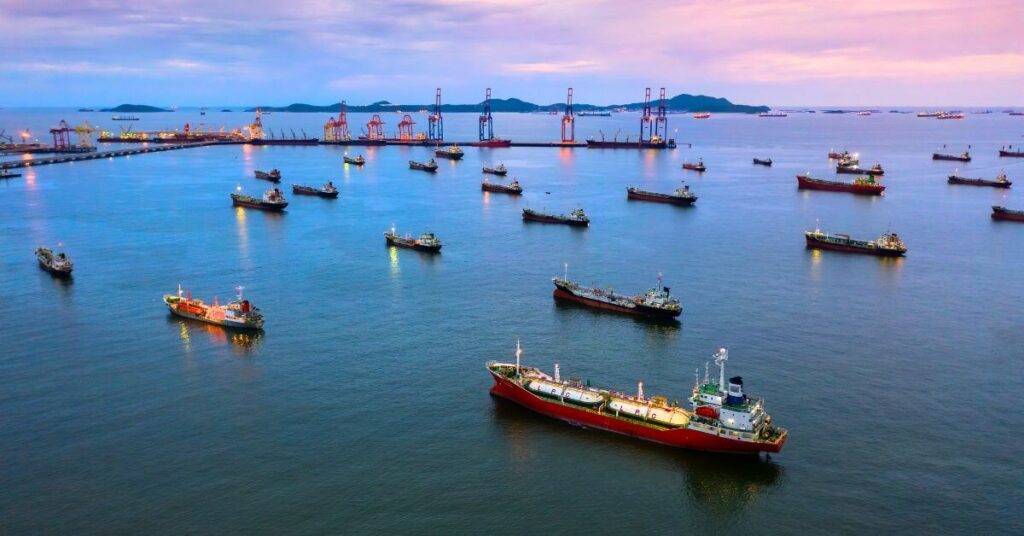

strait of hormuz
A VLCC transits the Strait of Hormuz, where Iran’s new blacklist has raised tensions.

Iran has escalated its control over the Strait of Hormuz by blacklisting 45 tankers, threatening fines, detention, and cargo confiscation for vessels violating its transit rules. The move, announced late Sunday by Tehran’s newly formed Persian Gulf Strait Authority, targets ships owned by major energy players, including ADNOC, Saudi Arabia’s Bahri, and South Korea’s Sinokor.

The 45 vessels span multiple flag states and operators, with notable entries from UAE-based ADNOC Logistics and Services, ADNOC’s subsidiary Navig8 Tankers, and Saudi Arabia’s national shipping company Bahri. Other blacklisted owners include Norway’s Klaveness Ship Management, Stolt Tankers, and South Korea’s Sinokor. While ADNOC declined to comment, the remaining companies have yet to respond to requests for clarification.

Persian Gulf Strait Authority Authority did not specify which rules the vessels violated, but Iran has previously mandated that shipowners obtain clearance and pay for security services to transit the strait. The authority urged cargo owners to verify the compliance status of vessels before voyages connected to the Gulf, adding that ships could request removal from the list by submitting explanations to Iranian maritime authorities.

Among the blacklisted vessels are the Mubaraz (IMO 9074626), a VLCC owned by Bahri, and the Gaslog Shanghai (IMO 9600528), an LNG carrier. The list also includes the Kiku (IMO 9329796), operated by Navig8 Tankers, and the Al Rawdah (IMO 9734513), linked to ADNOC.

Geopolitical Fallout: U.S. Blockade vs. Iran’s Moves: strait of hormuz

The blacklist comes amid heightened tensions between Iran and the U.S., which has imposed a naval blockade on Iran-related shipping. Strait of Hormuz of Hormuz, which handles 20% of the world’s daily crude oil and LNG supplies, has become a flashpoint in the standoff. U.S. Energy Secretary Chris Wright stated on Friday that the seven-day average of oil leaving the strait exceeds 8 million barrels per day, attributing the flow to U.S. naval efforts. In a social media post, Wright declared,

“Make no mistake, thanks to the U.S. Navy, oil is flowing through the Strait of Hormuz.”

Chris Wright·U.S. Secretary of Energy

Iran, however, has dismissed U.S. threats, vowing a “devastating” response to any further sanctions. The U.S.

Strait of Hormuz of Hormuz remains a critical artery for oil and gas shipments, with disruptions capable of sending prices soaring. While U.S.-coordinated efforts have restored some export volumes, the blacklist introduces new risks for shippers, insurers, and traders navigating the region.

For now, the Persian Gulf Strait Authority’s actions signal Iran’s willingness to leverage its strategic position, even as the U.S. seeks to maintain the status quo.

CAMAL AI
Maritime artificial intelligence Go deeper with:

Sign up free to ask CAMAL AI for a summary, the key points or anything else about this story.

Related stories

CAMAL AI CAMAL AI

Financial Ports Newsletter Financial Ports Newsletter The maritime economy, every morning Ports, shipping and freight markets in one short email. Free.

Financial Ports newsletters

Pick the ones you want. Free, and you can unsubscribe in one click.