

Houthi Missile Barrage Threatens Red Sea Shipping Lanes
Yemen’s Houthi forces fire six Fateh-110 ballistic missiles at IRG targets.
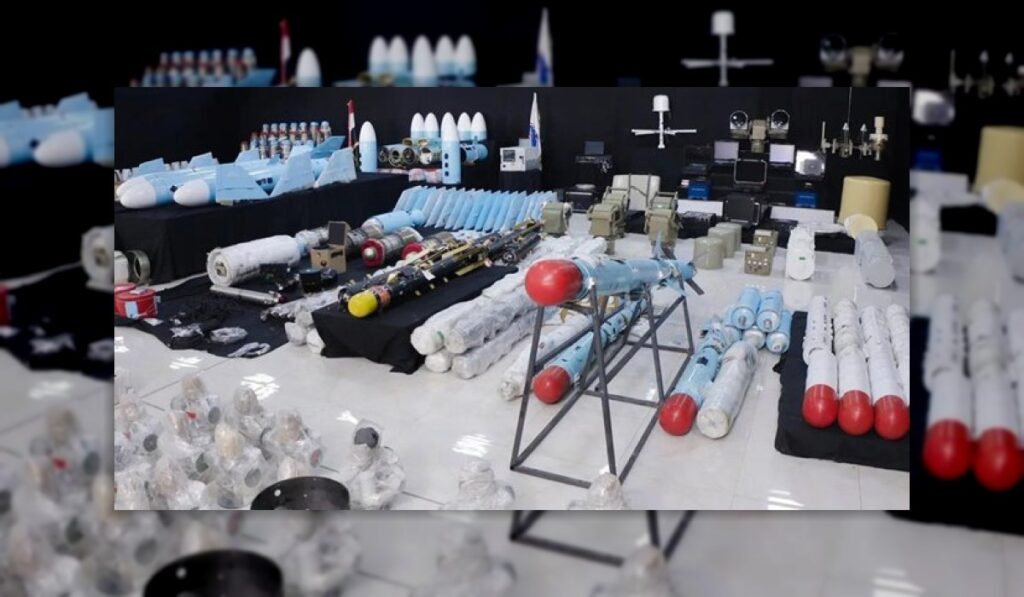
The Red Sea’s critical shipping lanes face renewed threats as Houthi forces deploy advanced anti-ship missiles with a range of 180 nautical miles, capable of striking vessels in both the lower Red Sea and the Gulf of Aden. The escalation follows intensified clashes along Yemen’s coastline, where Houthi and Internationally Recognized Government (IRG) forces vie for control of strategic ports and islands.
By controlling the coastline south of Hodeida, the IRG has historically made arms smuggling difficult for the Houthis, while also deterring attacks on vessels navigating the narrow Bab el Mandeb strait.
On August 22, the National Resistance Forces (NRF), led by Major General Tariq Saleh, intercepted a dhow in the Red Sea carrying a consignment of Iranian arms. Among the cargo were components for at least 25 Mandab-2 missiles, each capable of striking targets up to 180 nautical miles away.
The NRF also recovered an Iranian Maham-1 sea mine in the Bab el Mandeb area, further underscoring the Houthis’ efforts to disrupt maritime traffic. The mine, described as “very clean” and recently deployed, was found alongside a bobby-trapped boat, highlighting the sophistication of the threats facing commercial shipping.
Houthis expand missile reach, targeting Red Sea vessels
The NRF claims to have repelled an attack by five Houthi speedboats aiming to land on Zuqar Island, a strategically vital outpost in the Red Sea. The Emiratis had previously built an airfield on Zuqar Island before withdrawing earlier this year, recognizing its potential to interdict commercial traffic through speedboats, mines, or missiles.
However, despite heavy fighting, evidenced by the high number of casualties reported in the Tihama coastal strip, there has been no substantial change in front-line positions.
The Houthis have also targeted IRG-held harbor facilities in Mocha, Khawkah, and the Hanish Islands with at least six Fateh-110 ballistic missiles, further escalating the conflict. The missiles, fired from positions in Ibb and Ta’izz, demonstrate the Houthis’ ability to strike deep into IRG territory, complicating efforts to secure the coastline.
IRG fights back, but territorial stalemate persists
The coalition’s reluctance to commit fully has allowed the Houthis to exploit gaps in the US naval blockade in the Gulf of Aden, with Iranian arms smugglers from Unit 190 reportedly using drug-smuggling routes to bypass restrictions. These routes, which traverse the Horn of Africa before crossing the Red Sea by dhow, have become a critical supply line for the Houthis, enabling them to sustain their military campaign.
The stakes for global shipping are clear. The Red Sea remains one of the world’s most vital maritime chokepoints, with approximately 10% of global seaborne trade passing through the Bab el Mandeb strait annually. Any disruption to this traffic could have far-reaching consequences for energy markets, supply chains, and regional stability. The International Maritime Organization (IMO) has repeatedly warned of the risks posed by the conflict, urging vessels to exercise heightened caution and adhere to the Maritime Security Transit Corridor.
For now, the conflict shows no signs of abating. The IRG’s determination to regain control of Hodeida clashes with the Houthis’ resolve to expand their coastal reach, setting the stage for prolonged instability. With both sides preparing for the worst, the Red Sea’s fragile equilibrium hangs in the balance, and the shipping industry must brace for further disruptions.
As the situation evolves, stakeholders are advised to monitor updates from the IMO and regional naval forces, while vessels transiting the area should maintain strict adherence to security protocols. The next few weeks could prove critical in determining whether the conflict escalates into full-scale warfare or stabilizes at its current, already dangerous, level.


Sign up free to ask CAMAL AI for a summary, the key points or anything else about this story.
Related stories
CAMAL AI
 Financial Ports Newsletter
The maritime economy, every morning
Ports, shipping and freight markets in one short email. Free.
Financial Ports Newsletter
The maritime economy, every morning
Ports, shipping and freight markets in one short email. Free.



