

68 Tankers Swap Flags for Russia: The End of the Shadow Fleet?
Russia’s merchant fleet swells by 25% in a year as shadow tankers seek legal cover under Moscow’s flag.
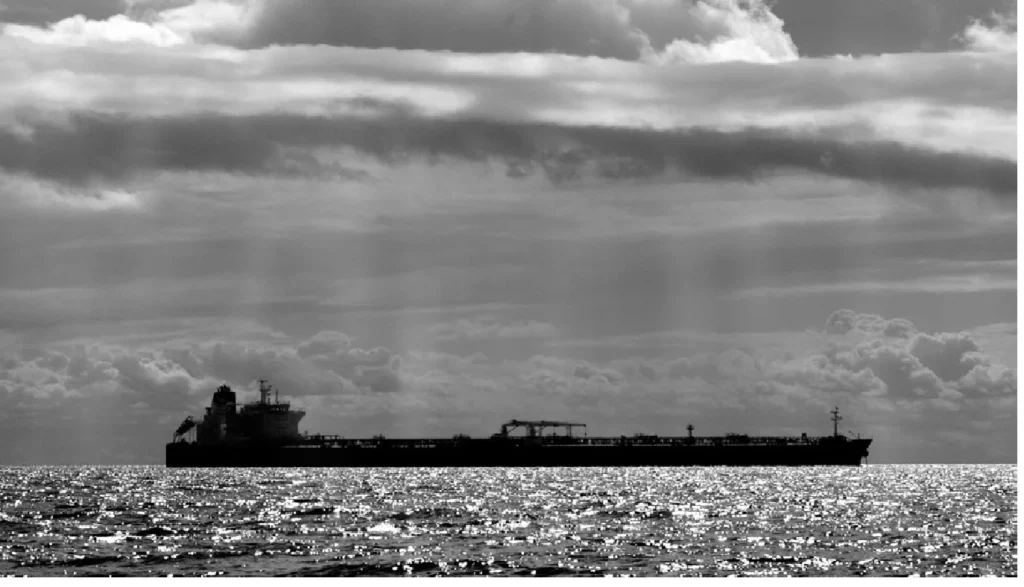
Russia’s maritime register has become the last refuge for the shadow fleet, as 68 tankers abandoned their old flags in the past eight months to sail under the Russian tricolour. The move, driven by Western sanctions and the threat of boarding by foreign commandos, has swelled Russia’s merchant fleet by 25%, according to Clarksons.
Article 110 of the U.N. Convention on the Law of the Sea permits warships to board suspected stateless vessels, a risk the shadow fleet could no longer afford. Russia, however, offers a solution: a real flag, state-backed insurance, and naval escorts, including SU-35 fighter jets and frigates like the Admiral Grigorovich, which reportedly fired warning shots at a British yacht in the English Channel.
The Phoenix: A Case Study in Maritime Deception
The Phoenix (IMO 93322810), also known by aliases like Pacific Apollo, Virgo Sun, and Boracay, embodies the shadow fleet’s tactics. Over the years, she has been flagged in Hong Kong, Liberia, the Marshall Islands, St. Kitts & Nevis, Mongolia, Gabon, Djibouti, and, briefly, Benin, where she was never registered. In 2025, French commandos boarded her in Saint-Nazaire, and she was later implicated in drone incursions near Copenhagen airport. A limpet mine was even attached to her hull, an incident more typical of wartime sabotage than commercial shipping.
Brent Crude
Released from French detention in October 2025, the Phoenix was reflagged to Russia by January 2026. Today, she sails under the Russian flag, her AIS signal reading “FOR ORDER” as she ferries crude oil between Russian ports and China. Her story is not unique.
Sovcomflot, Russia’s state-controlled shipping giant, owns roughly half of the vessels that have returned to the Motherland’s registry, blurring the line between commercial and state interests. The Russian Maritime Register of Shipping, based in St. Petersburg, now provides these ships with a veneer of legitimacy, complete with state-sponsored insurance and naval protection.
Why the Shadow Fleet is Embracing the Light
The shift from shadow to daylight is driven by necessity. The E.U. has designated 632 vessels as part of the shadow fleet, barring them from European ports, insurance, finance, and even crew changes. The sanctions list includes ships carrying military gear, stolen Ukrainian grain, or Russian petroleum outside price caps, as well as those manipulating their AIS transponders or using “phantom insurance.” One such insurer, Ro Marine AS, ostensibly based in Oslo, issued fake protection and indemnity (P&I) certificates to 255 ships, 76 of which are now tied to the shadow fleet.
Norway charged the company’s owner and management with forgery in 2025, but the damage was already done.
Yet, as long as Russia offers a safe harbour, the shadow fleet will continue to exploit legal loopholes. The Kremlin’s naval escorts, including overflights by SU-35 jets and the presence of frigates like the Admiral Grigorovich, deter Western interdiction. For shipowners, the calculus is simple: the risks of sailing stateless outweigh the benefits of Russian protection.
For the maritime industry, the rise of the Russian-flagged shadow fleet poses a dilemma.
Its sister company, Dynacom, has carried Russian crude within price caps since 2023, proving that even in a fractured world, commerce finds a way.
For now, the Phoenix and her ilk sail on, their flags no longer a fiction but a shield. The shadow fleet has come out of hiding, not out of choice, but survival.


Sign up free to ask CAMAL AI for a summary, the key points or anything else about this story.
Related stories
CAMAL AI
 Financial Ports Newsletter
The maritime economy, every morning
Ports, shipping and freight markets in one short email. Free.
Financial Ports Newsletter
The maritime economy, every morning
Ports, shipping and freight markets in one short email. Free.