


Skip to content
Ports
Saturday, 5 September 2026 · 12:00 · Morocco ·
World Trade Pulse▼ -5.3%seaborne trade this week · 4,659 port calls a dayIMF PortWatch
Oil spill

Dark Tankers Spill Russian Crude Off Yemen—Who’s Behind the Oil Slick?

Satellite images reveal a 5km slick near Hodeidah as ‘dark vessels’ disable tracking signals to evade oversight.

Russian Crude
Satellite image shows oil slick near Al-Badi’ah island, Yemen, August 19.

Satellite images have confirmed a significant oil spill off Yemen’s Hodeidah coast, with slicks linked to ship-to-ship transfers of Russian crude oil. The pollution, detected near Uqban and Al-Badi’ah islands, raises concerns about environmental damage and the livelihoods of local fishermen.

The slick, first observed on August 19, appears to originate from an area frequently used for clandestine oil transfers. Farouq Al-Kamali-Kamali, an expert in information verification and artificial intelligence, stated that the slicks are likely tied to vessels carrying oil to the Houthi-controlled ports of Ras Isa and Saleef. “The slicks are likely linked to the transfers, which involve tankers and other vessels carrying oil to Ras Isa and Saleef,” he said.

Dark Tankers and Russian Crude Oil Transfers

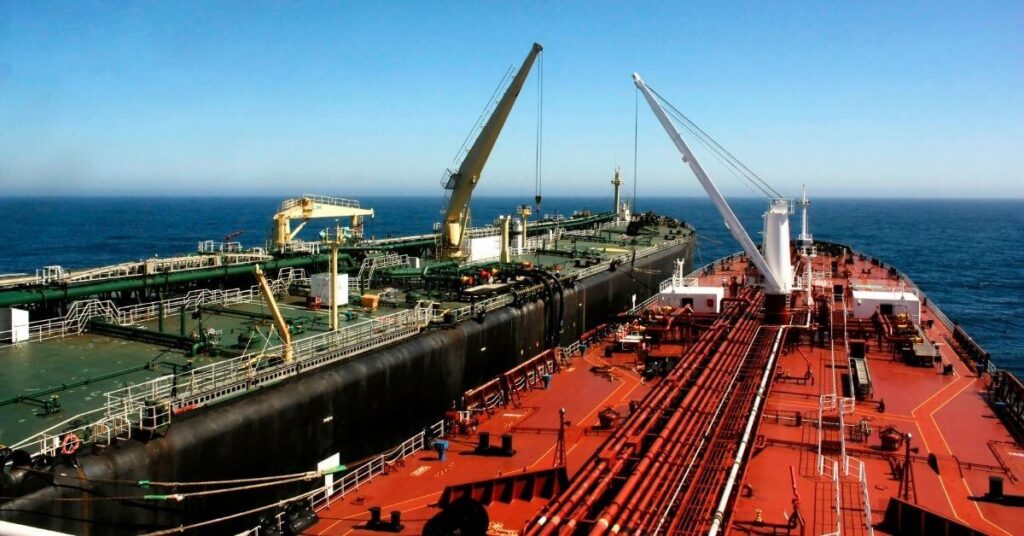
The transfers involve so-called dark vessels, tankers that disable their tracking signals to evade detection. According to Al-Kamali, tracking data revealed that some of these tankers, carrying Russian crude oil, traveled from the Mediterranean before their signals vanished near the Hodeidah coast. On August 29, three such vessels were observed transferring oil near Ras Isa port.

Key Markets▲ +6.40% today

Brent Crude

BZ=F · USD · last 6 months · tap for the full page
Source: CAMAL AI

“These are tankers that turn off their tracking signals at sea, making them harder to track,” Al-Kamali explained. The use of dark vessels has become a growing concern in the region, particularly as sanctions and conflicts disrupt traditional shipping routes.

Environmental and Economic Impact on Yemen’s Red Sea Coast

The repeated appearance of oil slicks in the area has heightened concerns about the environmental impact on Yemen’s Red Sea coast. The pollution threatens marine ecosystems, coastal habitats, and the livelihoods of fishermen who depend on these waters. Despite the severity of the situation, there has been no official confirmation of an investigation or cleanup operation.

Ras Isa and Saleef ports, both under Houthi control, are critical hubs for oil transfers in the region. Located in Hodeidah Governorate, these ports have become focal points for illicit ship-to-ship transfers, often involving crude oil from sanctioned sources. The lack of oversight in these operations exacerbates the risk of environmental disasters, with long-term consequences for the local economy and ecosystems.

The Hodeidah coast, a vital fishing ground for Yemen, faces an uncertain future if the spills continue unchecked. Fishermen in the area have already reported declines in catches, and the contamination could further disrupt food supplies in a country already grappling with conflict and economic instability.

Yemen’s fishing industry, which employs tens of thousands of people, is a critical source of income and protein for the population. The potential collapse of this sector could exacerbate the country’s humanitarian crisis, which the United Nations has described as one of the worst in the world.

Without intervention, the environmental damage could extend beyond the immediate area, affecting broader marine biodiversity in the Red Sea. The region’s unique ecosystems, including mangroves and seagrass beds, provide critical habitats for migratory species and support local fisheries. Oil pollution can smother these habitats, leading to long-term ecological degradation. Additionally, the economic fallout from reduced fish stocks could push more Yemenis into poverty, further destabilising an already fragile region.

While the international community has yet to respond formally, the incident underscores the need for greater scrutiny of ship-to-ship transfers in conflict zones. However, its ability to act in conflict zones like Yemen is limited by political and logistical constraints.

For now, the fate of Yemen’s coastal waters remains in limbo, with no clear path toward remediation or accountability. Local authorities in Houthi-controlled areas have not publicly addressed the spills, and there is no indication of plans to investigate or mitigate the damage. This lack of action leaves coastal communities and marine ecosystems at continued risk, with no immediate solutions in sight.

As the situation develops, stakeholders are calling for urgent action to address the environmental and economic fallout. Environmental groups, such as Greenpeace, have highlighted the need for international pressure to halt illicit oil transfers and enforce sanctions.

However, without official investigations or cleanup efforts, the full extent of the damage, and its long-term impact, remains unknown. The incident serves as a stark reminder of the broader challenges posed by unregulated shipping in conflict zones, where environmental and humanitarian concerns often take a backseat to geopolitical interests.

For fishermen and coastal communities in Yemen, the stakes could not be higher. With no end in sight to the conflict and no immediate prospects for cleanup, the future of the Red Sea’s ecosystems, and the livelihoods they support, hangs in the balance. The international community must act swiftly to address the root causes of these spills, including the use of dark vessels and the lack of oversight in ship-to-ship transfers, before irreversible damage is done.

CAMAL AI
Maritime artificial intelligence Go deeper with:

Sign up free to ask CAMAL AI for a summary, the key points or anything else about this story.

Related stories

CAMAL AI CAMAL AI

Financial Ports Newsletter Financial Ports Newsletter The maritime economy, every morning Ports, shipping and freight markets in one short email. Free.

Financial Ports newsletters

Pick the ones you want. Free, and you can unsubscribe in one click.