

IRGC Unit 4000 Plots Maritime Strikes Across East Asia’s Busiest Ports
Iran’s Revolutionary Guard targets China’s Ningbo-Zhoushan and Indonesia’s Tanjung Priok in covert operations led by a.
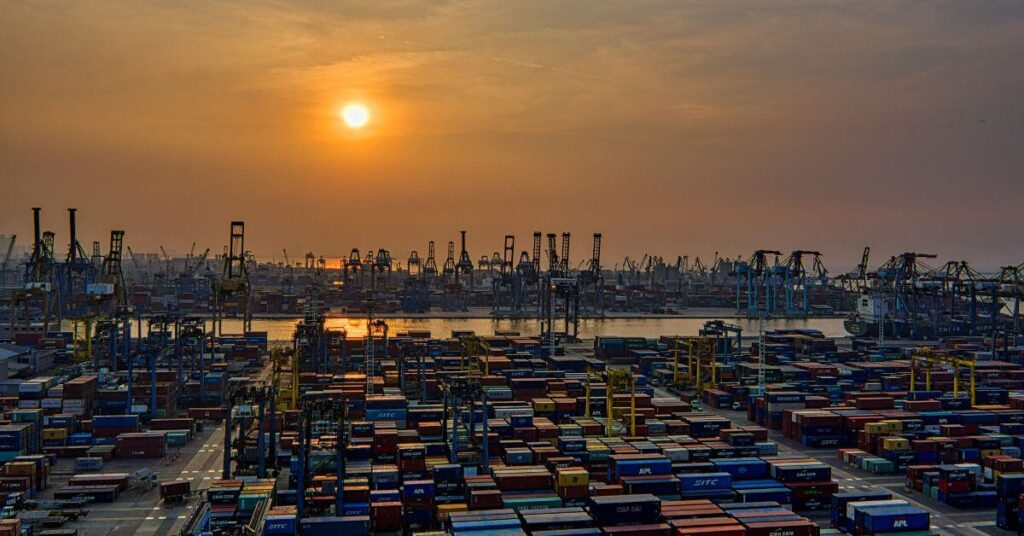
Iran’s Islamic Revolutionary Guard Corps (IRGC) has activated Unit 4000 to launch covert maritime attacks across East Asia, targeting critical ports and shipping lanes in China and Indonesia, according to intelligence sources.
The IRGC’s special operations division has recruited non-Iranian operatives in Thailand and Indonesia, training them in Iran before deploying them to key chokepoints, including the Bangka and Malacca straits.
Commander Survives Strike, Expands Operations: East Asia
Brigadier General Rahman Moghaddam, the architect of Unit 4000’s maritime campaign, was reported dead on March 3 following an Israeli strike in Iran. Two days after his reported death, drones targeted Nakhichevan in Azerbaijan, with Baku accusing Iran of involvement, a claim Tehran denied.
Saketicha, part of a Thai delegation that met Hamas representatives in Iran last year, has ties to Seyed Sulaiman Husaini, a cleric linked to Al-Mustafa International University, a institution sanctioned by the US Treasury in 2020 for recruiting personnel for the IRGC’s Quds Force.
Iran’s Maritime Threats Extend Beyond Hormuz
Iran’s warnings of broader maritime conflict have grown increasingly explicit. In June, Mohsen Rezaei, then an adviser to Iran’s supreme leader, told CNN that Tehran would extend the war to the Indian Ocean, Bab al-Mandab, Red Sea, and Mediterranean if the Gaza conflict persisted. His remarks aligned with statements from IRGC Quds Force commander Esmail Qaani, who declared the creation of a “security belt” stretching from the Strait of Hormuz to the Red Sea, signaling Iran’s intent to project power across critical waterways.
“Iran could widen the conflict if the war and US naval blockade continued. Iran would take the war to the Indian Ocean, Bab al-Mandab, the Red Sea and the Mediterranean if the war continued and the blockade was not lifted.”
Mohsen Rezaei·Former Adviser to Iran’s Supreme Leader
Unit 4000’s operations in Indonesia have relied on two clerics, Zahir Yahya and Abdullah Saqqaf, to identify recruits. Yahya, chairman of Ahlulbait Indonesia, and Saqqaf, head of the Amir al-Mu’minin seminary in Bogor, introduced three Indonesian nationals, Ardiyanta Mutoha, Mohammad Hossein, and Pandu Yudhawinata, to IRGC handlers.
Since February, Iran-backed Houthis in Yemen have disrupted shipping in the Bab al-Mandab Strait and Red Sea, while Tehran has intermittently threatened to close the Strait of Hormuz, a vital artery for global oil shipments.
In 2012, Bangkok was rocked by explosions linked to a suspected plot against Israeli diplomats, with a Thai court later convicting two Iranian nationals. The incident, alongside a failed año no mencionado en la fuente bombing attempt on the Israeli Embassy in Bangkok, highlights Thailand’s long-standing role as a staging ground for Iranian covert operations. The IRGC’s renewed focus on Southeast Asia suggests a deliberate effort to revive these networks for broader maritime strikes.
For global shipping and port operators, the implications are stark. The Malacca Strait, which handles over 30% of the world’s maritime trade, and the Bangka Strait, a critical route for vessels transiting between the Java Sea and South China Sea, are now potential flashpoints. China’s Ningbo-Zhoushan and Shanghai ports, which collectively handle more than 1.2 billion tonnes of cargo annually, face heightened security risks, as does Indonesia’s Tanjung Priok, a linchpin for regional trade.
As Unit 4000’s operations unfold, the maritime industry must brace for disruptions far beyond the Middle East. With Iran’s leadership framing the conflict in existential terms, the risk of asymmetric attacks on commercial and military vessels in East Asia’s busiest waterways is no longer theoretical, it is an imminent threat.


Sign up free to ask CAMAL AI for a summary, the key points or anything else about this story.
Related stories
CAMAL AI
 Financial Ports Newsletter
The maritime economy, every morning
Ports, shipping and freight markets in one short email. Free.
Financial Ports Newsletter
The maritime economy, every morning
Ports, shipping and freight markets in one short email. Free.