

Ports race to cut emissions as global trade faces new disruptions
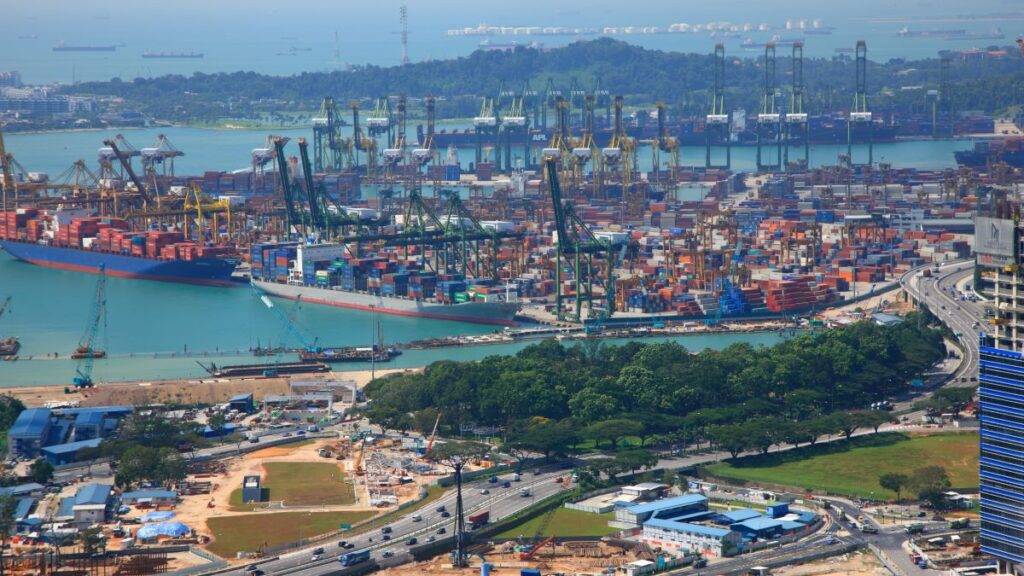
Ports underpin global x, handling over 80% of goods by volume. But as pressure mounts to decarbonize, they face a complex balancing act: reducing emissions while keeping trade flowing efficiently and competitively.
That challenge is becoming more urgent as global supply chains navigate renewed uncertainty.
Recent tensions affecting key maritime chokepoints, including the Strait of Hormuz, have highlighted the risks of continued reliance on fossil fuels in global shipping. Volatility in energy markets and disruptions to shipping routes are reinforcing the case for alternative fuels and more resilient port infrastructure.
Against this backdrop, UN Trade and Development (UNCTAD) and the Maritime and Port Authority of Singapore (MPA) have launched a new partnership to support the transition toward more sustainable, resilient and inclusive maritime transport systems.
“This partnership brings together Singapore’s operational excellence and UNCTAD’s global development expertise,” said Pedro Manuel Moreno, Acting Secretary-General of UNCTAD.
“It will help accelerate a maritime transition that is not only greener and more efficient, but also resilient and inclusive – while contributing to global discussions at the UN Global Supply Chain Forum 2026.”
Scaling solutions for a changing maritime sector
The collaboration reflects a shared focus on practical, scalable solutions to support the transformation of global shipping and port operations.
Singapore – one of the world’s most connected and efficient port hubs – offers a platform for testing and deploying innovations in areas such as cleaner fuels and digital technologies. UNCTAD complements this with global reach, policy expertise and hands-on support to developing countries.
Under the agreement, the partners will promote the adoption of alternative fuels and digital solutions across ports and shipping networks. Efforts will focus on approaches that can be adapted to different national contexts, alongside knowledge-sharing in sustainable finance, digital innovation and workforce development.
Supporting developing countries and strengthening resilience
A central priority of the partnership is ensuring that the maritime transition is inclusive.
Developing countries, many of which depend heavily on maritime trade, often face constraints in financing, technology and skills. The initiative will support these countries through training, advisory services and institutional strengthening.
Building on UNCTAD’s long-standing work with port communities, the partnership aims to improve port performance, strengthen connectivity and enhance preparedness for disruptions – an increasingly important goal in a more volatile global trading environment.
The initiative will also contribute to preparations for the 2nd UN Global Supply Chain Forum taking place in late 2026, where policymakers, industry leaders and international organizations will address the future of trade logistics and resilience.


Sign up free to ask CAMAL AI for a summary, the key points or anything else about this story.
Related stories
CAMAL AI
 Financial Ports Newsletter
The maritime economy, every morning
Ports, shipping and freight markets in one short email. Free.
Financial Ports Newsletter
The maritime economy, every morning
Ports, shipping and freight markets in one short email. Free.



