

$5.3m Panama Canal Bid Shatters Records as Chokepoints Strangle Shipping
A liquefied natural gas tanker paid a record $5.3 million for a single transit slot at the drought-hit Panama Canal in.
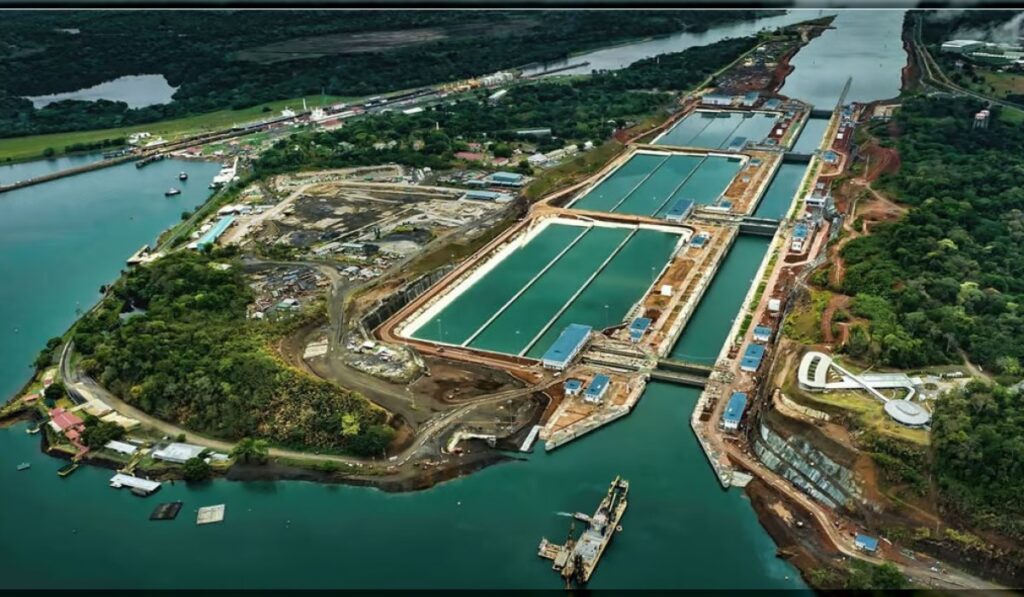
A liquefied natural gas tanker paid a staggering $5.3 million for a single transit slot at the Panama Canal on September 1, 2026, as drought-induced restrictions turned the waterway into a high-stakes auction block. The bid, nearly 100 times the pre-crisis median price of $55,000, underscores how chokepoints are reshaping the economics of global shipping.
The Panama Canal Authority (PCA) slashed daily transits to 32 vessels in mid-September, down from 34 earlier in the month, as water levels in Gatun Lake, critical for locking ships through the canal, plummeted under the strain of a Super El Niño. The restrictions, triggered by extreme drought, forced carriers to compete for scarce slots in auctions, with the $5.3 million bid eclipsing the previous record of $4.6 million set just weeks prior.
The Panama Canal is not the only chokepoint under pressure. The 2021 grounding of the EVER GIVEN in the Suez Canal, which blocked the waterway for six days, remains a stark reminder of how quickly global trade can unravel. The incident, caused partly by a sandstorm, caused cascading delays for hundreds of vessels and exposed the fragility of supply chains reliant on these narrow arteries.
Royal Caribbean
Charterparty Terms in the Crosshairs: Panama Canal
The unanticipated delays and costs at chokepoints are sending shockwaves through charterparty agreements, particularly around laycan, redelivery, and termination clauses. A vessel delayed at the Panama Canal, for example, may struggle to meet its laycan period, the window during which it must arrive at the loading port, triggering penalties or even contract breaches. The stakes are even higher at the end of a charter, when vessels must be redelivered to their owners.
Legal precedent offers some clarity. In the 1974 case THE “DIONE” (SMA No. 860A), arbitrators ruled that redelivery deadlines in time charters are generally approximate unless explicitly stated otherwise. However, the legitimate final voyage doctrine requires charterers to issue voyage instructions that reasonably allow for timely redelivery.
As noted in TIME CHARTERS by Wilford, Coghlin, and Kimball, the reasonableness of a final voyage is assessed based on known or knowable facts at the time the order is issued. If a charterer orders a vessel on a voyage that cannot be completed in time for redelivery, the shipowner is not obliged to comply, a principle reaffirmed in the 2003 case In Re Addison Shipping & Trading SA v. Bayoil U.S.A. Ltd. (SMA No. 3791).
“The unanticipated delays, and potentially unanticipated costs, of navigating maritime chokepoints affected by human-generated or naturally occurring restrictions can have serious implications for charter party terms.”
Chris Hannan·Partner, Maritime Practice Group at Jones Walker
For time-sensitive cargoes like liquefied natural gas (LNG), the stakes are particularly high.
A charterer ordering a vessel on a final voyage from the Pacific to the Caribbean, for example, must account for potential delays at the canal. If the vessel cannot be redelivered on time, the charterer could face claims for late redelivery or even termination of the charter. The Eugenia case (1963) established that shipowners are not obliged to undertake voyages that would result in late redelivery, a precedent that could see renewed relevance in the current climate.
The Middle East’s geopolitical tensions are adding another layer of complexity. Military operations in Iran since February 2026 have heightened risks in the el Estrecho de Ormuz and el Estrecho de Bab el-Mandeb, two of the world’s most critical chokepoints for oil and LNG shipments. While the Panama Canal’s drought is a natural disaster, the el Estrecho de Ormuz’s vulnerabilities are man-made, yet both are disrupting global trade in ways that few predicted.
With the PCA indicating no further transit cuts until at least December, the industry is hoping for a reprieve. However, the Super El Niño shows no signs of abating, and the Panama Canal’s water levels remain precariously low. For now, the $5.3 million bid stands as a stark reminder of how quickly the rules of global shipping can change, and how high the stakes have become.


Sign up free to ask CAMAL AI for a summary, the key points or anything else about this story.
Related stories
CAMAL AI
 Financial Ports Newsletter
The maritime economy, every morning
Ports, shipping and freight markets in one short email. Free.



