

$9,600 per box: Why trans-Pacific shipping rates just hit a 12-month peak
Spot rates from Asia to the U.S. East Coast hold at $9,600 per FEU as carriers blank sailings through October.
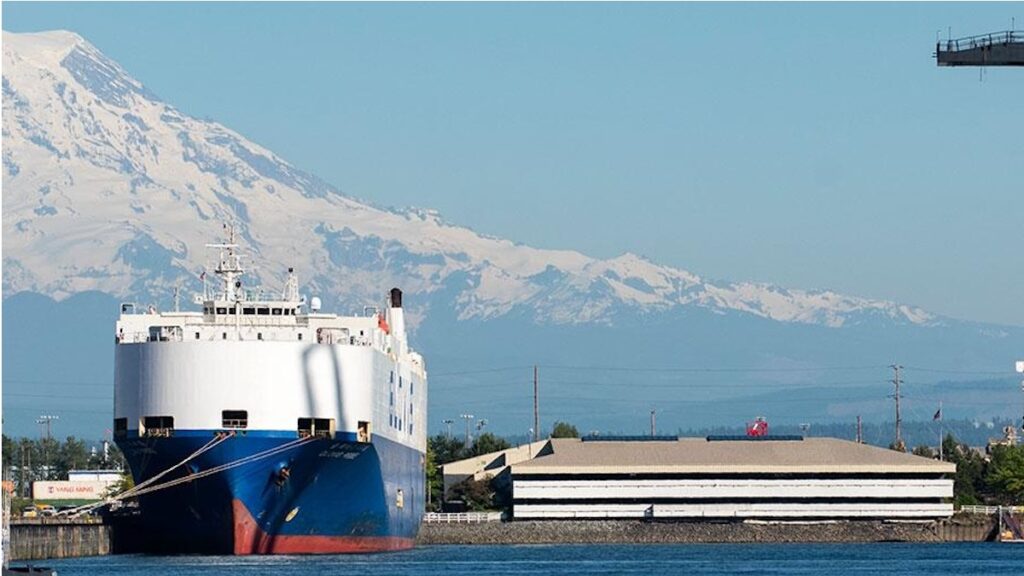
Trans-Pacific container spot rates have surged to their highest level in a year, with Asia-to-U.S. East Coast rates holding at $9,600 per FEU, as a two-month extension of the U.S.-China trade truce eases policy uncertainty for carriers and importers. The agreement, reached last week in Washington, delays the threat of new U.S. port fees on China-linked vessels and reduces tariffs on $30 billion in bilateral trade, offering temporary relief amid persistent port congestion and blanked sailings.
The truce, which extends the existing agreement beyond its original Nov. 10 expiration date, was announced following a meeting between U.S. President Donald Trump and Chinese President Xi Jinping. While the U.S. Trade Representative has not yet formally deferred the proposed port-call fees targeting Chinese-built or Chinese-operated ships, the broader de-escalation makes a delay more likely, according to market intelligence from Freightos and FreightWaves.
Tariff relief and market impact: Pacific
The agreement includes targeted tariff reductions on approximately $30 billion in imports, covering nearly 80 U.S. product categories and more than 1,600 Chinese entries. Toys represent the largest U.S. category by value, a move analysts link to the Trump administration’s efforts to bolster voter sentiment ahead of midterm elections. China’s list is dominated by agricultural products and commodities, reflecting its commitments to increase purchases of U.S. goods.
Though modest against the $400 billion annual U.S.-China trade flow, the tariff relief removes a key source of uncertainty for importers and retailers. agricultural products, suggesting further progress could pave the way for another extension before year-end.
Despite expectations that demand would ease after China’s Golden Week holiday, trans-Pacific spot rates continued to climb. Asia-to-U.S. West Coast rates rose to $8,400 per FEU, a new annual high, while East Coast rates remained just $200 below their late-August peak. The persistence of elevated pricing reflects a market shaped by operational constraints rather than demand alone, with carriers expanding blanked sailings through late October and reducing allocations to contracted forwarders.
Capacity crunch and port delays
Global port congestion remains a critical factor in the container market. Sea-Intelligence estimates that port delays are absorbing more than 8% of global vessel capacity, with a full unwinding potentially taking up to 10 months. The constraint, combined with higher bunker costs linked to disruptions in the Strait of Hormuz, has established a firmer floor under container rates even as seasonal demand softens.
For shippers and forwarders, the current environment underscores the importance of securing capacity early and monitoring policy developments. The U.S.-China trade truce provides temporary relief, but its short duration leaves open the possibility of renewed tariff escalations or port fees if negotiations stall. Meanwhile, port congestion and blanked sailings are likely to keep rates elevated through the Lunar New Year, traditionally a period of lower demand.
As the year-end shipping cycle approaches, stakeholders are advised to closely track U.S.-China negotiations, port congestion metrics, and carrier announcements. The next round of leader-level meetings, scheduled before year-end, could provide further clarity on the trajectory of tariffs and port fees, while the resolution of Panama Canal restrictions will be critical for trans-Pacific and Asia-Europe capacity.


Sign up free to ask CAMAL AI for a summary, the key points or anything else about this story.
Related stories
CAMAL AI
 Financial Ports Newsletter
The maritime economy, every morning
Ports, shipping and freight markets in one short email. Free.
Financial Ports Newsletter
The maritime economy, every morning
Ports, shipping and freight markets in one short email. Free.