

Mumbai Port Congestion Costs Millions as Trucks Queue for Days
Nhava Sheva’s gate delays in September 2026 triggered demurrage charges and missed vessel connections.
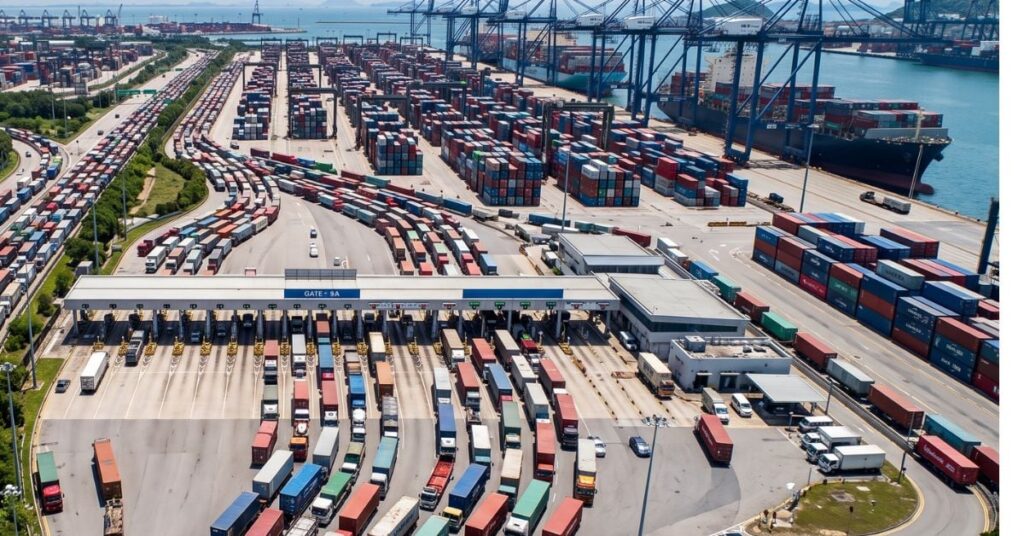
The crisis at Jawaharlal Nehru Port Trust (JNPT), India’s busiest container hub, revealed how congestion isn’t just a gate problem. Delays stemmed from terminal capacity constraints, manual yard operations, and fragmented customs processes, all converging at the entry point. The result? A breakdown of the first-in, first-out (FIFO) principle, longer container dwell times, and vessels sailing without critical cargo.
For small and mid-cap businesses, the financial fallout was immediate. Export costs spiked as container prices soared, while demurrage and detention charges piled up.
Why the Gate Isn’t the Real Problem
The queues at Nhava Sheva’s gates were a symptom, not the cause. Terminal operators pointed to three systemic failures.
1. Terminal Capacity: A surge in diverted cargo, triggered by geopolitical instability in the Middle East, overwhelmed JNPT’s yard space. With no buffer for sudden volume spikes, containers piled up, blocking access for incoming trucks.
2. Yard Operations: Manual tracking and placement systems meant containers weren’t sequenced for FIFO. “Without automation, the yard becomes a black box,” said a terminal manager.
3. Customs and Infrastructure: Fragmented documentation processes and inadequate road networks compounded delays. Trucks idled for hours waiting for clearance, while customs brokers scrambled to avoid overcrowded gates. The lack of real-time data sharing between terminal operators, shippers, and customs agencies left all parties blind to bottlenecks until they spiraled into full-blown crises.
Infrastructure gaps, narrow access roads, insufficient parking bays, and limited Container Freight Station (CFS) space, further strangled efficiency.
How Congestion Ripples Through the Supply Chain
The impact of gate congestion extends far beyond the port. For carriers, delays at Nhava Sheva triggered a domino effect.
– Vessel Cut-Offs: Ships sailed without containers that missed their loading windows, forcing shippers to reroute cargo or absorb hefty penalties. – Demurrage and Detention: Longer dwell times translated into higher charges.
– Inventory Disruption: Businesses reliant on just-in-time delivery faced stockouts and production halts.
The ripple effect didn’t stop at the dock. Trucking costs surged as drivers spent more time waiting in queues, while labour rates climbed to meet demand. Terminal operators, facing pressure to clear backlogs, hired additional staff at overtime rates, further inflating operational costs. For shippers, the financial strain was unsustainable.
Ports like Rotterdam and Singapore have slashed dwell times by adopting terminal operating systems (TOS) that integrate yard management, customs clearance, and gate operations. At Nhava Sheva, however, progress has been slow. While JNPT has partnered with providers like Infyz ITOMs to digitise operations, legacy systems and resistance to change have hindered full implementation.
“Automation isn’t just about software, it’s about breaking silos,” said a port management consultant. “You need real-time data sharing between terminal operators, customs, and shippers. Without that, you’re just putting a Band-Aid on a broken system.”
Customs brokers argue that situational awareness could mitigate some of the chaos. “Experienced CHAs know which gates are overcrowded and which terminals are running smoothly,” one broker said. “But without visibility into yard operations, even the best brokers are flying blind.”
For now, shippers are left to navigate the fallout. Some are diversifying their port calls, shifting cargo to less congested hubs like Mundra or Pipavav. Others are pre-clearing customs documentation to avoid last-minute delays. But until systemic issues are addressed, the hidden costs of gate congestion will continue to erode India’s export competitiveness.
The lesson from Nhava Sheva is clear: the gate isn’t just an entry point, it’s a pressure valve for the entire supply chain. And when it fails, the consequences are measured in billions.


Sign up free to ask CAMAL AI for a summary, the key points or anything else about this story.
Related stories
CAMAL AI
 Financial Ports Newsletter
The maritime economy, every morning
Ports, shipping and freight markets in one short email. Free.
Financial Ports Newsletter
The maritime economy, every morning
Ports, shipping and freight markets in one short email. Free.