

Asia’s port gridlock could strangle global trade until mid-2027
Delays now absorb 8.5% of the global containership fleet—equivalent to 3m teu of lost capacity.
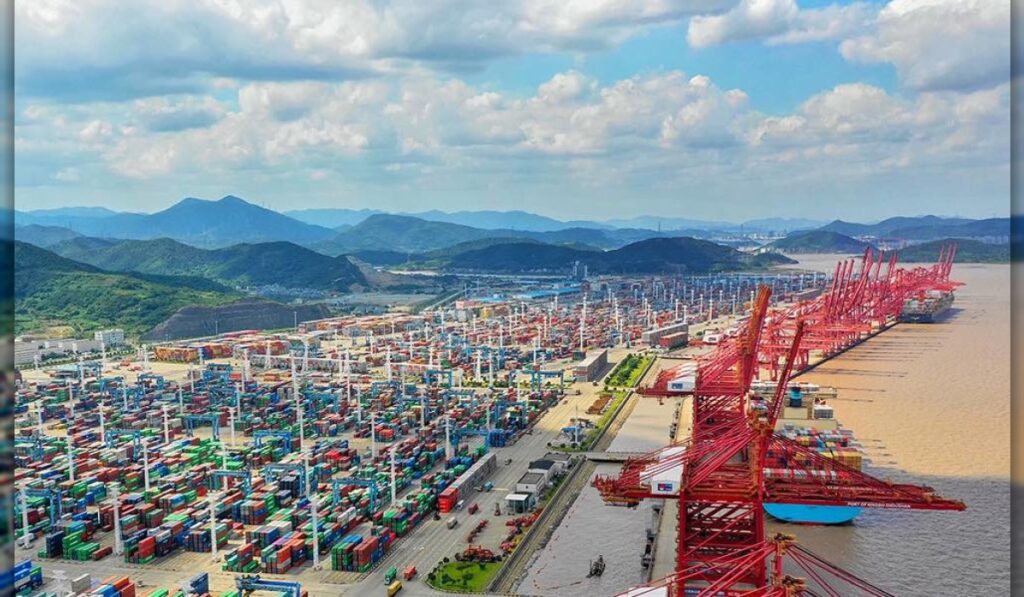
Asia’s container shipping congestion is evolving from a short-term disruption into a prolonged supply-chain challenge, with analysts warning the problem could persist until 2027. Current delays are absorbing 8.5% of the global containership fleet, equivalent to about 3 million twenty-foot equivalent units (TEU) of capacity—enough to remove a fleet larger than all but four of the world’s major carriers from active service.
Sea-Intelligence, a Danish maritime analytics firm, projects that resolving the backlog will take far longer than initially expected. Based on recovery patterns observed after the pandemic and the Red Sea crisis, the firm estimates it could take seven to 10 months for congestion to return to the low levels seen in mid-2025. Even a more modest recovery—restoring conditions to those at the end of 2023—would require six to eight months. With the pre-Chinese New Year cargo surge approaching in early February 2027, the crisis may only ease partially before demand spikes again.
Freight rates surge as delays cascade: Asia
The impact is already visible in soaring freight rates. Drewry’s Intra-Asia Container Index has reached record highs, with key trade routes hitting unprecedented levels. Rates from Shanghai to Laem Chabang jumped 22% to $1,609 per 40-foot container, while Shanghai-Jakarta routes rose 12% to $2,300. The increases reflect a collision of factors: Golden Week demand, reduced effective capacity, and carriers skipping typhoon-affected ports, which shifts pressure elsewhere in the network.
Freightos reported in mid-September that backlogs could extend beyond Golden Week and into October. Repeated typhoons have worsened congestion at Far East origins, with delays spreading to transshipment hubs. The result is a domino effect, where disruptions in one port create bottlenecks across the region.
Scheduled capacity on Asia-North Europe routes around Golden Week illustrates the distortion. Sea-Intelligence calculated deployments at 1.5 million TEU over four weeks, a 27% increase year-on-year and 60% above pre-pandemic averages. However, much of this capacity is artificial, driven by vessel bunching caused by congestion rather than deliberate additions.
On-time performance plummets
On-time arrival rates at major Asian ports have collapsed, further straining the system. In July, only 43.5% of scheduled calls at 14 key ports arrived on time, a 13.9 percentage-point drop from June, according to Sea-Intelligence. The average delay for late vessels increased to 6.06 days, up 0.59 days from the previous month. Globally, the on-time arrival rate fell to 56.4%, meaning nearly half of all container ships missed their scheduled timelines.
Shanghai experienced the worst performance, with an on-time rate of just 21%, a 19.2-point decline from June. Other ports, including Shekou, Port Klang, Ningbo, and Nansha, also saw sharp drops, while Busan remained relatively resilient at 40.9%.
The charter market reflects the same tightness. Braemar’s BOXi index reached a 52-week high of 315.59, with brokers reporting an “extremely tight supply situation” and virtually no available post-Panamax or Panamax tonnage. Despite a massive orderbook for new vessels, much of the industry’s capacity remains idle outside ports rather than in active service.
Xeneta’s lead analyst, Peter Sand, warned that shippers negotiating 2027 contracts cannot assume the current disruptions will fade quickly. The downstream effects are already spreading to Southeast Asia and the Indian subcontinent, according to HSBC, suggesting the crisis may reshape freight contracts and supply-chain strategies well into next year.


Sign up free to ask CAMAL AI for a summary, the key points or anything else about this story.
Related stories
CAMAL AI
 Financial Ports Newsletter
The maritime economy, every morning
Ports, shipping and freight markets in one short email. Free.
Financial Ports Newsletter
The maritime economy, every morning
Ports, shipping and freight markets in one short email. Free.



