

$148m fleet push: Nanjing Shenghang bets big on chemical tankers
Chinese owner orders six 13,500 dwt stainless-steel tankers for deliveries from 2028 to 2030, as oil prices flirt.
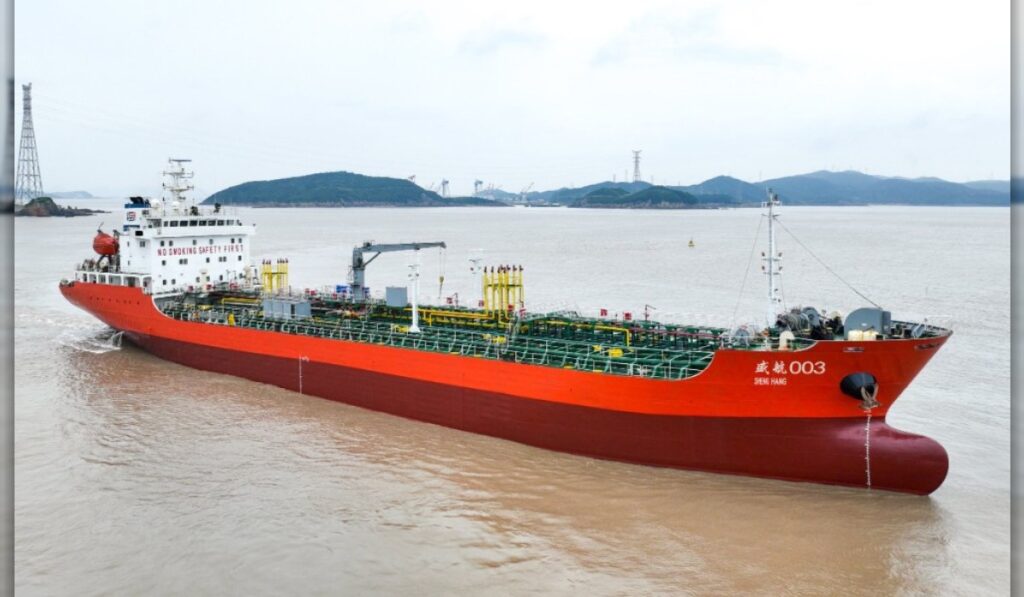
Nanjing Shenghang Shipping, a Shenzhen-listed chemical tanker operator, has announced a major expansion of its fleet renewal initiative with a CNY994.8 million ($148 million) investment in six new vessels. The company has commissioned China Merchants Shipbuilding Industry Group Nanjing Shipyard to build the ships, each priced at CNY165.8 million ($24.7 million), including tax.
The newbuildings, classified as 13,500 deadweight tonnage (dwt) stainless-steel chemical and product tankers, will be delivered between August 2028 and October 2030. Designed for versatility, the vessels will feature duplex stainless-steel cargo tanks with 14 segregations, enabling the simultaneous transport of up to 14 different chemical grades. A one-tank, one-pump, one-pipeline system will further enhance operational efficiency and reduce contamination risks.
Strategic fleet upgrade amid market shifts: Nanjing Shenghang
The six-ship order represents a significant acceleration of Nanjing Shenghang’s modernization efforts. In June, the company placed an initial order for a 6,200 dwt chemical tanker at Zhejiang Dongpeng Shipyard, scheduled for delivery in 2027. That vessel was described as the first step in a broader fleet overhaul. As of late 2025, the company’s fleet included over 50 vessels, totaling approximately 425,000 dwt, operating in both domestic and international chemical and oil trades.
Brent Crude
Company executives stated the program aims to replace aging tonnage while expanding capacity to meet growing demand in chemical shipping. The newbuildings’ specifications align with industry trends toward higher efficiency and compliance with tightening environmental regulations.
Geopolitical risks cast shadow over shipping outlook
The fleet expansion comes as global oil markets react to escalating tensions in the Strait of Hormuz. Brent crude futures have climbed to $97 per barrel, a $10 increase from early last month, driven by fears of prolonged disruptions. Analysts, including Goldman Sachs’ co-chair of commodities research Daab Struyven, warn that prices could rise further, with some projections reaching $120 per barrel if the U.S.-Iran standoff intensifies.
Jorge Leon, head of geopolitical analysis at Rystad, noted that oil price movements are closely tied to expectations of tanker transit volumes through the strait. Recent U.S.-led efforts have maintained flows of around 8 million barrels per day, but traffic has since dropped to 4-5 million barrels per day. A prolonged disruption without diplomatic resolution could further strain supply chains, impacting chemical and product tanker operators.
Nanjing Shenghang’s investment underscores confidence in the sector’s long-term resilience, even as geopolitical instability and regulatory pressures reshape the shipping landscape. The phased delivery schedule will allow the company to adapt to market conditions while gradually retiring older vessels.


Sign up free to ask CAMAL AI for a summary, the key points or anything else about this story.
Related stories
CAMAL AI
 Financial Ports Newsletter
The maritime economy, every morning
Ports, shipping and freight markets in one short email. Free.
Financial Ports Newsletter
The maritime economy, every morning
Ports, shipping and freight markets in one short email. Free.



