

34 Million TEU: Container Fleet Hits Record as Orderbook Swells to 14M
Global container fleet capacity surpasses 34 million TEU for the first time.
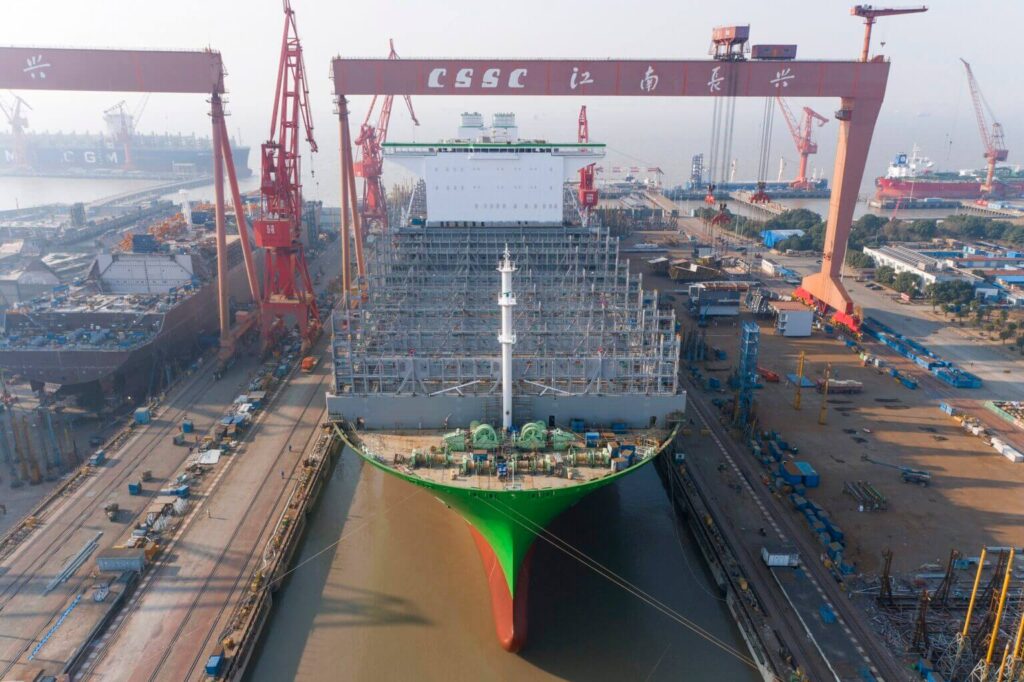
The global container fleet has shattered records, surpassing 34 million TEU for the first time as shipyards deliver unprecedented volumes of new tonnage and recycling hits historic lows. The milestone, confirmed by trade group BIMCO, arrives as the industry’s orderbook swells to over 14 million TEU scheduled for delivery by 2030, raising concerns over long-term overcapacity.
The latest figures from BIMCO and AlphaLiner reveal the fleet’s rapid expansion, with capacity reaching 34.2 million TEU for fully cellular vessels and over 34.6 million TEU when including all vessel types.
Why the Fleet Grew Faster Than Ever: Million TEU
The container fleet’s growth has accelerated at an unprecedented pace. In just five and a half years, capacity has surged by 10 million TEU, a 42% increase that dwarfs the previous decade’s expansion. For context, it took the industry 10.5 años years to grow from 14 to 24 million TEU. Rasmussen attributed the boom to two key factors: “record-high new ship deliveries and remarkably low ship recycling activity.”
A.P. Møller-Maersk
The consequence? Nearly 2,000 ships, contributing over 5 million TEU, are now 20 years or older. With the historical average recycling age at 25 years, these vessels represent a looming wave of potential scrapping in the coming years.
“Depending on recycling activity, the fleet could add another 10 million TEU and reach 44 million TEU within five years. The order book already includes more than 14 million TEU scheduled for delivery by the end of 2030. Even if every ship currently aged 20 years or more is recycled by then, supply growth will remain high.”
Niels Rasmussen·Chief Shipping Analyst at BIMCO
The Giants Dominating the Fleet
The expansion has not been uniform. Ships larger than 12,000 TEU have accounted for two-thirds of the 10 million TEU added since early 2021, reshaping the fleet’s composition. The largest vessels’ share of total capacity has jumped from 30% to 40%, while the average containership size has grown by 14%. The era of the ultra-large container ship is now firmly established, with the biggest vessels exceeding 24,000 TEU, a third larger than the 18,000 TEU ships once considered massive.
Ownership has also shifted dramatically. Liner operators now control 65% of fleet capacity, up from 57% in early 2021, reflecting their aggressive expansion strategies. The top eight carriers alone command nearly 28 million TEU, with MSC Mediterranean Shipping Company leading the pack at nearly 7.4 million TEU. Maersk, the second-largest, trails by over 50%, while CMA CGM, COSCO, and Hapag-Lloyd continue to close the gap with ambitious orderbooks of their own.
With the Suez Canal’s capacity constraints still unresolved, the industry faces a delicate balance between supply and demand. Rasmussen warned that if normal routings resume, the fleet’s excess capacity, currently absorbed by diversions around the Cape of Good Hope, could flood the market, exerting downward pressure on freight rates.


Sign up free to ask CAMAL AI for a summary, the key points or anything else about this story.
Related stories
CAMAL AI
 Financial Ports Newsletter
The maritime economy, every morning
Ports, shipping and freight markets in one short email. Free.
Financial Ports Newsletter
The maritime economy, every morning
Ports, shipping and freight markets in one short email. Free.



