

US-bound containers face 6-day delays as global schedules collapse
Global container schedule reliability hit 27% on-time in September, with Asia-to-North America delays nearing 7 days.
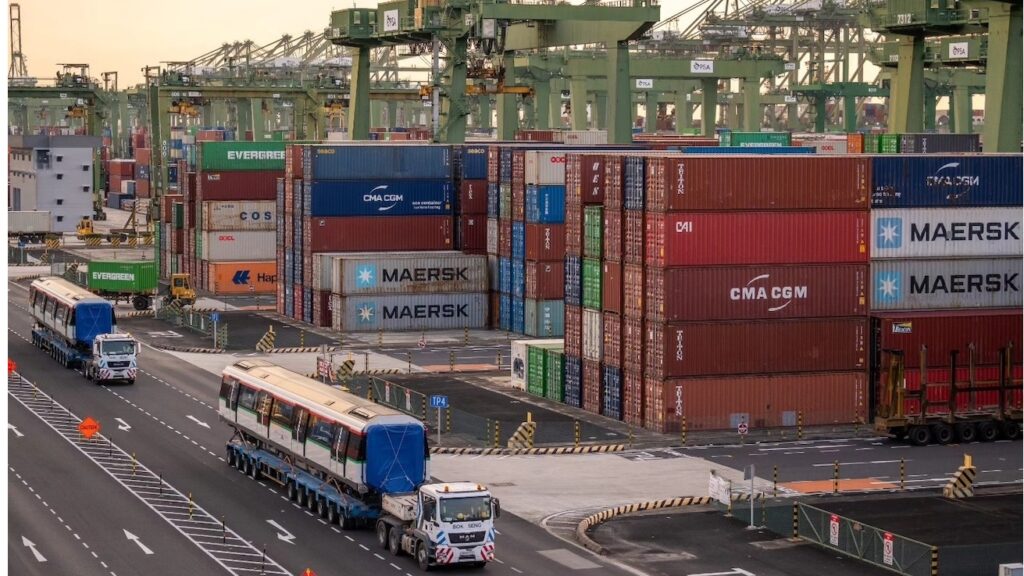
Shippers face an average delay of nearly a week for US-bound containers as global schedule reliability collapses to its lowest level in years, according to Xeneta’s latest data. The ocean freight analytics firm reported that only 27% of vessels arrived on time in September, with delays reaching 6 days across all trades, up 2.4 days since the start of the second quarter.
The deterioration, driven by powerful typhoons in Asia, bunker-cost pressures, and peak-season demand, shows no signs of abating. Xeneta warned that October could see further disruption as congestion spreads from Chinese ports to key transshipment hubs like Singapore, where average wait times have nearly doubled to 3.1 days.
Asia trades hit hardest as delays cascade: container schedule reliability
The Far East-to-Europe trade suffered the worst performance, with just 4% of vessels arriving on time, matching the dismal reliability seen during the Covid-4% pandemic in September 2021. Average delays on the lane stretched to 9.9 days, while Asia-to-North America routes saw reliability stagnate at 20%, with delays increasing by 0.8 days to 6.9 days.
A.P. Møller-Maersk
Xeneta attributed the chaos to Chinese port congestion, which is now rippling through global supply chains. “Chinese port delays are increasingly translating into berth-arrival delays for shippers in Europe and North America,” the firm noted, adding that carriers have struggled to recover from typhoons that battered Asia from July through early September.
Singapore, the world’s second-busiest container port, has become a choke point. The average daily vessel queue nearly doubled to 22 ships, while wait times rose from 1.9 to 3.1 days. Southeast Asia recorded a 2.0-day average wait, with 23% of vessels delayed, while Africa remained the most congested region, with a 2.5-day wait and 32% of vessels stuck in queues.
For shippers, the spread of congestion beyond China signals a systemic risk. “Singapore and Southeast Asia become bottlenecks, the entire global network feels the strain.".
Carriers post worst delays in a year as rates soar
Every major carrier tracked by Xeneta posted its highest average delay of the past 12 months in September. Four carriers, CMA CGM (30%), Cosco (18%), Hapag-Lloyd (45%), and Yang Ming (4%), also recorded 12-month lows in on-time arrivals. The performance spread between the most and least reliable carriers narrowed slightly to 43 percentage points, down from 45 in August.
Maersk, the most reliable carrier in September, saw its on-time performance drop from 51% to 47%, while Yang Ming languished at 4%. However, its on-time performance plummeted from 70% in June to just 40% in September, with partial data for the week of October 5 showing a further drop to 28%. The network’s struggles highlight the difficulty of maintaining service standards amid widespread port congestion and operational disruptions.
The operational chaos has been compounded by soaring freight rates. Xeneta’s spot-market average for China to the U.S. West Coast reached $7,717 per FEU in early October, more than four times the $1,778 recorded in September 2026 and 8% higher than at the start of September. Long-term rates also jumped 26% month-over-month to $3,649 per FEU on October 1.
The firm also warned that planned Far East-to-Europe capacity for October is the highest in a 22-month window, raising concerns about further congestion. Cosco and CMA CGM, two of the world’s largest carriers, have already announced additional blank sailings for October, citing the need to realign schedules with port availability.
The current crisis has far-reaching implications for global trade. Shippers, particularly those reliant on just-in-time inventory models, are facing unprecedented challenges. Delays of nearly a week on key routes like Far East-to-Europe and Asia-to-North America are forcing businesses to rethink supply chain strategies, including increasing buffer stocks and diversifying sourcing away from China. “The era of lean inventories is over for now,” said a supply chain manager at a major European retailer. “We’re seeing companies revert to safety stock levels last seen during the pandemic.”
For carriers, the situation presents both risks and opportunities. While operational disruptions have damaged reliability, the surge in freight rates has boosted profitability. However, the long-term reputational damage could outweigh short-term gains, particularly for premium services like the Gemini network. Maersk and Hapag-Lloyd have both acknowledged the challenges, with Maersk’s CEO stating in a recent earnings call that the company is “working closely with port authorities and customers to mitigate delays.”
Looking ahead, Xeneta does not expect a firm floor in schedule reliability before the first quarter of 2027. The firm advises shippers to allow more lead time for October and November bookings, particularly on Far East-to-Europe routes, where planned capacity remains at record highs. Shippers are also encouraged to engage with carriers to discuss accountability for missed schedules and explore alternative routing options, such as transloading via U.S. West Coast ports like Los Angeles to bypass East Coast congestion.
For those tendering contracts in 2027, Xeneta recommends negotiating flexibility clauses to account for potential delays and rate volatility. “The market is in uncharted territory,” said the firm’s lead analyst. “Shippers who fail to adapt risk being left behind.”
The broader impact of the crisis extends beyond logistics. Rising freight costs are expected to feed into higher consumer prices, particularly for electronics, furniture, and apparel, which rely heavily on Asian manufacturing. Economists warn that sustained delays could dampen global trade growth, with the World Trade Organization already revising its 2026 forecasts downward due to supply chain bottlenecks.
As the peak season stretches into the new year, businesses and consumers alike will need to brace for continued disruption. For now, the message from the shipping industry is clear: delays are the new normal, and resilience will be the key to navigating the storm.


Sign up free to ask CAMAL AI for a summary, the key points or anything else about this story.
Related stories
CAMAL AI
 Financial Ports Newsletter
The maritime economy, every morning
Ports, shipping and freight markets in one short email. Free.