

Why maritime safety ignores 99% of what goes right at sea
Industry focuses on rare incidents while daily safe operations—worth millions in avoided claims—go unexamined.
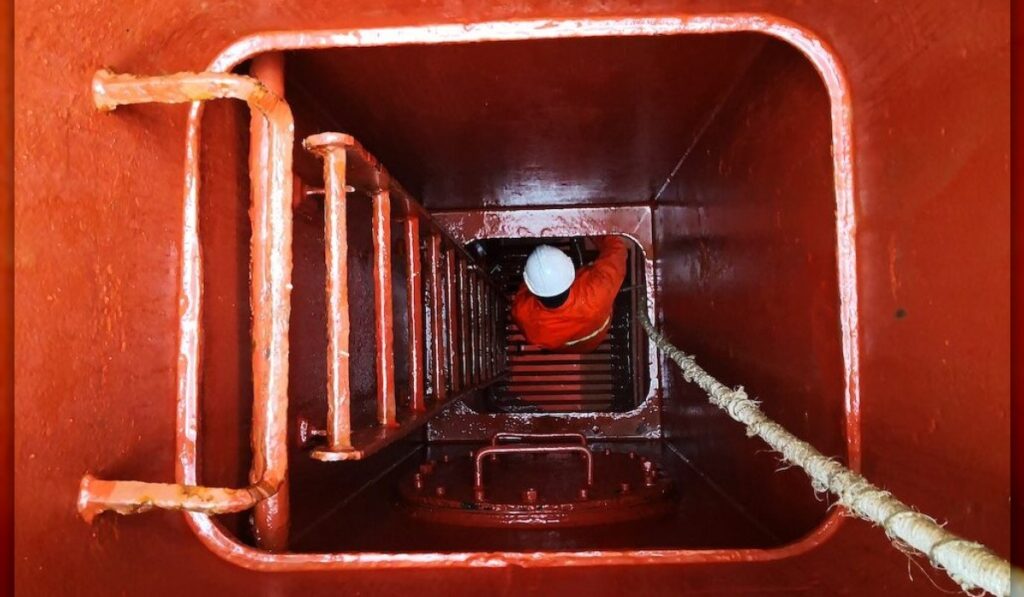
The maritime industry investigates every accident in forensic detail, yet it almost never asks why the same operations succeed thousands of times under identical conditions.
These routine successes rarely appear in logbooks or safety reports. Instead, they become another unremarkable day at sea, while the rare failures trigger exhaustive investigations, corrective actions, and new layers of oversight.
The question the industry never asks: maritime safety
Traditional maritime safety, often termed Safety-I, defines safety as the absence of accidents and non-conformities. It assumes systems work as designed and fail only when a component breaks. When incidents occur, the focus is on identifying which barrier failed, which procedure was missed, and what corrective action is needed. While essential, this approach examines only a small, unrepresentative sample of vessel operations.
“The question we do not ask often enough,” says Jayant, “is why did the operation go right for so long?” This shift in perspective is central to Safety-II, a framework associated with resilience engineering and Professor Erik Hollnagel. Safety-II defines safety as the ability to succeed under changing conditions, recognising that human adaptability, often blamed for errors, is also what enables most operations to succeed when weather, equipment, workload, and commercial pressures deviate from the plan.
Work as imagined vs. work as done
The gap between work as imagined and work as done is particularly stark in maritime operations. Work as imagined is the operation described in the Safety Management System (SMS), planned ashore, and assessed during audits.
Work as done, however, is the reality of a night watch in rough seas, with limited staffing, competing priorities, and equipment that may not function as intended. This gap is not evidence of indiscipline, Jayant argues. Instead, it provides critical operational intelligence, revealing where procedures are difficult to apply, where equipment design creates recurring workarounds, and where crews must balance competing demands to keep operations safe.
A practical example lies in the persistent issue of slips, trips, and falls. Data from Gard, the American Club, ABS, and EMSA shows these incidents account for a substantial proportion of crew injuries, with claims averaging $182,000. Gard’s analysis also highlights a concentration among seafarers during their first months on board and during busy morning operating periods, such as watch handovers, permit work, and maintenance start-ups.
A conventional response might focus on reminders, posters, personal protective equipment (PPE), toolbox talks, and reporting targets. While these measures have value, the persistence of the injury pattern suggests the underlying issue is broader than individual awareness. A Safety-II perspective asks what the operating environment demands: decks and ladders that require constant adjustment to vessel movement, new joiners who lack familiarity with vessel-specific hazards, and competing priorities that delay housekeeping.
“The error is therefore not always the root cause,” Jayant explains. “It may be the last visible link in a chain of design, workload, equipment, familiarisation, and organisational constraints established long before the person stepped on deck.”
This insight has significant implications for ship and shore management. Safety-II is not a replacement for compliance or a substitute for near-miss investigations. Instead, it offers a complementary way to learn from routine operations and successful adaptations. Jayant recommends debriefing demanding operations, such as heavy-weather work, bunkering, difficult passages, and cargo turnarounds, with the same rigour applied to near-miss investigations.
These hazards are often invisible to shore-based auditors but are well-known to crews who navigate them daily. Corrective actions, Jayant argues, should be tested against real operating conditions, not just theoretical plans.
Auditors and inspectors, too, must adapt their approach. Rather than merely checking documented compliance, they should ask how work is actually performed on board. This shift requires a deeper understanding of the challenges crews face, from limited space and time to the physical demands of working in a moving environment. Safety systems often fail not because crews neglect to report hazards, but because shore-side action is delayed or disconnected from operational reality.
Safety-II does not negate the importance of the International Safety Management (ISM) Code or Safety-I practices. Instead, it complements them by acknowledging that safe voyages are not produced by procedures alone. “They are produced by ship and shore teams adapting to conditions that rarely match the textbook plan,” Jayant notes. “The maritime industry has spent decades asking what went wrong. It should now invest equal effort in understanding why operations go right.”
The implications extend beyond injury prevention. A Safety-II approach could reshape how the industry designs equipment, writes procedures, and trains crews. For example, if recurring workarounds are identified during bunkering operations, it may signal a need for better equipment design or revised procedures that account for real-world constraints. Similarly, if new joiners consistently struggle with certain tasks, it could highlight gaps in familiarisation programmes or vessel-specific training.
For shipowners and operators, adopting a Safety-II mindset requires a cultural shift. It means valuing the insights of crews who perform the work daily and creating systems that reflect operational reality. It also means recognising that the safest practical method should be the easiest method to use, not an additional layer of paperwork or bureaucracy.
“Maritime safety does not need more administrative paperwork for its own sake,” Jayant concludes. “It needs safety management systems that reflect operational reality and make the safest practical method the easiest method to use.” This vision aligns with the broader goals of the ISM Code, which emphasises continuous improvement and the involvement of all levels of an organisation in safety management.
The challenge for the industry is to move beyond the reactive cycle of incident investigation and corrective action. By systematically analysing why operations succeed, maritime safety can become more proactive, adaptive, and aligned with the realities of life at sea. For crews, this could mean fewer injuries, less frustration with impractical procedures, and a greater sense of ownership over safety. For the industry, it could mean fewer claims, lower costs, and a stronger safety culture that values both compliance and adaptability.


Sign up free to ask CAMAL AI for a summary, the key points or anything else about this story.
Related stories
CAMAL AI
 Financial Ports Newsletter
The maritime economy, every morning
Ports, shipping and freight markets in one short email. Free.
Financial Ports Newsletter
The maritime economy, every morning
Ports, shipping and freight markets in one short email. Free.