

Oil slicks cover 1.58m sq km of ocean yearly – and ships are to blame
Satellite data reveals 81% of attributable oil slicks are linked to vessels, including dark ships evading tracking.
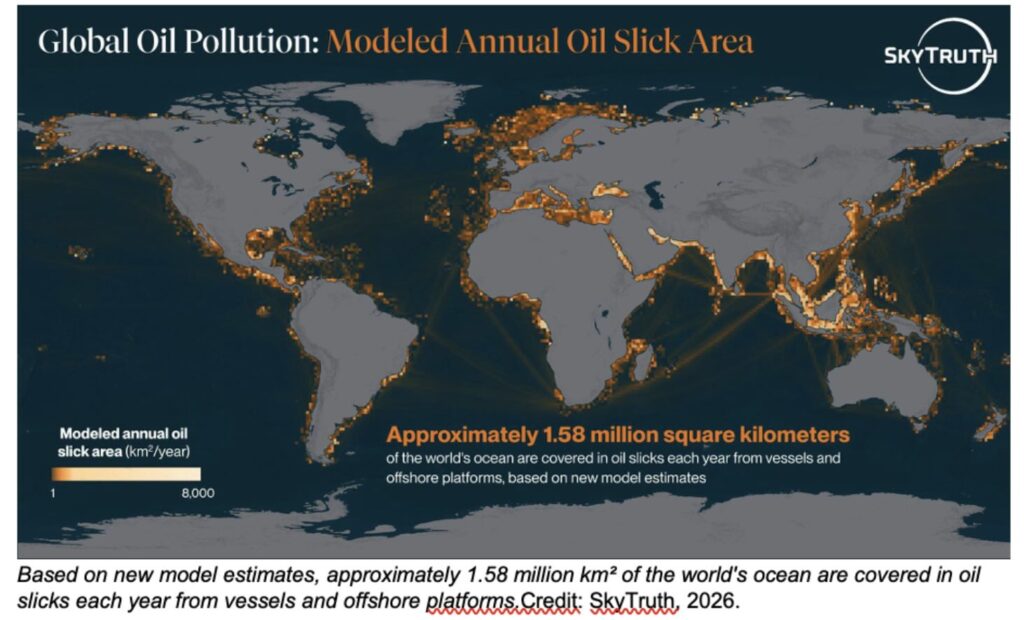
A new global analysis by satellite-monitoring group SkyTruth reveals that 1.58 million square kilometres of ocean surface is covered by oil pollution annually, with 81% of attributable slicks linked directly to vessels.
The findings, based on radar imagery from the European Space Agency’s Sentinel-1 satellites between 2023 and 2025, expose a systemic issue: merchant ships, including both dark vessels operating without tracking signals and those transmitting Automatic Identification System (AIS) data, are responsible for the overwhelming majority of slicks. Tankers and cargo vessels emerge as the worst offenders, with 16 individual ships linked to oil discharges in more than 10% of observed satellite passes.
Where the pollution is worst, and why it’s hidden: chronic oil pollution
The analysis pinpoints hotspots where chronic oil pollution is most severe. The Red Sea, Persian Gulf, Mediterranean, and Black Sea rank among the most affected regions, alongside waters off West Africa and Indonesia. More than 90% of slicks occur within national waters, often perilously close to coastlines where marine ecosystems are most vulnerable. Even marine protected areas are not spared: while around 75% record lower slick concentrations than surrounding waters, sensitive habitats in the Black Sea and Gulf of Mexico remain heavily impacted.
The study also raises red flags over flag-state oversight. Vessels registered in Palau, Panama, Malta, and Cyprus are disproportionately represented in slick data relative to their fleet sizes. Karl Wuster, SkyTruth’s Chief Technology Officer, underscores the scale of the problem:
“Oil pollution is a constant, global issue that happens far more often than the spills that make headlines.".
Offshore facilities are not blameless. The analysis identifies several platforms, particularly off Indonesia and Nigeria, as significant contributors. However, the vast majority of slicks are tied to shipping activities, routine operations rather than isolated accidents. Synthetic aperture radar, which detects slicks regardless of cloud cover or darkness, has peeled back the veil on this hidden crisis. Yet the technology has its limits: large swathes of the high seas remain poorly observed due to limited satellite coverage, leaving gaps in the data.
What this means for the maritime industry, and the planet
The implications of SkyTruth’s findings are stark. Chronic oil pollution is not merely an environmental nuisance; it is a persistent threat to marine biodiversity, coastal communities, and global fisheries.
The prevalence of dark vessels, which evade tracking systems, further complicates enforcement efforts. Regulators and port authorities now face a critical challenge: how to hold operators accountable when ownership and flag registries are deliberately obscured.
SkyTruth’s analysis also highlights the role of technology in exposing environmental harm. The Cerulean monitoring platform, which combines satellite imagery with vessel tracking data, has made it possible to quantify a problem that was once invisible. Yet the report warns that without expanded satellite coverage and greater transparency in vessel ownership, large areas of the ocean will remain unmonitored, and pollution will continue unchecked.
Meanwhile, the International Maritime Organization (IMO) must address the gaps in its regulatory framework that allow chronic pollution to persist.
The report arrives at a pivotal moment. As the maritime industry grapples with decarbonisation and sustainability goals, chronic oil pollution stands as a glaring contradiction. Ships that transport goods across the globe are also quietly poisoning the very waters they rely on. The question now is whether the industry, and the regulators who oversee it, will act before the damage becomes irreversible.
For coastal communities and environmental advocates, the message is clear: the fight against ocean pollution must expand beyond high-profile disasters. The real battle lies in addressing the routine, systemic discharges that are choking marine life and degrading ecosystems every single day. With satellite technology providing unprecedented visibility, there is no longer an excuse for inaction.


Sign up free to ask CAMAL AI for a summary, the key points or anything else about this story.
Related stories
CAMAL AI
 Financial Ports Newsletter
The maritime economy, every morning
Ports, shipping and freight markets in one short email. Free.



