

China’s Maritime Militia Makes First Pacific Foray Off Taiwan’s East Coast
Beijing deploys militia vessel Minfudingyu 07902 alongside coast guard and research ships over 30 nautical miles from.
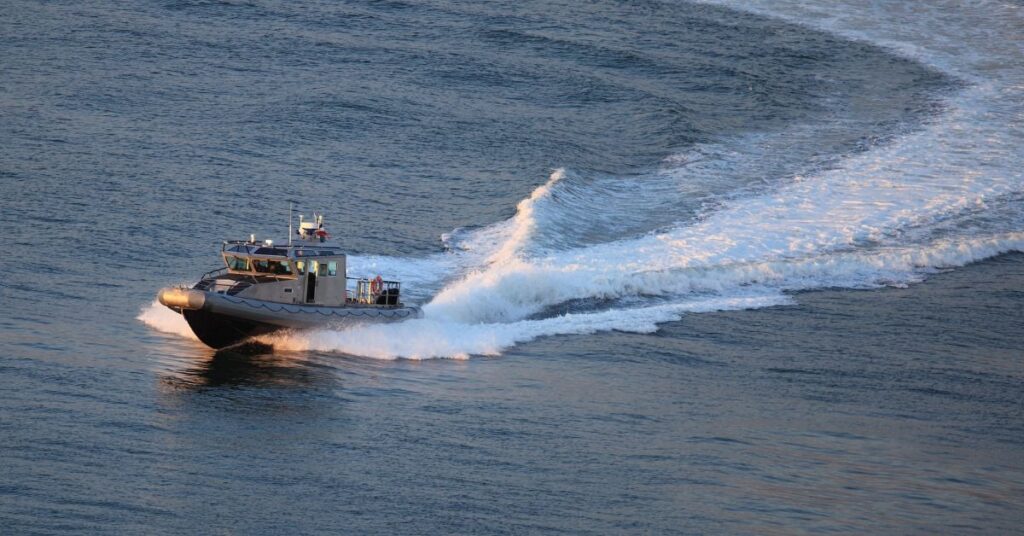
The vessels, including the Coast Guard Cutter 2502 and the research ship Xiang Yang Hong 03, were tracked by an aircraft operated by Apex Aviation, a Taiwan-based surveillance company. While the ships remained outside Taiwan’s restricted waters, their presence in an area rarely frequented by Chinese vessels has heightened concerns about Beijing’s intentions.
The use of maritime militia vessels is not new for China, but their deployment near Taiwan’s Pacific coast represents a significant escalation. The tactic, which dates back to the 1990s, involves civilian fishing boats whose crews receive military training and support to conduct missions in contested waters. These vessels often operate alongside coast guard and naval ships, allowing Beijing to assert maritime dominance while maintaining plausible deniability.
China’s increased maritime activity around Taiwan’s east coast since June has been widely interpreted as part of a broader strategy to exert pressure on the island.
Taiwan’s Response and the Broader Implications: maritime militia
In response to the sighting, Taiwan’s Coast Guard Administration has been placed on high alert, with surveillance efforts intensified to monitor Chinese vessel movements.
The involvement of Apex Aviation, a private company, highlights Taiwan’s efforts to bolster its maritime surveillance capabilities. While the firm insists its patrols are “independent and not carried out for the government,” its role in detecting the Chinese vessels underscores the growing collaboration between civilian and state actors in Taiwan’s security apparatus. This approach mirrors China’s own use of civilian assets for military purposes, creating a shadow war of reconnaissance and counter-reconnaissance in the Taiwan Strait and beyond.
For Taiwan, the stakes could not be higher. The island’s east coast is not only a critical supply route but also a potential flashpoint in any future conflict with China. The presence of Chinese militia vessels in these waters suggests Beijing is testing Taiwan’s resolve, probing for weaknesses in its defenses while avoiding overt military confrontation. The tactic allows China to maintain pressure on Taipei without crossing the threshold that might trigger a stronger international response.
Analysts warn that if China’s maritime militia operations continue to expand, they could set a dangerous precedent for other disputed regions. The South China Sea, where similar tactics have been used to assert control over contested territories, offers a cautionary tale. There, China’s use of civilian vessels has allowed it to gradually shift the status quo in its favor, often without drawing significant pushback from the international community. If Taiwan fails to counter these moves effectively, it risks ceding control of its surrounding waters by default.
The incident also raises questions about the effectiveness of international law in deterring China’s maritime assertiveness. Taiwan’s Ministry of National Defense has repeatedly accused Beijing of undermining the United Nations Convention on the Law of the Sea (UNCLOS), which governs maritime boundaries and rights. However, with China refusing to recognize Taiwan’s sovereignty, the island has limited recourse to legal mechanisms to challenge Beijing’s actions. This leaves Taiwan reliant on its own defenses and the support of like-minded nations to counter China’s growing maritime ambitions.
Looking ahead, Taiwan’s government is likely to intensify its surveillance efforts, particularly in the waters off Hualien and other strategic locations. The Coast Guard Administration may also increase patrols and coordination with civilian companies like Apex Aviation to monitor Chinese vessel movements more closely. However, without a unified international response, Taiwan’s ability to deter China’s maritime militia operations remains constrained.
For now, the sighting of the Minfudingyu 07902 serves as a stark reminder of the evolving nature of maritime conflict. As China continues to blur the lines between civilian and military assets, Taiwan, and the broader international community, must adapt to a new era of hybrid warfare at sea. The question is no longer whether China will escalate its pressure on Taiwan, but how far it is willing to go to achieve its strategic objectives.


Sign up free to ask CAMAL AI for a summary, the key points or anything else about this story.
Related stories
CAMAL AI
 Financial Ports Newsletter
The maritime economy, every morning
Ports, shipping and freight markets in one short email. Free.



