

IRGC Escalates: 100+ Tanker Strikes Reshape Gulf Shipping Routes
Iran’s Revolutionary Guards expand attacks beyond Hormuz, slashing crude exports by a third in a week
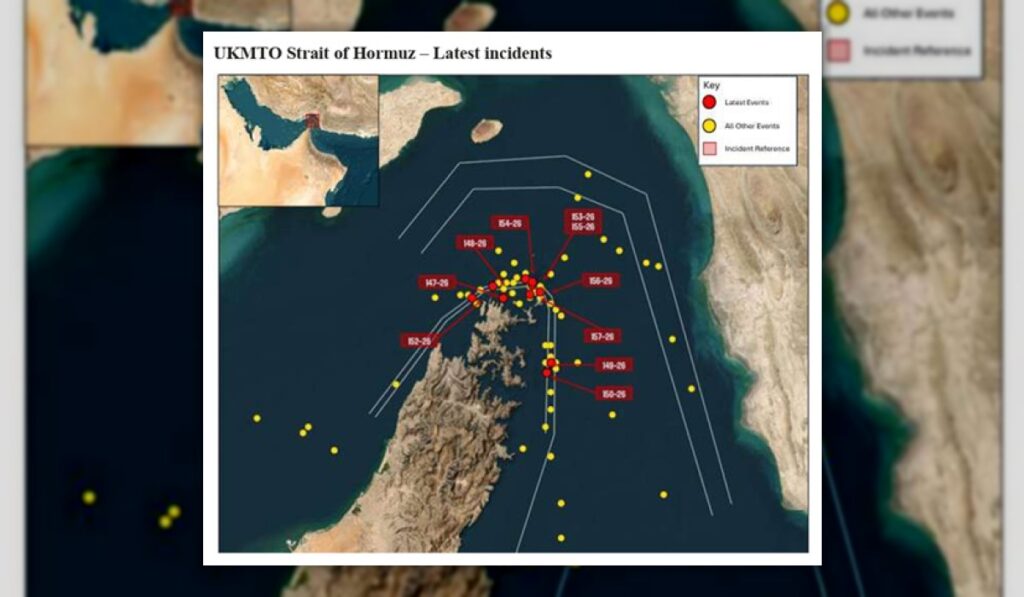
The IRGC’s Friday statement marked a tactical shift, warning that “encounters with offending vessels will not be limited to the Strait of Hormuz“ and that any ship using unauthorised passages “anywhere in the region will be pursued”. The threat came as UK Maritime Trade Operations confirmed a fresh strike on the Chinese-owned VLCC Gem No. 2 (302,783 dwt), anchored 13 nautical miles west of Al Jazeera, UAE. The fire aboard the Panama-registered vessel, chartered by Trafigura, was extinguished, but the extent of damage remains unclear.
The tempo of attacks has accelerated sharply. UKMTO reports 15 or 16 incidents since September, with a dozen in the past few days alone. Since July, 59 incidents have been logged, 41 involving commercial shipping in the Strait of Hormuz. The International Maritime Organization’s tally now exceeds 100 confirmed strikes since the conflict began, with Wednesday’s attack on the tanker ST1 (IMO 9256999) off Oman pushing the total past the grim milestone.
Tankers Under Fire: A Dozen Strikes in Days: IRGC
AI analytics firm Windward identified 12 vessels struck in recent attacks, 11 of them tankers. All were transiting the southern channel near Oman with their AIS transmissions switched off, a tactic that has become a red flag for Iranian patrols. The IRGC claimed a separate strike on the Vietnamese LPG tanker NV Sunshine (54,975 dwt) late Thursday, alleging an “illegal transit” near Qatar. The vessel, disabled by an engine-room fire, limped to anchorage off Ras Laffan.
Brent Crude
The attacks have sent shockwaves through global oil markets. Kpler’s data shows crude exports “sharply lower”, down by approximately a third from September’s 15.5 million barrels per day to just under 10 million by October 7. Brent crude, which hovered around $100 last week, spiked to $$102 by Friday’s close, a clear signal that traders are pricing in heightened risk. Iran’s calculus appears twofold: economic pressure and political leverage.
Economic Pressure and Political Brinkmanship
Unconfirmed reports from Iranian media described “several heavy explosions” in the southern passage of the Strait of Hormuz on Friday, though U.S. Central Command dismissed claims of mines in the shipping lane. The IRGC’s narrative, that non-compliant tankers struck mines, clashes with Washington’s assurance that the route remains clear. Meanwhile, security consultants Vanguard Tech reported harassment of the Marshall Islands-flagged VLCC Dhalkut (299,997 dwt) off Fujairah, with shots fired near the vessel on Thursday.
The shipping industry is bracing for further disruption. With the IRGC’s warning that “punishment will be certain”, tanker operators face a stark choice: comply with Tehran’s demands or risk becoming the next target.


Sign up free to ask CAMAL AI for a summary, the key points or anything else about this story.
Related stories
CAMAL AI
 Financial Ports Newsletter
The maritime economy, every morning
Ports, shipping and freight markets in one short email. Free.



