

US Blockade Cuts Iran’s Oil Revenue by 40% as Land Routes Crumble
Washington’s naval blockade has redirected 138 vessels and slashed Tehran’s budget revenues.
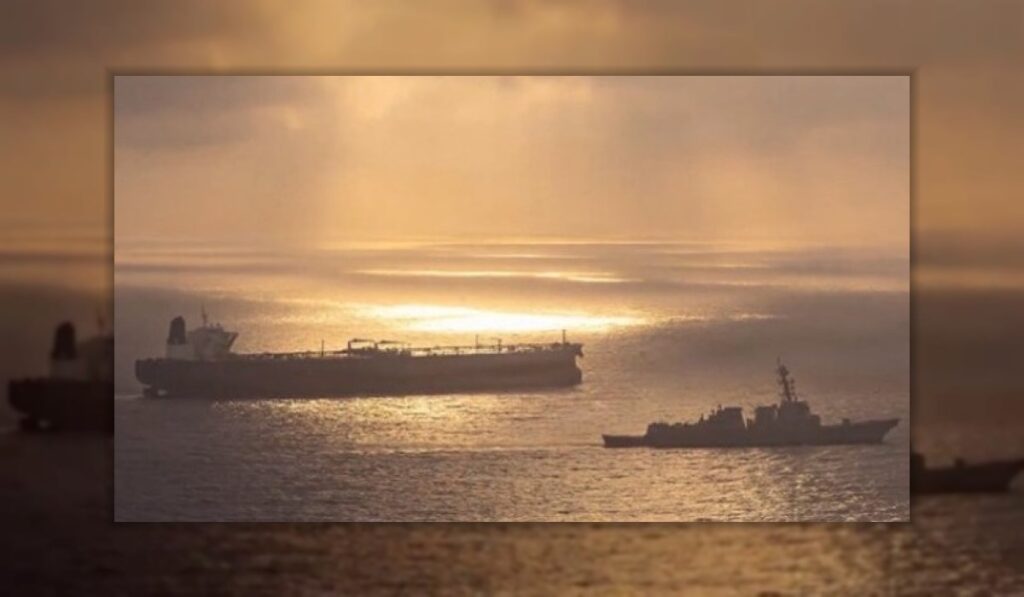
The U.S. naval blockade on Iran has reached near-total effectiveness, cutting off the country’s oil exports and slashing its budget revenues by an estimated 40%. With maritime trade virtually halted and land routes increasingly restricted, Tehran’s economic isolation is deepening under coordinated U.S. pressure.
After 100 days of enforcement, U.S. Central Command reports the blockade has successfully prevented Iran from exporting oil for weeks. Pre-war contingency reserves, built up as a buffer, are now depleted or nearly exhausted. The financial impact is severe: the Iranian government stands to lose 40% of its annual budget revenues, a critical blow to its operational capacity.
U.S. forces have redirected 138 commercial vessels since mid-October to enforce compliance, effectively severing Iran’s primary trade routes. While the Caspian Sea and rail links to China and Russia were never major conduits for oil or gas, these alternatives have also been severely restricted. Air traffic has faced similar disruptions, compounding the economic strain.
Oil Exports Collapse, Financial Pressure Mounts: Iran
The U.S. Treasury’s Operation Economic Fury has further tightened the blockade by targeting illicit financial transactions. Though Iranian operatives have demonstrated skill in bypassing restrictions, exploiting loopholes as they are closed, the naval blockade remains the most damaging component of the campaign. Despite widespread discontent with the government, the Iranian population’s historical resilience to hardship suggests the regime may endure prolonged economic pressure.
With maritime trade blocked, Iran’s land borders have become the focus of U.S. efforts to further isolate the country. An interagency strategy is now targeting cross-border commerce with neighboring states, including Pakistan, Afghanistan, Turkmenistan, Azerbaijan, Armenia, Turkey, and Iraq.
Land Borders Face Growing Restrictions
To the east, Pakistan has announced plans to expand capacity at the Kuhak border crossing, though much of the existing trade is informal smuggling that bypasses official checkpoints. Relations remain tense due to a Sunni Baluch separatist insurgency in Iran’s southwestern provinces. Turkmenistan and Afghanistan, both wary of U.S. scrutiny, have shown little willingness to facilitate Iranian trade. The Inche-Burun border crossing, a key link to China, was disabled in July after U.S. forces bombed the bridge at Aq Tekeh Khan in Golestan Province.
Azerbaijan, despite formal diplomatic ties, has offered no meaningful relief. Recent restrictions on headscarves in schools, a secularization measure, have further strained relations, particularly with Iran’s Azeri minority. While Azerbaijan could theoretically provide access to the Cehyan-Tbilisi pipeline via Baku, political tensions make cooperation unlikely.
Turkey and Iraq, both under U.S. pressure, are tightening border controls. The Al Sheeb crossing in Iraq’s Maysan province has already been closed, and Kurdish officials anticipate similar restrictions at Mandali. Armenia’s Zangezur Corridor, a limited-capacity road route, remains a theoretical alternative, though Yerevan is unlikely to risk its improving ties with NATO by aiding Tehran.


Sign up free to ask CAMAL AI for a summary, the key points or anything else about this story.
Related stories
CAMAL AI
 Financial Ports Newsletter
The maritime economy, every morning
Ports, shipping and freight markets in one short email. Free.



