

India’s INS Vikrant Welcomes First Rafale M Landing in Historic Trial
Indian Navy achieves maiden landing of French-built Rafale M fighter on indigenous carrier INS Vikrant.
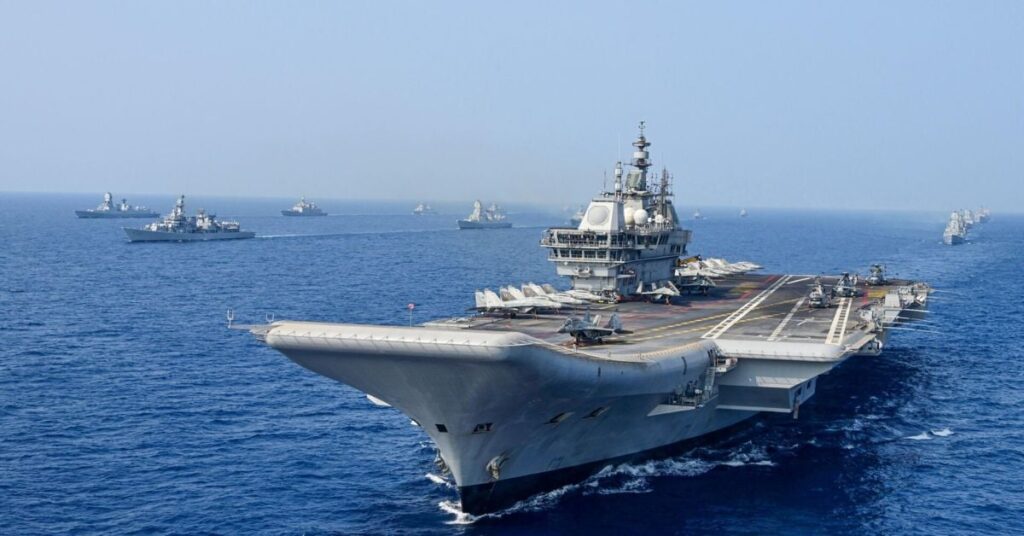
The Indian Navy has initiated trials for its first Rafale Marine fighter jets, marking a key step in the country’s efforts to enhance its carrier-based air power. The tests, conducted in Goa, aim to evaluate the modifications needed for the aircraft to operate from India’s largest indigenously built warship, INS Vikrant.
These trials are part of a broader plan to induct 26 carrier-based fighters under a ₹63,000 crore agreement signed with France on April 28, 2025. Deliveries of the jets are expected to begin by the end of 2028 or early 2029, according to defence officials. The Rafale-M, developed by French aerospace company Dassault Aviation, is already in service with the French Navy and will make India its first international operator.
Compatibility Tests for INS Vikrant’s Unique System
INS Vikrant employs a Short Take-Off But Arrested Recovery (STOBAR) system, which uses a ski-jump ramp for take-offs and arrestor wires for landings. This differs from the catapult-assisted systems used on French aircraft carriers, requiring thorough compatibility assessments. The Rafale-M is equipped with a naval-specific landing configuration, including an arrestor hook, to facilitate operations from carriers. The ongoing trials in Goa will determine whether additional adjustments are needed for safe operations on INS Vikrant’s flight deck.
The Indian Navy operates two aircraft carriers, INS Vikrant and INS Vikramaditya, and the 26 Rafale-M fighters will be deployed on both ships. The agreement includes 22 single-seat and four twin-seat aircraft, along with pilot training, flight simulators, weapons, and long-term maintenance support. It also covers technology transfer to integrate Indian-made weapons, supporting the government’s Aatmanirbhar Bharat (self-reliant India) initiative.
Advanced Capabilities for Naval Operations
The Rafale-M is a twin-engine, multirole fighter with a maximum take-off weight of 24.5 tonnes and a top speed of Mach 1.8 (approximately 2,200 kmph). Its advanced sensor systems, including the RBE2 active electronically scanned array (AESA) radar, Front Sector Optronics sensor, and SPECTRA electronic warfare suite, provide a consolidated tactical picture through sensor-data fusion. This technology enables the aircraft to perform air defence, maritime strikes, reconnaissance, and anti-ship operations.
The fighter’s weapons suite includes Meteor and MICA air-to-air missiles, SCALP long-range cruise missiles, AM39 Exocet anti-ship missiles, and HAMMER precision-guided air-to-ground weapons. These armaments will allow the Indian Navy to counter enemy aircraft, protect naval forces at sea, and conduct strikes against shore-based targets. The successful trials and upcoming induction of the Rafale-M reflect India’s commitment to modernising its naval aviation capabilities.


Sign up free to ask CAMAL AI for a summary, the key points or anything else about this story.
Related stories
CAMAL AI
 Financial Ports Newsletter
The maritime economy, every morning
Ports, shipping and freight markets in one short email. Free.



