

Indian Navy Ditches Imports: Homegrown SATCOM for Warships by 2027
Navy seeks three indigenous SATCOM terminal prototypes to cut reliance on foreign tech and boost secure fleet.
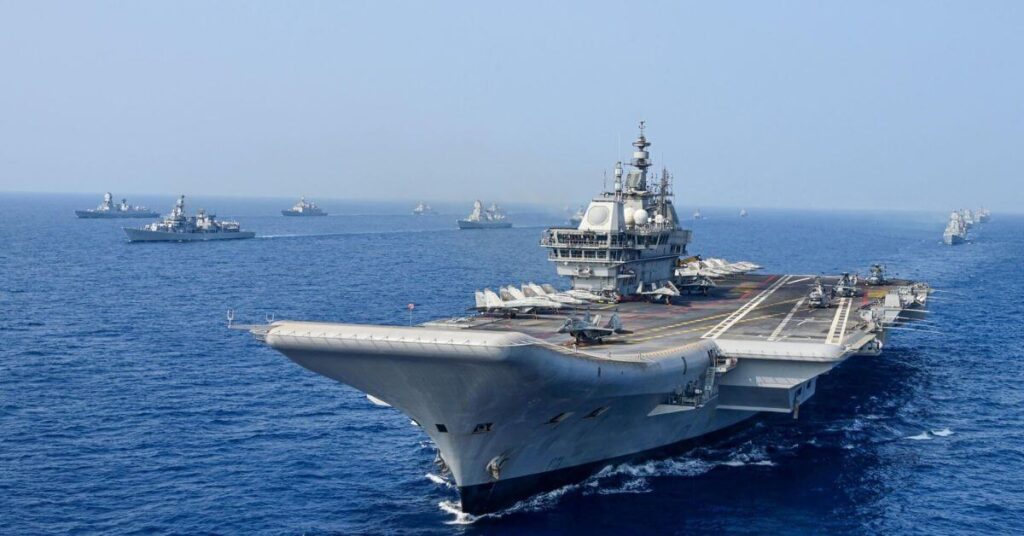
The Indian Navy has kicked off a push to develop its own satellite communication terminals for warships, aiming to slash dependence on imported gear and boost secure connectivity across the Indian Ocean.
The move comes as the Navy looks to modernise its network-centric warfare capabilities. The new terminals will connect warships to the GSAT-7R satellite, launched in November 2, 2025, which provides secure voice, data, and video links for ships, submarines, and aircraft up to 2,000 kilometres from shore. The project starts with three prototypes, a large C-band terminal, a large Ku-band terminal, and a smaller Ku-band system, before potentially scaling to around 30 units.
Why Indigenous SATCOM Terminals Matter for the Fleet
The shift to homegrown technology is part of a broader effort to reduce reliance on foreign suppliers. The Make-II scheme, run by the Ministry of Defence’s Department of Defence Production, is a key initiative under India’s defence-indigenisation policy. Established to promote domestic manufacturing, the scheme encourages private sector participation in defence projects, offering a faster procurement route compared to traditional tenders.
The SATCOM terminal project is a direct reflection of this strategy, ensuring that critical communication infrastructure remains under Indian control.
The Navy has long relied on satellite communications for fleet operations. Its previous dedicated satellite, GSAT-7 Rukmini, entered service in 2013 and demonstrated the value of secure, real-time connectivity during exercises like TROPEX in 201(eliminar ‘4’), where 60 warships and 75 aircraft shared data seamlessly.
What the New Terminals Mean for Naval Operations
The new SATCOM terminals will play a pivotal role in the Indian Navy’s network-centric warfare doctrine. Network-centric warfare relies on real-time data sharing between platforms, enabling faster decision-making and coordinated responses. By integrating indigenous terminals with the GSAT-7R satellite, the Navy can enhance its ability to monitor and respond to threats across the Indian Ocean Region, a critical area for India’s maritime security.
The terminals will operate in both C-band and Ku-band frequencies, offering flexibility for different platforms and operational needs. This dual-band capability ensures that the Navy can maintain connectivity in diverse operational scenarios, from routine patrols to high-intensity combat situations.
For the fleet, the new terminals will mean improved situational awareness. Warships equipped with these systems will be able to receive real-time updates on enemy movements, weather conditions, and logistical support, all while maintaining secure communication with command centres. This level of integration is essential for modern naval operations, where split-second decisions can determine the outcome of a mission. What’s Next for the SATCOM Terminal Project
The first phase of the project focuses on prototype development, with the Navy expected to evaluate designs before moving to production. If successful, the project could deliver around 30 terminals, providing a significant upgrade to the fleet’s communication infrastructure.
The GSAT-7R satellite, also known as CMS-(eliminar ’03’), is central to the Navy’s plans. Launched aboard ISRO’s LVM3-M5 mission, it extends secure communication coverage across the Indian Ocean Region, supporting not just warships but also submarines, aircraft, and Maritime Operations Centres. The LVM3, formerly known as the GSLV Mk III, is ISRO’s heaviest launch vehicle, capable of placing heavy payloads into geostationary orbit. Its use for the GSAT-7R launch highlights the satellite’s strategic importance to India’s defence capabilities.
For the Indian Navy, the project represents a step toward greater self-reliance in defence technology. By developing indigenous SATCOM terminals, the service aims to enhance its operational capabilities while reducing vulnerabilities tied to foreign supply chains. The move also reflects broader trends in military modernisation, where secure, resilient communications are critical for network-centric warfare. As geopolitical tensions rise in the Indo-Pacific region, the ability to maintain secure, uninterrupted communication will be a key factor in maintaining maritime dominance.
The timeline for the project remains tight. With prototypes expected to undergo testing soon, the Navy could begin integrating the new terminals into its fleet within the next two years. Companies interested in participating in the project can find details on the Ministry of Defence’s official website, where the Expression of Interest is available for review. The successful development of these terminals will not only strengthen the Navy’s communication infrastructure but also boost India’s defence manufacturing sector, creating jobs and fostering innovation in high-tech industries.
For stakeholders in India’s defence and maritime sectors, this project is a clear signal of the country’s commitment to self-reliance. As the Navy modernises its fleet, the development of indigenous SATCOM terminals will ensure that critical communication links remain secure, resilient, and under Indian control. The broader implications extend beyond defence, as the project could spur advancements in satellite technology and cybersecurity, positioning India as a leader in the global defence market.


Sign up free to ask CAMAL AI for a summary, the key points or anything else about this story.
Related stories
CAMAL AI
 Financial Ports Newsletter
The maritime economy, every morning
Ports, shipping and freight markets in one short email. Free.
Financial Ports Newsletter
The maritime economy, every morning
Ports, shipping and freight markets in one short email. Free.



