

Iran’s VLCC blacklist chokes 24% of Hormuz crude shuttle trade
Tehran’s move targets 12 vessels carrying 750,000 barrels per day of ship-to-ship transfers in the Gulf of Oman.
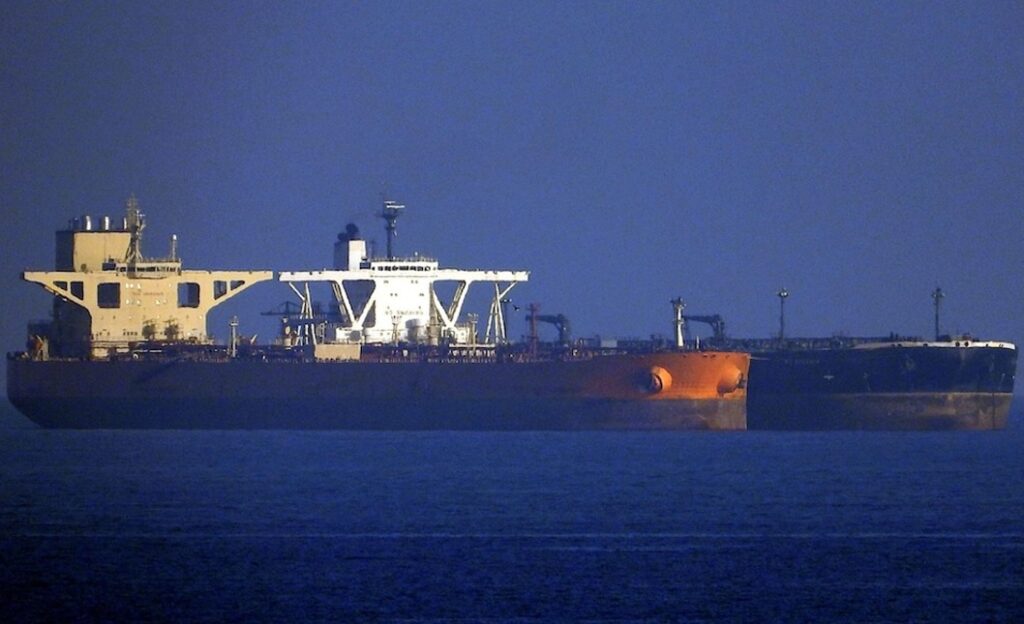
Iran’s decision to blacklist 12 Very Large Crude Carriers (VLCCs) has thrown a critical lifeline for Middle East oil exports into jeopardy, with the vessels targeted accounting for nearly a quarter of all ship-to-ship (STS) crude transfers outside the Strait of Hormuz.
The vessels had also lifted 900,000 barrels per day from inside the Middle East Gulf, equivalent to 16% of the region’s total crude exports during the period.
Threats and market impact: why the blacklist matters: Hormuz
Tehran’s blacklist carries severe consequences. Iran has threatened blacklisted vessels with fines, detention and cargo confiscation, while warning that any ship conducting STS operations with them could also be added to the list. The threat has already prompted action: Reuters reported that at least three Indian refiners and a global energy major plan to stop using the blacklisted tankers due to security concerns.
Brent Crude
Braemar noted that if owners begin avoiding these highly active shuttle tankers, the remaining vessels still willing to transit Hormuz could command higher premiums. “If owners begin avoiding these highly active shuttle tankers, the ships yet unnamed by Iran and still willing to transit Hormuz are likely to command higher premiums,” the broker said.
The shuttle system has become an essential workaround for Gulf exporters during the crisis. Since early July, Middle East Gulf crude exported through STS transfers in the Gulf of Oman has averaged 3.1 million barrels per day, according to Vortexa, almost 30% of the region’s total crude exports of 5.6 million barrels per day. The UAE alone has accounted for around 1.3 million barrels per day, while Kuwait has contributed 940,000 barrels per day.
The shuttle trade’s fragile resilience
The shuttle trade concentrates the most dangerous part of the voyage, crossing the Strait of Hormuz, among a small group of vessels making repeated runs. MB Shipbrokers observed that as of August August 21, there had been 284 shuttle runs since the war began, with 54% carried out by vessels repeating four or more transits. “With the highest-risk part of the voyage increasingly concentrated among few repeat vessels, flow resilience depends disproportionately on their willingness to keep returning,” the broker warned.
The scale of the workaround was highlighted this week by TankerTrackers.com, which counted at least 20 STS operations underway in the Gulf of Oman on a single day, involving crude, refined products and LPG. On a particularly busy day, the platform reported 25 million barrels of crude oil in transfer sessions, originating from nearly every country in the region except Iran. Product tankers have not been spared.
MB Shipbrokers emphasised that STS activity has been instrumental in sustaining Asia’s crude imports above seasonal averages in August.
“With the highest-risk part of the voyage increasingly concentrated among few repeat vessels, flow resilience depends disproportionately on their willingness to keep returning. If these vessels are targeted and subsequently avoid the trade, Hormuz flows would tighten further from its already low levels.”
MB Shipbrokers·Maritime Analysts


Sign up free to ask CAMAL AI for a summary, the key points or anything else about this story.
Related stories
CAMAL AI
 Financial Ports Newsletter
The maritime economy, every morning
Ports, shipping and freight markets in one short email. Free.
Financial Ports Newsletter
The maritime economy, every morning
Ports, shipping and freight markets in one short email. Free.



