

Ground Effect Vehicles: The $10bn Bet to Replace Short-Haul Flights
Regent’s 12-passenger Sea Glider just flew at 33 feet—using 75% less fuel than a plane of the same size.
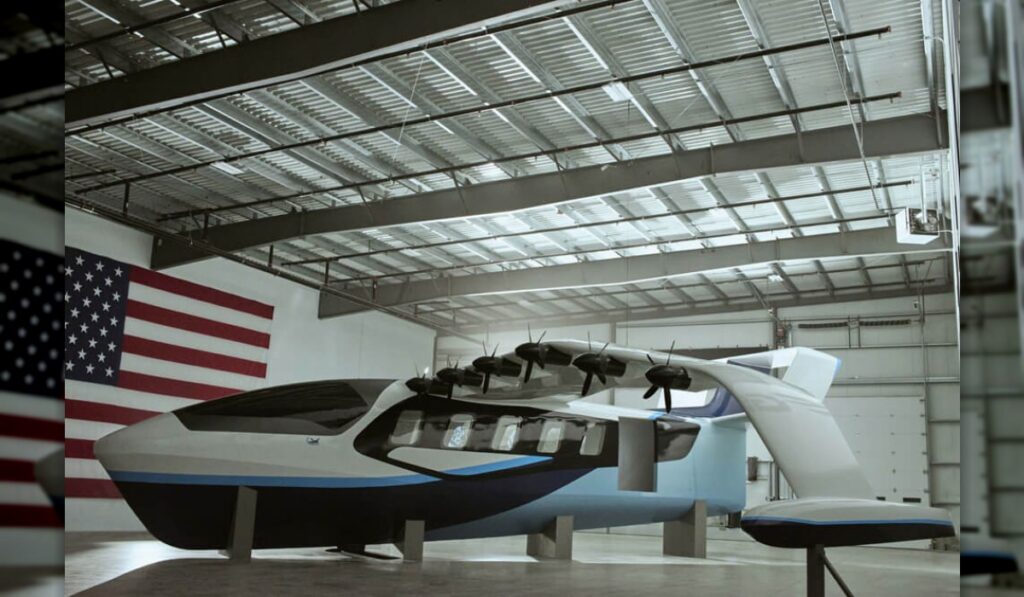
The test, conducted in early September 2026, marks the first time an onboard crew has piloted a craft designed to ride the cushion of air between wing and water, consuming a fraction of the fuel of conventional aircraft.
The economics are stark. Ground effect vehicles (GEVs) consume 25% to 33% of the energy of an airplane carrying the same payload. Billy Thalheimer, founder of Regent and a former Boeing engineer, has staked his company on the idea that GEVs can bridge the gap between ships and aircraft, offering the speed of flight with the efficiency of maritime transport.
The Boeing Pelican, a 500-foot-wingspan concept unveiled two decades ago, was designed to carry freight at 25 to 50 feet above calm seas, climbing to 250 to 500 feet to clear storms. The project, intended for military use, was shelved when defence funding dried up. But the Pelican’s failure wasn’t technical, it was timing.
Royal Caribbean
The Regent Sea Glider, for instance, is designed to operate between coastal cities in regions with gentler waves, such as the Caribbean, the South China Sea, or the Mediterranean.
The Pelican’s design, capable of carrying payloads equivalent to the largest commercial airplanes, which weigh up to 800,000 pounds, highlighted the potential of GEVs to handle heavy loads at a fraction of the energy cost.
Thalheimer’s team, composed of former Boeing personnel, has prioritised operational flexibility, designing the Sea Glider to operate from existing maritime terminals rather than requiring specialised airport infrastructure. This strategy avoids the regulatory hurdles that grounded the Pelican while still delivering the speed and efficiency that make GEVs attractive.
The Regulatory Hurdle: Ships or Planes?: ground effect vehicles
Despite their aviation-like speed, GEVs are classified as vessels under maritime law. This simplifies crew training, maritime pilots can transition to GEVs with minimal additional certification, but complicates airport integration. The Regent Sea Glider, for example, could dock at terminals adjacent to coastal airports, but larger models would need sloped ramps to transition from water to runway. Boeing’s Pelican was designed to do exactly that, but regulators never established rules for vehicles that straddle both domains.
The classification of GEVs as vessels stems from their operational profile: they spend the majority of their time at low altitudes over water, where maritime regulations apply. However, their ability to interact with airport runways, even if only for take-off and landing, blurs the line between aviation and maritime law. This ambiguity has historically deterred investment, as manufacturers like Boeing faced uncertainty over which regulatory body would oversee certification, safety standards, and operational protocols.
For instance, would a GEV operating from an airport runway fall under the jurisdiction of aviation authorities like the Federal Aviation Administration (FAA) in the U.S. or European Union Aviation Safety Agency (EASA), or would maritime agencies retain control?
Regent’s strategy sidesteps this issue by focusing on routes that avoid airport runways altogether. The Sea Glider is designed to operate between coastal cities, leveraging existing maritime infrastructure such as ports and terminals. This approach not only simplifies regulatory compliance but also reduces the need for costly modifications to airports.
However, the long-term vision for GEVs includes hybrid operations, where larger models could transition between water and runway. Achieving this would require revisions to international regulations, potentially involving collaboration between aviation and maritime authorities to establish unified standards for hybrid vehicles.
Thalheimer’s team is betting that the cost advantage will force change. A GEV pilot’s training costs a fraction of that for a commercial airline captain, and the vehicles can operate from existing maritime infrastructure. The 12-passenger Sea Glider is just the beginning; Regent envisions larger models capable of carrying freight or up to 100 passengers. If successful, these craft could occupy a niche between container ships and air cargo, offering door-to-door speeds at a third of the cost.
The potential for GEVs extends beyond passenger transport. The technology could revolutionise freight logistics, particularly in regions where air cargo is prohibitively expensive and maritime transport is too slow. For example, the Atlantic coast of Brazil, the coastal cities around the Caribbean Sea, and the cities around the South China Sea could benefit from GEVs that transport goods at speeds approaching those of air freight but at a fraction of the cost.
The Boeing Pelican, with its 500-foot wingspan and capacity to carry payloads comparable to large commercial aircraft, was originally envisioned for such markets. However, the lack of regulatory clarity and infrastructure investment stalled its development.
For now, the focus remains on proving the technology’s viability in calmer waters. The Tropics of Cancer and Capricorn, which encompass regions like the Caribbean, the Mediterranean, and parts of Southeast Asia, offer ideal conditions for GEVs due to their relatively gentle wave patterns.
In these areas, smaller GEVs like the Regent Sea Glider could operate efficiently between coastal cities, providing a faster alternative to ferries and a cheaper option than short-haul flights. However, expanding into rougher seas, such as the North Sea or the southern Atlantic and Indian Oceans, will require further technological advancements, particularly in hydrofoil design and stability control.
What This Means for the Maritime and Aviation Industries
The successful test of the Regent Sea Glider could signal a shift in how regional transport is approached. For the maritime industry, GEVs offer an opportunity to expand beyond traditional shipping routes, providing faster and more flexible services for both passengers and freight.
Ports and terminals in coastal cities could see increased traffic as GEVs become a viable alternative to short-haul flights, particularly in regions where airport capacity is constrained. For example, cities like Hong Kong, Singapore, and Rio de Janeiro could integrate GEV terminals into their existing port infrastructure, creating new hubs for regional travel.
The aviation industry, meanwhile, could benefit from the relief GEVs provide to overcrowded coastal airports. By shifting short-haul passenger and freight traffic to GEVs, airports could free up runway capacity for long-haul flights, reducing congestion and delays. This is particularly relevant for hubs in Asia, the Caribbean, and Europe, where regional travel demand is high, and airport expansion is often limited by geographical or regulatory constraints.
Additionally, the lower fuel consumption of GEVs could help airlines meet sustainability targets, as the vehicles produce significantly fewer emissions than conventional aircraft.
For passengers, GEVs could offer a more convenient and cost-effective alternative to short-haul flights. The ability to travel between coastal cities without the need for airport security or lengthy check-in procedures could make regional travel more appealing.
For instance, a journey between Miami and Havana, or Singapore and Jakarta, could be completed in a fraction of the time it takes by ferry, with fares competitive with budget airlines. The 12-passenger Sea Glider is just the first step; larger models could eventually accommodate up to 100 passengers, further reducing costs and increasing accessibility.
However, challenges remain. The technology must prove its reliability in rough sea conditions, and regulators must establish clear guidelines for hybrid operations. The International Maritime Organization (IMO) and aviation authorities like the FAA and EASA will need to collaborate to create a unified regulatory framework that addresses safety, certification, and operational standards for GEVs. Additionally, investment in infrastructure, such as specialised terminals and maintenance facilities, will be required to support the widespread adoption of GEVs.
The next test for Regent and other GEV developers will be demonstrating the technology’s scalability. The 12-passenger Sea Glider is a critical first step, but larger models capable of carrying freight or more passengers will be necessary to achieve commercial viability. The company has already outlined plans for larger hydrofoils with greater surface area, which could improve stability and lift in rougher conditions. If successful, these advancements could pave the way for GEVs to operate in regions like the North Atlantic and the southern Indian Ocean, where wave heights can exceed 13 feet.
For now, the industry is watching closely. The Regent Sea Glider’s flight in early September 2026 could mark the beginning of a new era in transport, or it could join a long list of ground effect concepts that failed to take off. What is clear is that the technology’s potential, lower costs, reduced emissions, and relief for overcrowded airports, is too significant to ignore. As Billy Thalheimer put it, the goal is to create a mode of transport that combines the best of maritime and aviation, offering speed, efficiency, and accessibility to regions that need it most.
The future of GEVs may hinge on their ability to navigate the regulatory and technological challenges ahead. If they succeed, these vehicles could redefine regional travel, bridging the gap between ships and aircraft in a way that benefits both industries, and the passengers and businesses that rely on them.


Sign up free to ask CAMAL AI for a summary, the key points or anything else about this story.
Related stories
CAMAL AI
 Financial Ports Newsletter
The maritime economy, every morning
Ports, shipping and freight markets in one short email. Free.
Financial Ports Newsletter
The maritime economy, every morning
Ports, shipping and freight markets in one short email. Free.