

32,000 lbs of contact lenses trapped on crashed Amazon jet
A Boeing 767-300 freighter operated by 21 Air for Amazon Air overshot the runway at Miami International Airport.
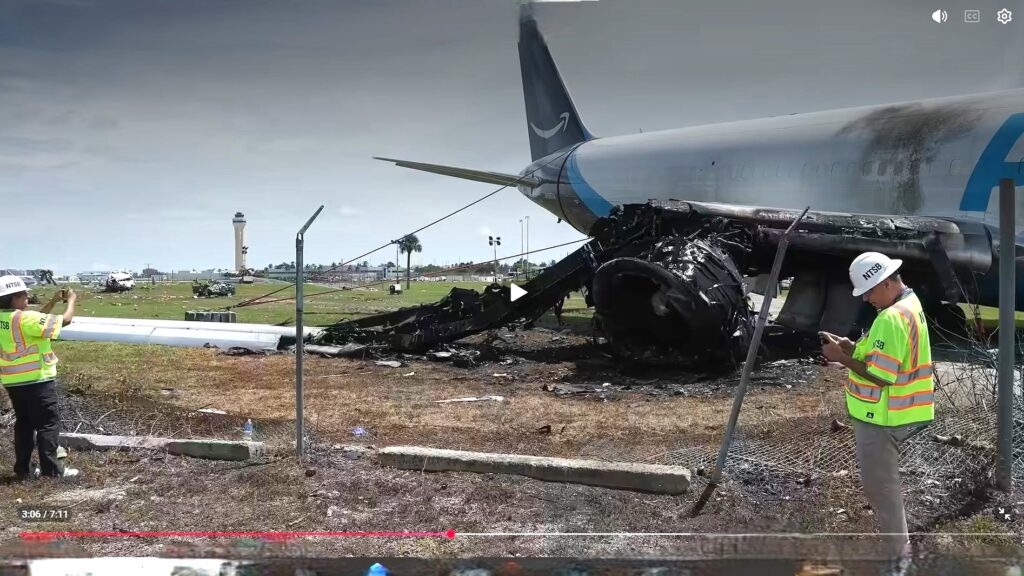
A Boeing 767-300 cargo jet operated by 21 Air for Amazon Air Cargo ran off the runway at Miami International Airport on Sunday, killing five ground workers and leaving more than 32,000 pounds of CooperVision contact lenses stranded onboard the partially damaged aircraft. The National Transportation Safety Board has launched an investigation into the accident, which also left several others injured after the plane struck a van near the runway.
The aircraft, a passenger-to-freighter conversion, was carrying contact lenses manufactured by CooperVision at its Juana Diaz facility in Puerto Rico as its primary cargo. The company, a division of CooperCompanies, has acknowledged the shipment but has not yet confirmed whether the products can be salvaged.
What happened during the crash?
The NTSB’s preliminary findings, revealed during a media briefing on Tuesday evening, paint a troubling picture of the final moments before the crash. Flight 7598 approached Miami International Airport at excessive speed, overshooting the runway’s touchdown zone. The pilots reportedly struggled to slow the aircraft, failing to engage speed brakes or thrust reversers. In a late attempt to take off again, the pilot hit the throttle, but the plane exited the runway, coming to rest tilted in a grassy field.
The NTSB’s investigation is ongoing, with data extracted from the flight data and cockpit voice recorders expected to provide further insights into the pilots’ actions.
How the stranded shipment impacts CooperVision and Amazon’s logistics network
In a statement, CooperVision expressed its condolences to those affected by the incident and pledged to support the NTSB’s investigation.
“Our thoughts are with everyone affected by the incident involving a flight at Miami International Airport,” the company said. “Among the aircraft’s cargo were contact lenses manufactured at CooperVision’s Juana Diaz facility in Puerto Rico. The company contracted with an independent third-party logistics provider that transports freight out of Puerto Rico on behalf of multiple organizations. CooperVision will support the National Transportation Safety Board and other relevant authorities as needed.”
The incident has also cast a spotlight on Amazon Air Cargo, the two-year-old logistics unit that sells excess capacity on Amazon’s cargo jets to third-party shippers. Amazon Air, which was launched a decade ago to expedite deliveries for Prime members, now operates a fleet of more than 100 aircraft and serves over 65 destinations worldwide.
Since the accident, 21 Air has continued to operate seven Boeing 767-300s, primarily shuttling between Amazon’s superhub at Cincinnati-Northern Kentucky International Airport and Miami, as well as other destinations such as San Juan, Puerto Rico; Quito, Ecuador; and Bogota, Colombia.
For CooperVision, the incident could lead to delays in product availability, potentially affecting customers who rely on its lenses for vision correction. The company has not yet provided details on how it plans to mitigate the impact of the stranded cargo, but industry analysts suggest that alternative transportation methods, such as sea freight or additional air cargo flights, may be considered.
Amazon, meanwhile, faces legal and reputational challenges in the wake of the accident. The wrongful death lawsuit filed by Yaraisi Santiso Morejon alleges that the flight was traveling significantly faster than normal and had an unstable approach, raising concerns about Amazon’s oversight of its logistics partners. The company has not yet commented on the lawsuit but is expected to cooperate fully with the NTSB’s investigation.
For the aviation industry, the incident serves as a stark reminder of the importance of rigorous safety protocols and pilot training. The NTSB’s final report, which could take months to complete, will likely include recommendations for improving runway safety and preventing similar accidents in the future. In the meantime, regulators and industry stakeholders will be closely monitoring the fallout from the crash, particularly as e-commerce giants like Amazon continue to expand their logistics networks.
The accident at Miami International Airport has also highlighted the broader challenges facing the air cargo industry, where demand for fast, reliable shipping has surged in recent years. As companies seek to meet consumer expectations for rapid deliveries, the pressure on logistics providers to maintain high safety standards while managing complex supply chains has never been greater.
As the investigation continues, the focus will remain on uncovering the root causes of the accident and ensuring that similar tragedies are prevented in the future. For the families of the victims, the road to justice will be long, but the outcome of the NTSB’s inquiry could bring much-needed answers and accountability to those responsible.


Sign up free to ask CAMAL AI for a summary, the key points or anything else about this story.
Related stories
CAMAL AI
 Financial Ports Newsletter
The maritime economy, every morning
Ports, shipping and freight markets in one short email. Free.
Financial Ports Newsletter
The maritime economy, every morning
Ports, shipping and freight markets in one short email. Free.