

Why Ships Keep Losing Cargo in Calm Seas—And How Forecasts Miss the Danger
Sofar Ocean analysis reveals wave period—not height—caused the Baltic Klipper to shed cargo off England in 2025.
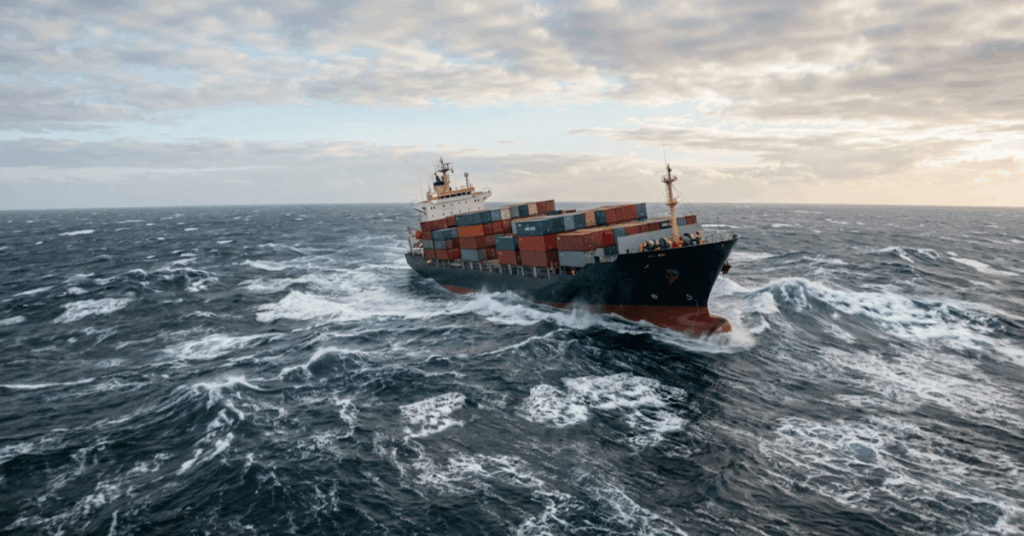
A new analysis by Sofar Ocean reveals that standard models focus on wave height, missing critical factors like period and direction that determine vessel stability.
In December 2025, the refrigerated cargo vessel Baltic Klipper shed part of its cargo off the Isle of Wight, England. Wave heights were unremarkable, but swells exceeding 15 seconds created hazardous rolling. Most forecasts failed to identify the risk. Sofar Ocean’s model, however, used direct measurements of the swell earlier in its path and predicted the danger more than two days in advance.
Why Wave Height Alone Is a Dangerous Metric: Forecasts
“Wave height is only part of what we look at when assessing risk,” said Jessica Topal, Senior Routing Specialist at Sofar Ocean. “The timing and direction of the waves, together with the vessel’s heading and speed, determine how the ship will actually respond. Two sea states with the same wave height can create very different conditions onboard.”
A.P. Møller-Maersk
Most marine forecasts rely on satellite data and buoy networks, which provide limited direct observations of the full wave field. As a result, wave period and direction, critical for vessel motion, are often inaccurately resolved. The gap in forecasting becomes especially dangerous as ships reroute through weather-exposed areas like the Cape of Good Hope, avoiding the Red Sea due to security risks.
The International Union of Marine Insurance (IUMI), which represents marine insurers worldwide, has highlighted the growing financial impact of inaccurate forecasts. In its September 2025 report, IUMI noted that heavy-weather claims had “spiked”, a trend linked to vessels diverting from the Red Sea. Similarly, the Nordic Association of Marine Insurers (Cefor), which tracks claims in Nordic markets, reported a rise in hull damage incidents, attributing them to reduced visibility in high-risk zones and longer exposure to adverse conditions.
Lessons from Past Incidents
Sofar Ocean’s white paper revisits two major container-loss incidents: the Svendborg Maersk and CMA CGM G. Washington. In both cases, the weather systems were forecasted, but the models failed to describe the wave characteristics that ultimately caused the vessels to roll. The analysis underscores the need for direct, in-water observations to improve understanding of wave period and direction.
“But as vessels navigate more challenging routes, we need forecasts that account for the full wave spectrum, not just the peaks.".
The implications of inaccurate wave forecasting extend beyond cargo losses. For shipowners and operators, the financial and operational risks are significant. A single incident involving container loss can result in claims exceeding tens of millions of dollars, not including reputational damage and potential regulatory scrutiny.
For crews, the human cost is equally pressing. Dangerous rolling can lead to injuries, fatigue, and in extreme cases, vessel abandonment. The International Maritime Organization (IMO) has emphasised the need for enhanced safety measures, including better forecasting tools, to protect seafarers navigating increasingly unpredictable routes.
For insurers, the rise in heavy-weather claims has led to higher premiums and stricter underwriting criteria. The Nordic Association of Marine Insurers (Cefor) has noted that hull claims in 2025 were 18% higher than the previous year, a trend directly linked to vessels rerouting through weather-exposed areas. Insurers are now pushing for greater transparency in routing decisions and demanding that shipping firms adopt advanced forecasting technologies.
Looking ahead, the industry is likely to see increased adoption of real-time wave monitoring systems. Companies like Sofar Ocean are expanding their networks of drifting buoys, which provide direct measurements of wave period and direction. These systems, combined with machine learning algorithms, could significantly improve the accuracy of maritime forecasts.
For now, the message is clear: the maritime sector can no longer rely solely on wave height to assess risk. As climate change intensifies weather patterns and geopolitical conflicts force vessels into riskier routes, the need for granular, real-time wave data has never been more urgent. Shipping companies, insurers, and regulators must collaborate to close the forecasting gap, before the next incident occurs.
“Wave height is only part of what we look at when assessing risk. The timing and direction of the waves, together with the vessel’s heading and speed, determine how the ship will actually respond. Two sea states with the same wave height can create very different conditions onboard.”
Jessica Topal·Senior Routing Specialist at Sofar Ocean
The findings come as shipping companies face mounting pressure to balance efficiency with safety. With more ships diverting around conflict zones, the demand for accurate, granular wave forecasting has never been higher. Sofar Ocean’s research suggests that integrating real-time swell measurements could prevent future cargo losses and reduce insurance claims.
For stakeholders, the path forward is clear. Investing in advanced forecasting technologies is no longer optional, it is a necessity. As vessels continue to navigate increasingly complex routes, the industry must adapt or risk facing even greater financial and operational disruptions.


Sign up free to ask CAMAL AI for a summary, the key points or anything else about this story.
Related stories
CAMAL AI
 Financial Ports Newsletter
The maritime economy, every morning
Ports, shipping and freight markets in one short email. Free.
Financial Ports Newsletter
The maritime economy, every morning
Ports, shipping and freight markets in one short email. Free.



