

12-Month Wait: How Dwell Time Chokes Europe’s Busiest RoRo Ports
Zeebrugge’s car yards now hold vehicles for over a year, slashing capacity despite lower volumes.
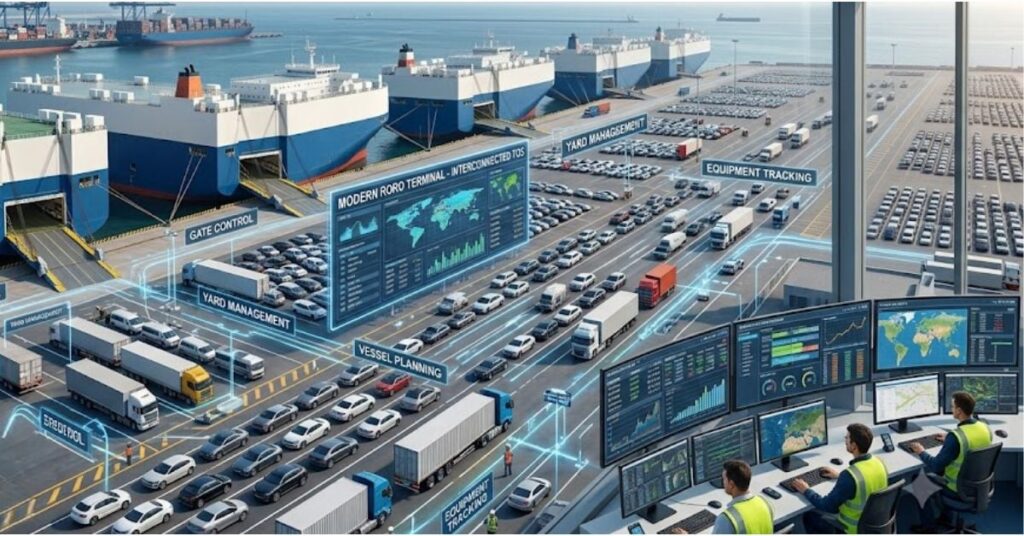
Europe’s roll-on/roll-off (RoRo) terminals are grappling with an unseen crisis: vehicles are lingering for over a year in ports like Zeebrugge, choking capacity despite a decline in overall cargo volumes. The culprit?
Recent data from Automotive Logistics reveals a paradox: while European car ports handled fewer vehicles in 2025 than in 2024, congestion has intensified. The reason lies in the unique constraints of RoRo terminals. Unlike container or bulk facilities, where cargo can be stacked or piled, RoRo terminals allocate a dedicated parking position for each vehicle.
What Is Dwell Time, and Why Does It Matter?
Dwell time in a RoRo terminal is the interval between a vehicle’s entry into the facility and its departure for the next stage of its journey. For exports, this period begins when the vehicle arrives at the terminal and ends when it is loaded onto a vessel. For imports, it starts upon discharge from the ship and concludes when the vehicle leaves via truck, rail, or another transport mode.
The duration can range from days to weeks, or, in extreme cases like Zeebrugge, more than 12 months. Factors such as inspections, documentation, processing delays, and onward transportation bottlenecks all contribute to prolonged dwell times. The consequences are severe: occupied parking positions, reduced yard availability, and terminal congestion that undermines operational efficiency. As dwell time lengthens, the effective capacity of the terminal shrinks, even if the physical infrastructure remains unchanged.
Why Are Vehicles Stuck for So Long?
Several factors exacerbate dwell time in RoRo terminals, turning them into logistical bottlenecks. One of the most critical is vehicle visibility and traceability. Missed scans, manual record-keeping, and disconnected systems create blind spots in tracking, leading to delays in processing and onward movement. Without real-time data on a vehicle’s location and status, terminals struggle to optimise space and workflows.
Inspections and surveys at multiple stages, gate-in, processing, and vessel loading or discharge, further slow operations. Each inspection adds time, particularly when conducted manually or without integrated digital tools. Processing requirements, such as pre-delivery inspections, accessory installations, software updates, and charging for electric vehicles (EVs), also extend dwell time.
Onward transportation delays compound the problem. Limited availability of trucks or rail services, documentation hold-ups, and dealer scheduling conflicts can leave vehicles stranded in the terminal. In some cases, vehicles remain parked for months awaiting the next leg of their journey, tying up space that could be used for new arrivals.
The impact of these delays is stark. According to Automotive Logistics, European car ports faced worsening congestion in 2025 despite handling fewer vehicles than in 2024. The study highlights that throughput alone does not reflect terminal performance, dwell time is the hidden metric that dictates capacity and efficiency.
By offering end-to-end tracking of vehicle status, stage, and operational delays, these systems aim to reduce dwell time and unlock existing terminal capacity.
By monitoring these indicators, ports can identify bottlenecks and implement targeted solutions to streamline workflows.
The stakes are high for the maritime and automotive industries. As terminals like Zeebrugge demonstrate, prolonged dwell times are not just a logistical headache, they represent a hidden cost that undermines efficiency, profitability, and the ability to adapt to changing trade flows. The solution lies in embracing digital tools, improving coordination across the supply chain, and prioritising the swift movement of vehicles through terminals. Until then, the spectre of congestion will loom large over Europe’s RoRo ports.


Sign up free to ask CAMAL AI for a summary, the key points or anything else about this story.
Related stories
CAMAL AI
 Financial Ports Newsletter
The maritime economy, every morning
Ports, shipping and freight markets in one short email. Free.
Financial Ports Newsletter
The maritime economy, every morning
Ports, shipping and freight markets in one short email. Free.



