

How Digital Twins Cut Port Delays by 30%—Before the Ship Even Docks
Terminals using live 3D yard models slash dwell times and avoid costly congestion before vessels arrive.
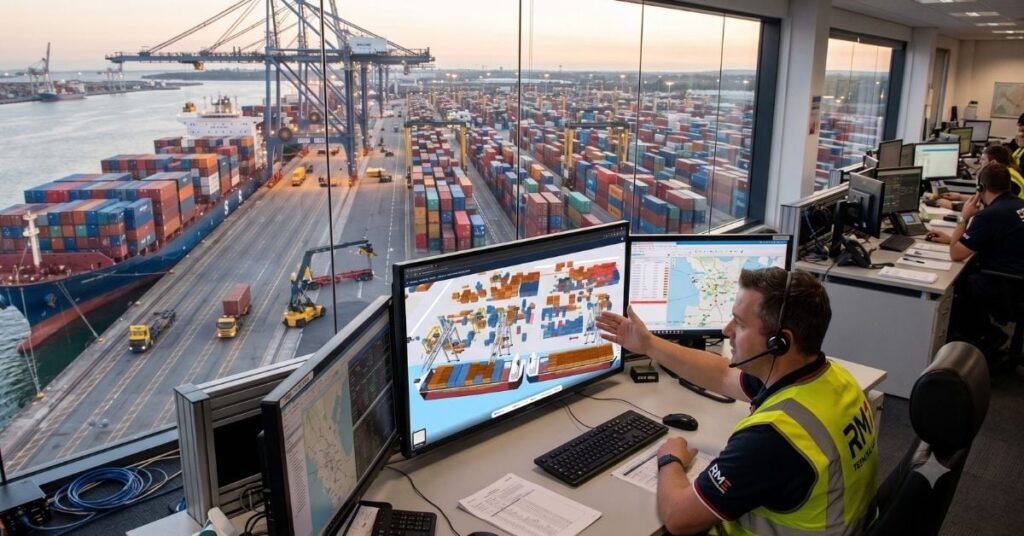
Terminal operators are ditching outdated spreadsheets and radio calls for digital twins that provide a live, 3D view of yard operations, updating every few seconds and forecasting congestion up to 72 hours ahead.
A yard that appears spacious in the morning can become gridlocked by afternoon. Traditional tools like shift reports or manual dashboards often deliver stale data, leaving planners to make decisions based on information that is already hours old. This lag can lead to misplaced containers, prolonged dwell times, and costly delays. Digital twins, however, connect directly to terminal databases, offering real-time visibility into yard capacity, container locations, and impending bottlenecks.
The technology is not just about tracking current conditions. By simulating yard activity over the next 48 to 72 hours, digital twins allow operators to anticipate problems before they arise. For example, if a heat map shows one section of the yard nearing capacity, planners can redirect incoming containers to less congested areas. This proactive approach reduces the need for last-minute adjustments and minimises disruptions to vessel schedules.
How Digital Twins Transform Yard Planning
One of the most immediate benefits of digital twins is their ability to provide a live, visual representation of yard activity. Instead of relying on static reports, supervisors can access a dynamic 3D model that updates in near real-time. This level of detail enables them to answer critical questions on the spot: How much space is available? Which areas are becoming crowded? Which containers have been waiting too long?
A key feature of digital twins is their use of heat maps to visualise yard density. Different colours indicate varying levels of congestion, allowing planners to quickly identify problem areas. For instance, if a section of the yard is shaded red, it signals that the area is nearing capacity. Planners can then take pre-emptive action, such as rerouting containers or adjusting stacking strategies, to prevent bottlenecks before they escalate.
Another advantage is the ability to filter containers by dwell time. Dwell time, the period a container spends at a terminal before moving to its next destination, is a critical metric for efficiency. Long dwell times can lead to demurrage charges, increased storage costs, and delayed shipments. Digital twins group containers by how long they have been in the yard, such as 5, 10, or 15 days, enabling staff to prioritise the movement of containers that have overstayed their welcome. This targeted approach helps terminals reduce unnecessary costs and improve turnaround times.
From Live Data to Predictive Insights
The real power of digital twins lies in their predictive capabilities. By integrating live data with advanced analytics, these systems can simulate future scenarios, such as the impact of incoming vessel arrivals or truck gate congestion. For example, predictive truck simulations can highlight potential delays at terminal gates before they occur, allowing operators to adjust staffing levels or gate hours to mitigate congestion.
Digital twins also enhance collaboration between terminal staff and field personnel. AI-powered surveillance cameras and smart inspection glasses can feed real-time data into the digital twin platform. Computer vision models analyse camera feeds to detect, classify, and track objects, generating alerts for anomalies such as misplaced containers or unauthorised access. Meanwhile, smart glasses enable field personnel to capture images, videos, and voice annotations directly into the system, ensuring that ground-level observations are instantly reflected in the digital twin.
Infyz’s iTOMS platform exemplifies this integration, combining live yard data, planning tools, digital twin capabilities, and predictive insights into a single system. By updating every few seconds, iTOMS ensures that terminal operators have access to the most current information, enabling them to make data-driven decisions that optimise yard operations.
The adoption of digital twins is not just about improving efficiency, it is about transforming how terminals operate. With real-time visibility and predictive insights, operators can reduce dwell times, prevent congestion, and enhance overall productivity. As the maritime industry continues to embrace digitalisation, digital twins are set to become a standard tool for terminals seeking to stay ahead in an increasingly competitive landscape.
For terminal operators looking to implement this technology, the next steps are clear: assess current yard management systems, identify areas where real-time data could drive improvements, and explore digital twin solutions tailored to their specific needs. The future of port operations is here, and it is live.


Sign up free to ask CAMAL AI for a summary, the key points or anything else about this story.
Related stories
CAMAL AI
 Financial Ports Newsletter
The maritime economy, every morning
Ports, shipping and freight markets in one short email. Free.
Financial Ports Newsletter
The maritime economy, every morning
Ports, shipping and freight markets in one short email. Free.



