

China Accuses US Navy of Sabotaging South China Sea Stability
Beijing claims USS Charleston violated its sovereignty near Sabina Shoal, escalating tensions in disputed waters.
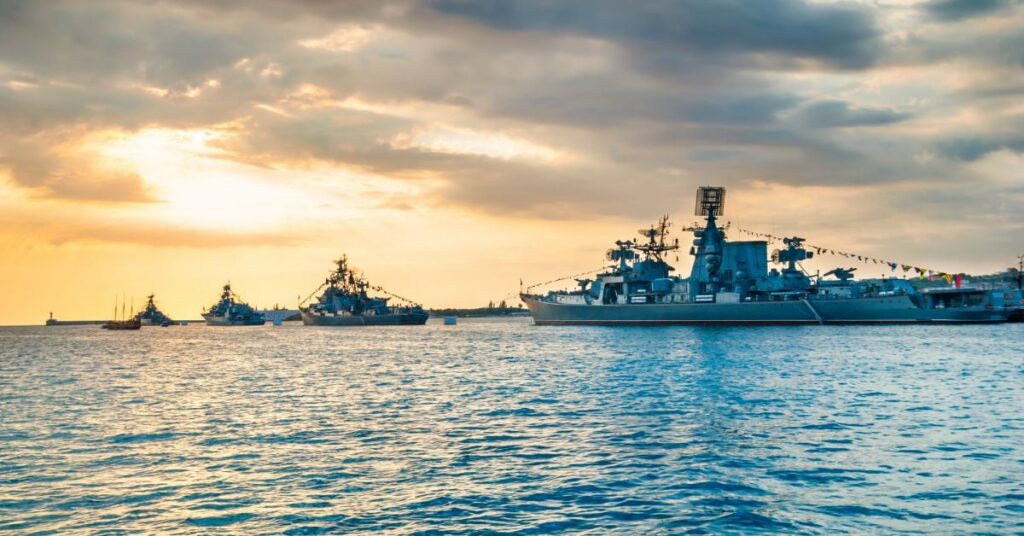
Tensions between China and the United States have escalated following the presence of a U.S. Navy vessel near the disputed Sabina Shoal in the South China Sea. Beijing accused the USS Charleston, an Independence-class littoral combat ship, of violating its territorial claims and undermining regional security.
The Chinese military stated that the USS Charleston entered waters adjacent to the Spratly Islands without prior authorization, calling the move a direct challenge to China’s sovereignty. A spokesperson for the People’s Liberation Army’s Southern Theater Command described the operation as an infringement on Beijing’s rights and a threat to maritime stability. China immediately deployed forces to monitor the U.S. vessel after detecting its presence near the Sabina Shoal.
China’s Accusations and Military Response: South China
Beijing has repeatedly asserted its claim over the shoal, despite overlapping territorial disputes with the Philippines, Brunei, Malaysia, Vietnam, and Taiwan. China does not recognize Taiwan as a sovereign nation, instead labeling its government as separatist. The latest incident follows a pattern of heightened naval activity in the region, including a September collision between a Chinese vessel and a Philippine ship near the same shoal, which Beijing blamed on Manila.
The U.S. Navy’s Seventh Fleet dismissed China’s accusations, affirming that the USS Charleston conducted routine operations in international waters in compliance with international law. A fleet spokesperson emphasized that no permission from China was required, stating that all nations have the right to freedom of navigation. The U.S. reiterated its commitment to conducting lawful missions in the region to uphold peace and stability.
U.S. and Allied Rebuttal
The Philippines, a U.S. treaty ally, supported Washington’s position. A senior Philippine official stated that the U.S. had not violated any laws, stressing that no country needs authorization for lawful transit through international waters. Meanwhile, Taiwan condemned China’s increasing naval patrols near its coast, calling them destabilizing and an attempt to alter the regional status quo.
The standoff underscores the broader strategic rivalry in the South China Sea, a vital trade route where competing territorial claims continue to fuel tensions. Both sides have signaled no intention of backing down, raising concerns over potential miscalculations in the disputed waters.


Sign up free to ask CAMAL AI for a summary, the key points or anything else about this story.
Related stories
CAMAL AI
 Financial Ports Newsletter
The maritime economy, every morning
Ports, shipping and freight markets in one short email. Free.



