

US Navy Controls Drone 2,100 Miles Away in Carrier Aviation First
USS Ronald Reagan pilots MQ-25A Stingray from Pacific to Illinois in historic trial.
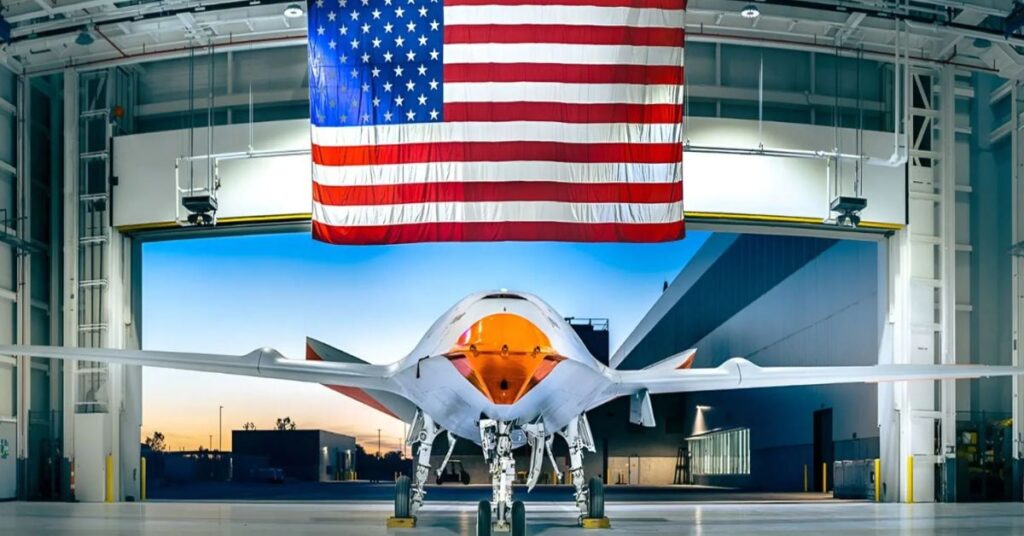
The U.S. Navy has achieved a historic milestone by remotely controlling an MQ-25A Stingray unmanned refuelling aircraft from the Nimitz-class carrier USS Ronald Reagan while the vessel sailed more than 2,100 miles away in the Pacific Ocean. The trial, conducted on Oct.
The MQ-25A Stingray, stationed at Boeing’s facility in Mascoutah, Illinois, was connected to the USS Ronald Reagan via a Proliferated Low Earth Orbit (pLEO) satellite network. Operators aboard the carrier used the ship’s Unmanned Air Warfare Center (UAWC) and MD-5C Ground Control Station to establish the link, validating the communication and command systems required for future drone operations from naval vessels.
The test was part of a series of build-up exercises designed to integrate and validate the processes, interfaces, and networks needed to operate the MQ-25A Stingray from a Navy ship. This system allowed operators on the USS Ronald Reagan to maintain control of the Stingray despite the vast distance separating the two assets.
Capt. Daniel Fucito, program manager for PMA-268, described the achievement as evidence that ‘the Carrier Air Wing of tomorrow is a reality today’. This first-ever underway connection between a carrier-based UAWC and an MQ-25A aircraft proves that the Carrier Air Wing of tomorrow is a reality today.".
The Acting Secretary of the Navy, the Honorable Hung Cao, echoed this sentiment, highlighting the broader implications for fleet operations.
“The MQ-25A Stingray’s carrier-based refuelling capabilities enable F/A-18 Super Hornets to fly farther and longer. The integration of this unmanned aerial refueller demonstrates the transformational change our manned and unmanned asset integration provides the Fleet.”
Hung Cao·Acting Secretary of the Navy
What the MQ-25A Stingray Brings to the Carrier Air Wing
The MQ-25A Stingray is set to become the U.S. Navy’s first unmanned refuelling aircraft, providing organic refuelling capabilities to the Carrier Air Wing. This will allow F/A-18E/F Super Hornets to extend their operational range and remain in the air longer, freeing them from the need to carry additional fuel for other aircraft. Instead, Super Hornets can focus on strike missions, enhancing the carrier’s combat effectiveness.
Boeing, the manufacturer of the MQ-25A, has been conducting additional trials to further integrate the aircraft into naval operations.
The MQ-25A Stingray’s introduction into the Carrier Air Wing is expected to lay the foundation for the inclusion of more unmanned systems in future naval operations. The Navy plans to conduct additional tests to evaluate the system’s performance during routine flight operations and missions, ensuring that the aircraft can meet the demands of real-world scenarios.
As the U.S. Navy continues to refine its unmanned capabilities, the MQ-25A Stingray represents a significant step forward in modernising naval aviation. The ability to control unmanned aircraft from carriers at extended ranges not only enhances the flexibility and reach of the fleet but also reduces the risk to human pilots in high-threat environments. With the Stingray’s refuelling capabilities, the Navy is poised to extend the operational range of its manned aircraft, ensuring that carriers remain a dominant force in global power projection.
The trial aboard the USS Ronald Reagan is just the beginning of what promises to be a transformative era for naval aviation. As the Navy continues to integrate unmanned systems into its operations, the MQ-25A Stingray will play a central role in shaping the future of carrier-based air power.


Sign up free to ask CAMAL AI for a summary, the key points or anything else about this story.
Related stories
CAMAL AI
 Financial Ports Newsletter
The maritime economy, every morning
Ports, shipping and freight markets in one short email. Free.



