

Black Sea Attacks Kill 20 Seafarers: Bulgaria’s Urgent NATO, EU Call
Bulgaria demands NATO and EU support after four ships struck in under a week, killing over 20 seafarers.
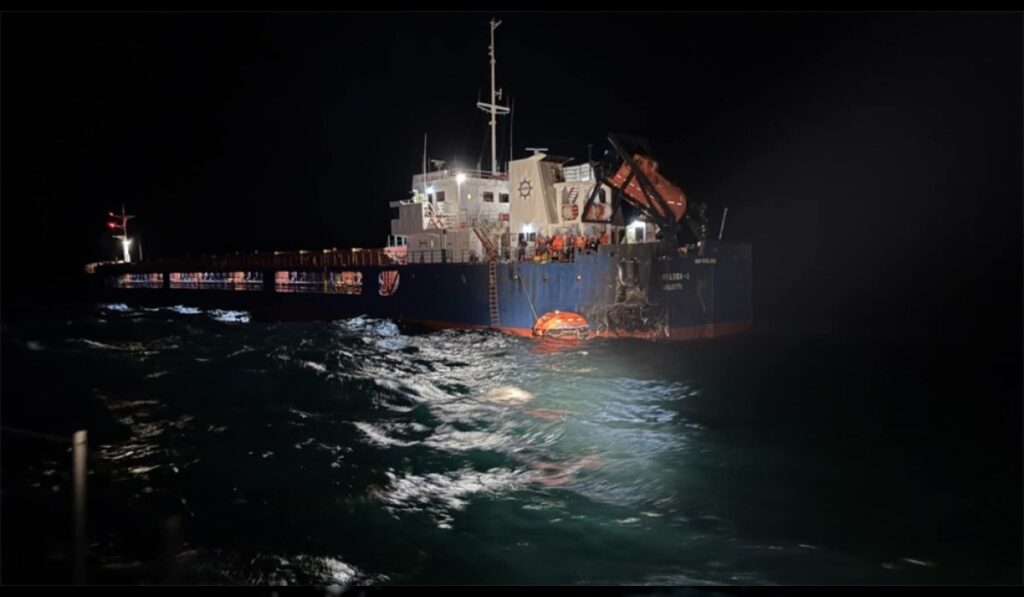
Bulgaria has demanded urgent support from NATO and the European Union to secure the Black Sea after four commercial vessels were attacked in less than a week, leaving over 20 seafarers feared dead.
The attacks have prompted Bulgaria’s Prime Minister, Rumen Radev, to call an emergency meeting of the Security Council and initiate direct appeals to NATO and EU leaders. “The situation in the Black Sea is becoming increasingly complex,” warned Defence Minister Dimitar Stoyanov, emphasising the need for coordinated regional action with Turkey and Romania. Bulgaria, though not a party to the conflict, is suffering significant economic and financial damage as commercial shipping faces heightened risks.
What happened in the latest attacks?: Black Sea
The Chelsea-3, a 5827 dwt general cargo ship built in 2006 and sailing under the Maltese flag, was struck by three drones while en route to Moldova to load a cargo of sunflower seeds. The vessel, owned by Ukrainian interests, was 16 nautical miles off Bulgaria’s coast when it sent out a distress signal. A Bulgarian Border Police vessel responded, evacuating all 15 crew members (seven Ukrainians and eight Azerbaijanis), five of whom were reportedly injured. Images of the ship show a large hole in its side, with the stern settling into the water.
Minutes later, the HS Dignity, an 8,642 dwt cargo ship flying the Guinea-Bissau flag, reported being hit and sinking 17 nautical miles off the coast. The vessel, sailing empty from Algeria to Romania, had a crew of Syrians and Egyptians. Two nearby ships, Azov Concord and Scandi Asserter, rescued five seafarers, but 11 remain missing. The attacks bring the death toll to over 20 seafarers in less than a week, following two earlier incidents that left one ship sunk and 11 crew members unaccounted for.
Why is Bulgaria turning to NATO and the EU?
Bulgaria’s government has made it clear that the attacks are a direct threat to regional stability and freedom of navigation. Prime Minister Radev described the strikes as “absolutely unacceptable” and stated that while Bulgaria lacks conclusive evidence to attribute responsibility, “the logic suggests that the outcome benefits the Russian Federation.” He has summoned the Russian ambassador for a meeting, signalling Bulgaria’s intent to hold Moscow accountable for the escalating violence in the Black Sea.
European Commission President Ursula von der Leyen echoed Radev’s concerns, calling the situation “unacceptable” and framing the Black Sea as “another front of escalation of the Russian war in Ukraine.” Bulgaria has requested NATO and EU assistance to strengthen its surveillance and control of maritime and airspace, as well as support in investigating the drone strikes to determine their origin. Last week, Bulgaria faced pressure from the EU to search the Black Sea and board a damaged cargo ship for evidence, but no identifiable fragments from the drones were found.
Meanwhile, the maritime rescue system remains on high alert, with Bulgaria’s Border Police and naval forces coordinating with neighbouring countries to respond to future incidents.
The next steps for Bulgaria include raising the issue at the upcoming European Council meeting on October 15 and 16. The government is also expected to push for a unified NATO response to the attacks, including enhanced surveillance capabilities and joint patrols in the Black Sea. For now, commercial shipping in the region remains at heightened risk, with insurers likely to raise premiums and some carriers considering rerouting vessels to avoid the area.
As the situation develops, Bulgaria’s calls for international support highlight the broader implications of the Black Sea’s deteriorating security. With no end in sight to the war in Ukraine, the region’s strategic importance, and its vulnerability, continues to grow, posing challenges not just for Bulgaria but for the entire NATO alliance.


Sign up free to ask CAMAL AI for a summary, the key points or anything else about this story.
Related stories
CAMAL AI
 Financial Ports Newsletter
The maritime economy, every morning
Ports, shipping and freight markets in one short email. Free.



